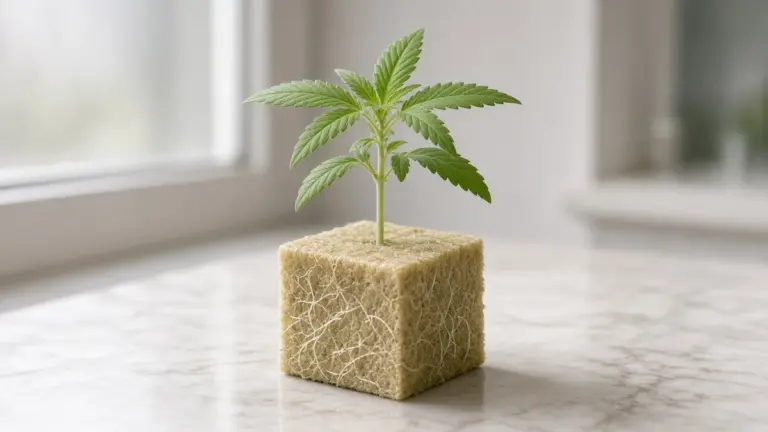



Motor breath strain is an indica-dominant cross of Chemdawg and SFV OG Kush, bred and selected by Pisces Genetics, with Motorbreath #15 as their phenotype selection. If you want a fuel-drenched OG cross, this is the strain. To look for Motorbreath 15 clones, visit the I Want Clones shop.
Key Takeaways
- Motor breath strain is a Chemdawg × SFV OG Kush cross; Motorbreath #15 is the specific phenotype selected by Pisces Genetics as their selection from the line.
- Terpene profile is dominated by fuel/diesel, sharp lemon-chemical, and earthy pine — driven primarily by limonene, myrcene, caryophyllene, and terpinolene.
- Flower time runs approximately 9 weeks (sometimes 9.5); indoor yields land around 400–500 g/m² with dialed-in feeding and training.
- This is an intermediate-to-advanced grow — VPD management, airflow, and a disciplined feeding schedule are not optional.
- Odor is extreme. A quality carbon filter is non-negotiable from mid-flower onward.
What Is Motor Breath Strain? Lineage & Genetics
Motor breath strain sits at the intersection of two influential American genetic lines. On one side you have Chemdawg, the East Coast diesel cut behind many modern strains. On the other side is SFV OG Kush — the San Fernando Valley cut of OG Kush, a Southern California-bred expression known for its sharp fuel-lemon profile.
Pisces Genetics took this cross and ran extensive pheno hunting, eventually landing on Motorbreath #15 as the keeper. The “15” is simply the phenotype number. When people refer to “Motor Breath weed,” they’re usually talking about this specific pheno, even if they don’t realize it. The #15 tag is what separates a true Motorbreath from random seed-run expressions of the same cross.
For a deeper look at one of Motorbreath’s parent families and its own diesel-forward genetics, check out our Sour Diesel strain guide — you’ll see a lot of family resemblance in the fuel terpene stack.
From a lineage standpoint, the Chemdawg influence brings the raw diesel punch and that slightly chemical-gasoline edge that makes your nose wrinkle. The SFV OG Kush side adds structure — compact, bushy plants, dense OG-style nugs, and the lemon-cleaner sharpness that refines the Chemdawg’s blunt-force diesel into something more complex and layered. The result is a cross that satisfies both the East Coast diesel crowd and the West Coast OG loyalists. You can read more about Chemdawg’s family history at Leafly’s Chemdawg lineage breakdown.
Motor Breath Strain Specs at a Glance
| Attribute | Detail |
|---|---|
| Lineage | Chemdawg × SFV OG Kush |
| Breeder / Selector | Pisces Genetics (Motorbreath #15) |
| Phenotype | Indica-dominant hybrid |
| Dominant Terpenes | Limonene, Myrcene, Caryophyllene, Terpinolene |
| Flower Time | ~9 weeks (sometimes 9.5) |
| Indoor Yield | 400–500 g/m² |
| Plant Height | Medium-compact (OG structure) |
| Grow Difficulty | Intermediate to Advanced |
| Odor Intensity | Extreme — carbon filter required |
Terpene Profile & Aroma
If you’ve ever opened a jar of strong OG and felt like you stuck your head in a gas tank that someone squeezed a lemon over, then you have a rough idea of what motor breath strain smells like. The diesel note comes primarily from the Chemdawg genetics, and it’s blunt and immediate — you don’t have to search for it. It fills the room the moment the jar opens.
What the SFV OG Kush side adds is a sharp, almost chemical lemon edge — not the sweet lemon of a citrus candy, but the astringent bite of lemon-scented cleaner. It’s aggressive, and it’s what makes Motorbreath smell more refined than a straight Chemdawg. Under that sharp top note there’s an earthy, damp pine character that grounds everything and adds depth. The full aromatic profile is complex but cohesive — fuel, chemical lemon, earthy pine, in that order of intensity.
The dominant terpenes driving this profile are limonene (that sharp citrus-chemical character), myrcene (the earthy backbone), caryophyllene (adding a spicy, peppery depth), and a notable amount of terpinolene, which contributes floral and slightly herbal notes that round out the profile’s sharper edges. This is the terpene stack that makes motor breath weed recognizable — once you’ve smelled an authentic #15 pheno, you won’t confuse it with anything else.
In dried and cured bud, the smell is borderline overwhelming. In a grow room at week 6 or 7 of flower, it becomes a neighbor problem. The odor control section below addresses that directly.
Motorbreath 15 Potency: What Is Known
Newer consumers should start low.
As with all cannabis, effects vary by individual, consumption method, and tolerance. This guide makes no medical claims about Motor Breath or any other strain. Cannabis is for legal adult use where permitted — always verify your state and local laws before purchasing or consuming. For federal scheduling, see the rescheduling explainer. Know your local rules.

Growing Motor Breath Strain: Overview
Growing motor breath strain successfully requires more than a basic setup. This is a genetics-first plant — the quality ceiling is very high, but you need to meet it halfway with dialed-in environmental control, a strong feeding program, and good training discipline. If you cut corners on VPD or skip your cal-mag, the plant will tell you, and it won’t be subtle.
The structure is classic OG: compact, bushy, with lateral branching that fills out a SCROG net beautifully. It’s not a massive stretcher — expect maybe 30–50% height increase in the first two weeks of flower, which is modest by hybrid standards. The compact structure is an advantage in tent grows, but it also means airflow through the canopy is a real concern. Without intentional management, the density of the foliage and buds creates exactly the conditions mold wants.
Before you start, make sure your space is set up right. Our grow tent setup guide covers ventilation, lighting, and layout decisions that matter especially for heavy-feeding, high-resin strains like Motorbreath.
Vegetative Stage
Starting from a rooted clone, Motorbreath 15 moves into veg smoothly. The OG genetics give it a slightly slower initial growth rate than some sativa-forward strains, but it fills out quickly once the root system establishes. Plan for 3–5 weeks of veg, depending on your target canopy size and container.
VPD matters from day one. During veg, target a VPD of 0.8–1.0 kPa, with day temps in the 75–80°F range and night temps no more than 10°F cooler. Don’t let humidity drop below 50% in veg — the plant transpires efficiently in this range and root development accelerates. Our VPD guide for cannabis clones has a full chart if you’re dialing this in for the first time.
Top the plant once it hits 5–6 nodes. Motor breath strain responds very well to topping — the lateral growth response is strong, and you’ll develop 4–8 main colas depending on when and how many times you top. Give the plant a week to recover before any additional stress techniques. If you’re running a SCROG setup, do your first topping early and begin weaving branches under the net at week 2–3 of veg.
Feeding in veg should be moderate — push nitrogen but don’t overdo it. A heavy hand with nitrogen in veg will carry over into flower and make the transition harder. Target EC around 1.0–1.4 in veg, ramping up to 1.6–1.8 by the last week before flip.
Flowering Stage
Flowering is where Motorbreath 15 really shows what it is. Flip to 12/12 once your canopy is at 60–70% of your target final height, accounting for the 30–50% stretch. The stretch on this strain is controlled and predictable — another OG trait that makes planning straightforward.
Week 1–2 of flower: continue the transition feeding, keep VPD at 1.0–1.2 kPa, and begin preparing your training for the net if you haven’t already. Branches will start to lock in position by the end of week 2.
Week 3–4: bud sites are establishing. This is when the smell first becomes detectable outside the tent. Make sure your carbon filter is running. Trichome development begins in earnest — if you’re not already impressed with the resin, you will be by week 4. This is also when phosphorus and potassium demand begins climbing sharply.
Week 4–7: the heavy feeding window. Motor breath strain is a legitimate heavy feeder in mid-flower, and the P/K demand in weeks 4–7 is where a lot of underprepared grows fall behind. If your bud development looks slow or your trichome density seems low, check your phosphorus levels first. This strain wants to be fed — don’t let “less is more” instincts starve it at this critical stage.
Week 7–8: Begin the flush transition. Taper nutrients down over 10–14 days if you’re flushing before harvest. The buds are packing on weight and density now — this is the most visually satisfying phase of the grow. Calyx swell is dramatic. The smell is now extreme.
Week 9 (and sometimes day 63–67): harvest window. See the harvest timing section below for specifics on trichome reading.
Feeding Schedule for Motorbreath 15
Motor breath strain responds best to a high-phosphorus, high-potassium approach from mid-flower onward. Think of the feeding program in three phases:
Phase 1 — Veg through week 2 of flower: Nitrogen-forward base nutrients, moderate Cal-Mag (especially under HID or high-intensity LED), and a balanced PK supplement. Target EC 1.0–1.8 depending on stage. pH 6.0–6.5 in soil, 5.8–6.2 in coco or hydro.
Phase 2 — Weeks 3–7 of flower: This is the critical window. Ramp phosphorus and potassium aggressively. Reduce nitrogen to maintenance level — you want the plant allocating energy to bud development, not vegetative growth. EC can push to 2.0–2.4 for mature plants with an established root system. Cal-Mag stays important; under LED grows especially, calcium deficiency will show up as light interveinal mottling if you’re not watching. Our full breakdown of what and when to feed your cannabis clones has specific nutrient timing charts that apply well to heavy-feeding OG crosses like Motorbreath.
Phase 3 — Weeks 7–9 (flush or taper): Pull back on synthetic nutrients, maintain pH, and let the plant clear out excess salts. Monitor runoff EC as a guide — when runoff EC starts matching input EC, your root zone is in balance. See our EC/PPM runoff guide for a detailed walkthrough of how to read and respond to runoff data.
One consistent issue with Motorbreath under intense lighting: calcium and magnesium deficiency can show up mid-flower even when you think you’re feeding enough. If you’re running a double-ended HPS or a high-power LED at close proximity, bump your Cal-Mag by 20–25% compared to what the bottle recommends and monitor leaf color through week 6.
Training Techniques for Motor Breath
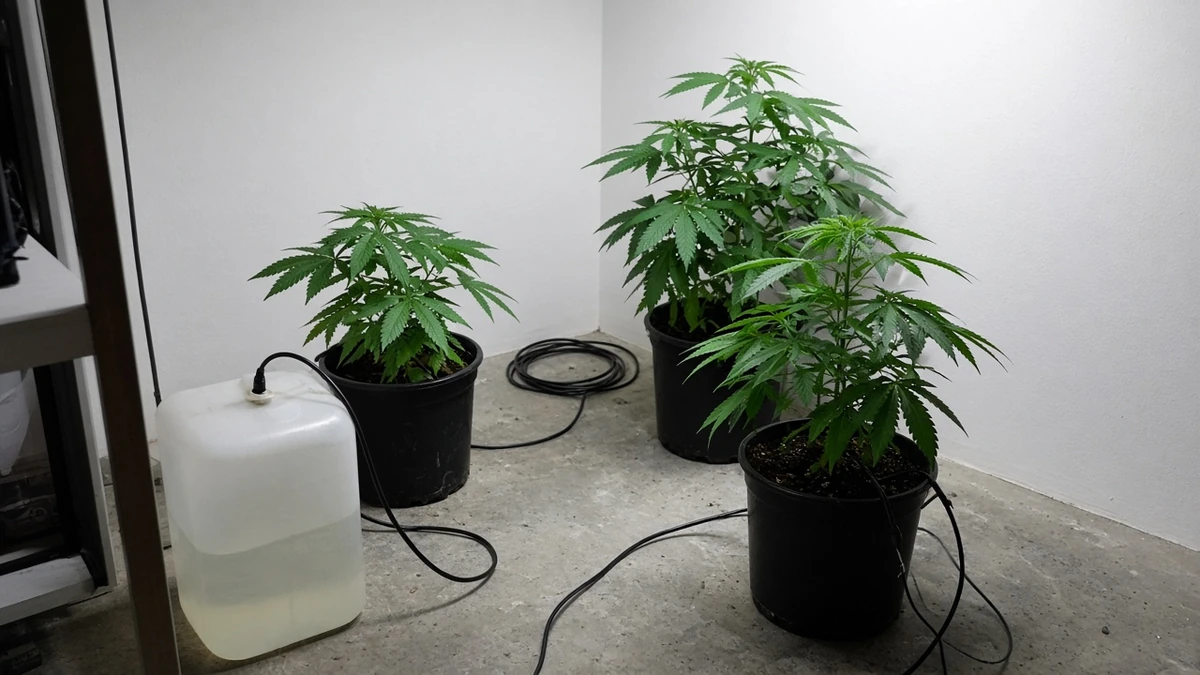
The compact, bushy OG structure of motor breath strain makes it a great candidate for several training approaches. Here’s what works and what to watch out for:
Topping: Highly recommended. Top once at node 5–6, then again at the secondary branches if you have the veg time. This produces a wide, even canopy with multiple main colas instead of a single dominant top. The plant’s branching response to topping is strong and reliable.
LST (Low-Stress Training): Works well alongside topping. Use soft plant ties to pull branches outward during veg, creating a low, flat canopy that maximizes light penetration. Motorbreath’s relatively stiff stems hold their position well once trained.
SCROG (Screen of Green): Probably the ideal method for this strain in a tent setup. The compact structure fills a net evenly, and the even light distribution translates directly to uniform bud development and canopy-wide resin coverage. Set your screen at 12–16 inches above the canopy, start weaving at week 2 of veg, and let the plant fill the net before flipping.
Lollipopping: This is not optional with Motorbreath — it’s maintenance. The lower bud sites on this strain will never receive enough light to develop into quality flower, and leaving them on the plant redirects energy away from the main colas. Remove everything below the lowest point where light penetrates effectively — typically the bottom third of the canopy. Do a preliminary lollipop at day 14–21 of veg, then a final cleanup at the end of week 2 of flower. Our defoliation and lollipopping guide covers the technique and timing in full.
What not to do: Avoid heavy defoliation after week 4 of flower. At that point, the fan leaves are fueling bud development directly — pulling too many late in flower will cost you density and finish weight.
Odor Control: Not Optional With Motor Breath
To be direct: motor breath strain is extremely pungent. By week 5 of flower, the smell will penetrate a closed tent and fill whatever room the tent is in. By week 7, it will be detectable outside the building in some setups. This is not an exaggeration.
A quality inline fan paired with a correctly sized activated carbon filter is the baseline minimum for this strain. Don’t try to manage Motorbreath odor with passive carbon filters, odor neutralizers, or ozonate the air around the tent. Those approaches fail with this level of terpene production.
Specifics that matter: your carbon filter should be rated for the same or higher CFM than your inline fan. Replace carbon filters on schedule — a worn-out filter that works fine for lower-terpene strains will be inadequate for Motorbreath in peak flower. If you’re in a shared living space or anywhere that discretion matters, add a second stage of odor control (ONA gel in the room outside the tent, not inside) as a buffer.
The smell during the grow is a preview of the jar. When the buds are cured and the jar opens, that same pungency is what makes Motorbreath worth the effort.
Harvest Timing for Motorbreath 15
Motor breath strain finishes around 9 weeks from flip to 12/12, sometimes pushing to day 65–67. Don’t rely on the calendar alone — use a jeweler’s loupe or digital microscope to read trichomes. This is the only reliable way to nail the harvest window.
At the right harvest point, trichomes on Motorbreath 15 should show mostly cloudy (milky white) with a portion — roughly 20–30% — transitioning to amber. Most experienced growers harvest at 20 to 25% amber.
Watch pistil color as a secondary indicator — when 70–80% of pistils have turned orange/red, you’re in the harvest zone. But trichomes are the primary guide. Our harvest timing guide breaks down trichome stages with visual reference descriptions that help you make consistent calls.
Post-harvest, the smell from drying buds is just as intense as during flower. Dry in a ventilated, dark space with temperature around 60–65°F and RH around 55–60% for a slow, even dry. Rush the dry and you lose terpene complexity — and with Motorbreath, the terpenes are the whole point.
Clone vs. Seed: Why Clones Win for Motorbreath
Here’s the practical reality of growing motor breath strain from seed versus clone: seeds give you genetic variation, and clone gives you the actual plant.
Motorbreath #15 is a specific phenotype — the 15th plant selected from Pisces Genetics’ Motorbreath line. If you buy Motorbreath seeds and germinate 10 plants, you will not get 10 Motorbreath #15s. You’ll get 10 different expressions of the Chemdawg × SFV OG Kush cross, some of which may be excellent, many of which won’t match the #15 profile in potency, terpenes, or structure. Running seeds means you’re pheno-hunting, which takes time, space, resources, and a fair amount of skill to do correctly.
A rooted clone from a Motorbreath #15 mother gives you the actual genetic — the same plant, expressed consistently, every run. You know what the terpene profile will be. You know the yield range. You know the flower time. The work of selection is already done.
This is the same reason commercial cultivators often work with clones. Consistency is everything when your reputation is built on a specific product.
To look for Motorbreath 15 clones, visit the I Want Clones shop. You’re not rolling the dice on pheno expression.
Where to Buy Motor Breath Clones
To look for Motorbreath 15 clones, visit the I Want Clones shop. See Shipping & Policies for shipping windows. Claims: if a clone arrives damaged, dead, or clearly unhealthy, contact IWC within 3 days of delivery and include clear photos of the plants and the packaging (claims policy).
Always verify that purchasing and growing cannabis clones is legal in your state and local jurisdiction before ordering. Cannabis law is actively evolving at both state and federal levels in 2026 — check current rules in your area.
Frequently Asked Questions
What is motor breath strain and who bred it?
Motor breath strain is an indica-dominant cannabis cross of Chemdawg and SFV OG Kush. It was bred and phenotype-selected by Pisces Genetics, who identified Motorbreath #15 as their selection from the line. The “15” refers to the specific phenotype number selected from their original Motorbreath cross — it’s this specific pheno that established the strain’s reputation for fuel-forward terpenes.
How long does motor breath strain take to flower?
Motor breath strain has a flower time of approximately 9 weeks, with some growers pushing to day 65 or 67 for maximum trichome development. Harvest timing should always be confirmed by trichome inspection rather than calendar alone. Most growers target 20 to 25% amber trichomes at harvest.
Is motor breath strain hard to grow?
Motor breath strain is rated intermediate to advanced difficulty. It demands well-managed VPD throughout the grow cycle, strong airflow to prevent humidity issues in its dense canopy, and a disciplined feeding schedule that ramps phosphorus and potassium significantly in mid-flower (weeks 4–7). Calcium and magnesium deficiency is common under high-intensity lighting if not proactively supplemented. The reward for dialed-in execution is exceptional.
Do I need a carbon filter to grow Motorbreath?
Yes — a carbon filter is non-negotiable for growing motor breath strain. By week 5 of flower, the terpene output from Motorbreath #15 is strong enough to fill a room through a closed tent. An inline fan paired with a properly sized and maintained activated carbon filter is the minimum effective odor control setup. Passive filters or odor neutralizers alone will not keep pace with this strain’s output at peak flower.
Final Thoughts on Motor Breath Strain
Motorbreath 15 combines Chemdawg’s raw diesel genetics with SFV OG Kush’s lemon-chemical precision, and Pisces Genetics selected the #15 phenotype from that cross.
As a grow, it rewards the grower who pays attention. Dial in your VPD, stay on top of feeding, train early, lollipop properly, and run a good carbon filter. Do those things consistently across a 9-week flower cycle and the result is dense, resin-coated buds with a terpene profile that announces itself across a room.
Starting from a Motorbreath #15 clone instead of seeds removes the biggest variable from the equation. The pheno is known, and the work you put into the grow reflects directly in the final product without the uncertainty of a seed run.
To look for Motorbreath 15 clones, visit the I Want Clones shop. If you’re building out your grow space, our grow tent setup guide and VPD guide are solid starting points before your clones arrive.
For another savory heavyweight, read our Garlic Breath strain and clone guide, or see the indica clones category.