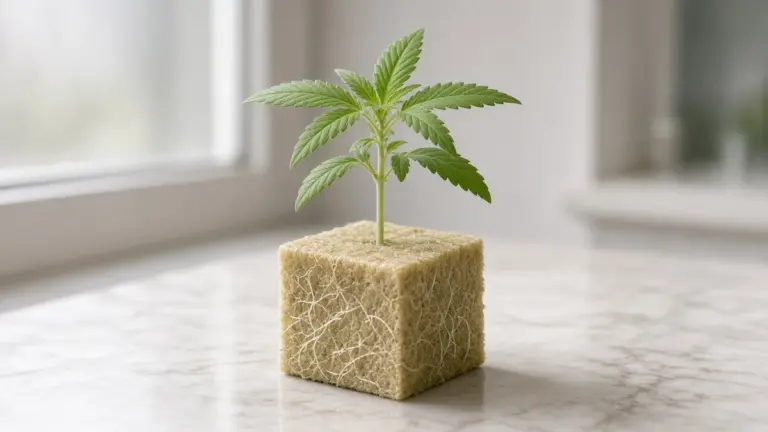


Strawberry Mango Haze Strain and Clone Grow Guide: Genetics, Effects and Cultivation

Haze people are a specific breed. They will forgive a lot — stretch, feeding quirks, lanky structure — but they will not forgive a fake, and they have waited out 12-week flowering windows for the real thing more times than they can count. The Strawberry Mango Haze strain is for exactly those people, with one twist that changes the math: this west coast clone finishes in about 8 weeks. A sativa-dominant cross of Strawberry Cough and Mango Haze commonly reported around 20% THC (per Leafly), it delivers authentic haze character on a schedule normal growers can actually live with. To look for Strawberry Mango Haze clones, visit the I Want Clones shop.
Key Takeaways
- Strawberry Mango Haze is a sativa-dominant strain (reported 70/30) crossing Strawberry Cough with Mango Haze, commonly reported around 20% THC (per Leafly).
- It flowers in roughly 8 weeks — fast for a haze, where 10 to 12 weeks is the norm.
- The profile is sweet strawberry and tropical mango over classic haze spice, with pine and exotic fruit through the exhale.
- Expect serious stretch in early flower — flip earlier than feels natural and keep support ready.
- Feed lighter than you would a heavy indica; haze-leaning plants are sensitive to overfeeding.
Strawberry Mango Haze Genetics
The pedigree here is old-school. Strawberry Cough — the East Coast classic popularized by Kyle Kushman — brings the unmistakable ripe-strawberry sweetness and a smooth, expansive smoke that made it famous. Mango Haze comes from the same family that produced the Super Silver Haze lines, contributing tropical fruit, haze spice, and the soaring sativa energy that defines the type.
The cross itself became known on the west coast as a clone-only cut, passed hand to hand among growers, and its reputation has grown as the cut became harder to find. That distribution history matters: because it spread as a cut rather than a seed line, the plants that earned the reputation are all the same plant. A seed version wearing this name — and there are some out there — is a different genetic event entirely.
For growers who love this end of the genetic pool, the haze family tree is worth knowing — our Super Lemon Haze strain and clone guide covers a related branch of it, and the two cuts complement each other well on a sativa-focused menu.
Aroma, Flavor and Terpene Profile
Sweet strawberries and tropical mango up front, light haze spice and earth on the finish, with pine and exotic fruit notes threading through the exhale. The strawberry reads authentic — candy-ripe rather than artificial — and the mango adds a juicy tropical layer you rarely find outside genuine haze lines.
No certified terpene panel has been published for this cut yet, so you will find no invented percentages here — just a profile that has been turning heads on the west coast for years, described the way it actually presents.
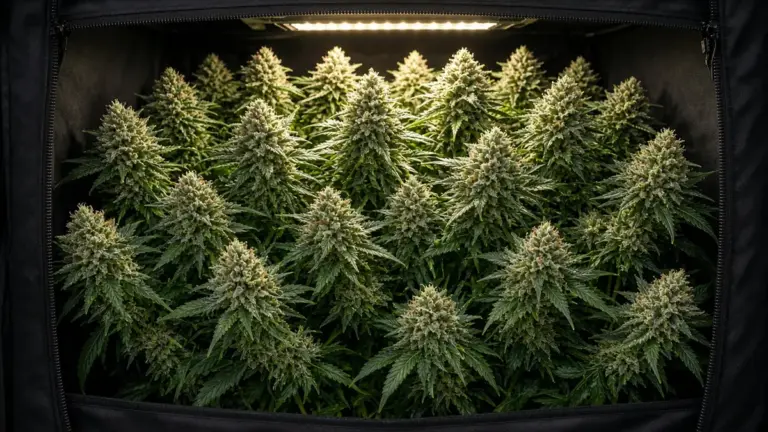
In the jar it shows large, colorful buds with purple undertones and neon green highlights — striking flower that looks as tropical as it smells. The smoke stays smooth in the Strawberry Cough tradition, expansive without harshness, which makes the flavor easy to actually enjoy rather than endure.

How Strong Is Strawberry Mango Haze?
Strawberry Mango Haze is a sativa-dominant haze.
Strawberry Mango Haze is commonly reported around 20% THC (per Leafly). Newer smokers should start low.
Strawberry Mango Haze Stats at a Glance
| Stat | Detail |
|---|---|
| Type | Sativa-dominant (reported 70/30) |
| Lineage | Strawberry Cough x Mango Haze |
| THC range | Commonly reported around 20% (per Leafly) |
| Flowering time | ~8 weeks — fast for a haze |
| Yield | Good with stretch management; long colas that reward support and training |
| Grow difficulty | Moderate |
Growing Strawberry Mango Haze: What You Need To Know
This haze finishes in about 8 weeks. Most haze hybrids make you wait 10 to 12, so a true haze profile on an 8-week clock is a gift to anyone running a tight rotation — it is the difference between five harvests a year and four in a perpetual room.
Expect sativa structure: an open frame, longer internodes, and long colas that appreciate support. The plant runs well indoors under a net and thrives outdoors in longer seasons, where its haze genetics get the light hours they were built for.
The defining management challenge is stretch. A haze cross can double or more in height during weeks 1 through 3 of flower, and growers who flip at their usual veg size end up with colas against the glass. Flip earlier than you think you should — at half your usual veg height is a good starting rule — and let the stretch fill the space for you. Timing that transition well is a skill of its own; our guide on transitioning cannabis clones from veg to flower walks through the decision points.
Training for Maximum Yield
Work with the stretch instead of fighting it. A SCROG net is the natural fit for this cut: flip early, weave the stretching mains through the net during weeks 1 to 3 of flower, and convert all that vertical ambition into an even horizontal canopy of budsites.
If you are not running a net, top once or twice in veg and low-stress train the mains outward, then stake generously — the long colas this plant builds will need the help by week 6. Either way, the principle is the same: haze structure wants to be tall and thin, and every training move you make is about redistributing that energy sideways.
Defoliate with a lighter hand than you would on a bushy indica. The open sativa structure already lets light penetrate, so aggressive stripping costs photosynthesis without buying much exposure. Clean the interior lightly at flip and again around day 21, and leave the rest.
Feeding and Nutrition
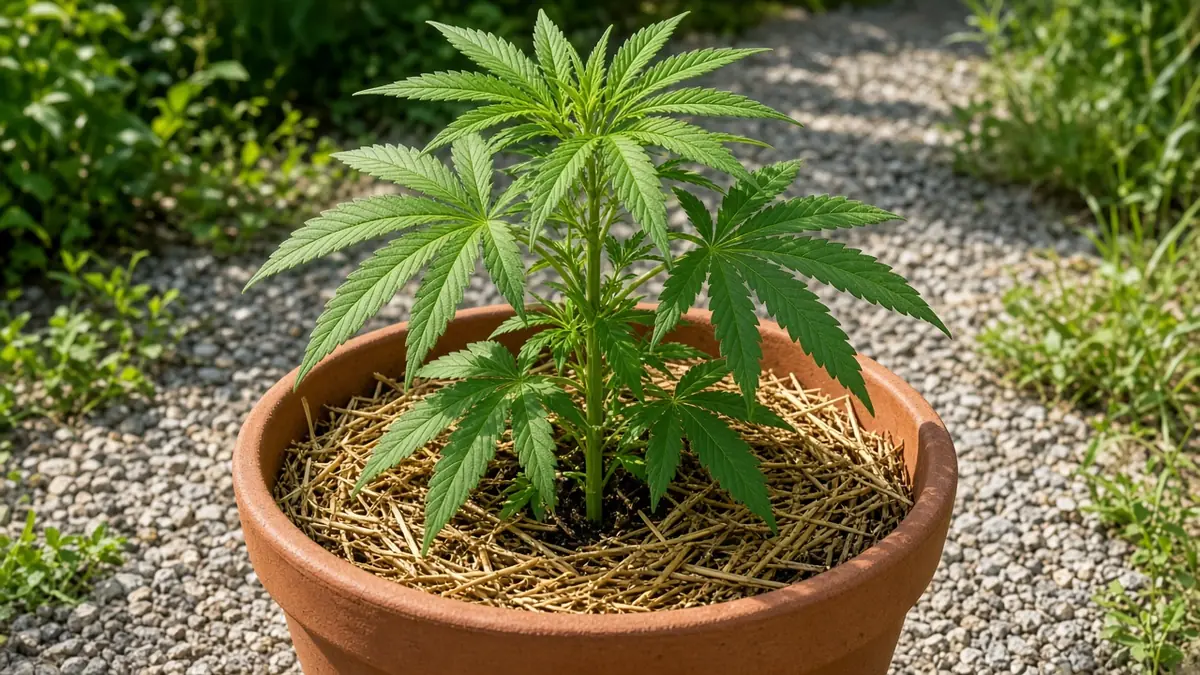
Feed lighter than you would a heavy indica. Haze-leaning plants are sensitive to overfeeding, and this one follows the family pattern: push a heavy hand and you get burnt tips and muddied flavor for your trouble.
Moderate nitrogen in veg supports the vigorous frame-building, but back off nitrogen after the flip — late nitrogen on a haze protects neither yield nor quality, and easing it down protects both the fade and the fruit terps. Run bloom nutrients at a conservative strength through the stretch, hold steady through the mid-flower stack, and taper cleanly at the end.
Watch the plant, not the bottle chart. Long-established growers of haze lines feed reactively — a notch up only when the plant shows genuine hunger — and this cut rewards exactly that approach. Under LED, keep cal-mag adequate but do not compensate for light feed by doubling supplements.
Common Problems
Runaway stretch is the classic one: flip too late and you run out of ceiling. The fix is prevention — flip early, net early. If you are already in trouble, supercropping the tallest mains in week 2 of flower buys you back some headroom without a yield penalty.
Overfeeding is second, and it is a common way growers ruin haze flavor. Tip burn is the visible symptom; the invisible one is a harsh finish that wastes the profile you grew it for. Lean feed, clean taper.
Third, impatience at harvest. Fast for a haze is still a haze — the last week is when the tropical layer deepens and the spice arrives. Chopping at day 49 because the calendar says eight weeks costs you the top end of the profile. Check trichomes from day 50 and let them make the call.
Why Buy Strawberry Mango Haze as a Clone Instead of Seeds
Because the reputation belongs to a specific plant. Strawberry Mango Haze earned its reputation as a clone-only cut, which means every jar that built the name came from the same genetics. Seed reproductions chasing that name are rolling new dice — different phenos, different terps, and often a longer flowering window.
With a legacy haze, the clone-only cut is the way to grow the plant the reputation describes. You also keep the 8-week finish, which is very much a property of this cut, not of the name.
To look for Strawberry Mango Haze clones, visit the I Want Clones shop. It is a Cut-to-Order clone: the vendor has up to three weeks to cut, root, and ship. See Shipping & Policies for shipping windows. Claims: if a clone arrives damaged, dead, or clearly unhealthy, contact IWC within 3 days of delivery and include clear photos of the plants and the packaging (claims policy). For other sativas, see the sativa strain clone category.
Who Is Strawberry Mango Haze For?
Growers who love sativa flavor but hate 12-week flowering times get the best of both worlds here.
Beginners can handle her with some homework on stretch control — she is forgiving in every other department. Commercial growers get a rare cut plus a haze that fits a normal flip schedule. The only grower she frustrates is the one who ignores the stretch and the light-feed rule; respect those two things and she is a pleasure.
Harvesting, Drying, and Curing
Start checking trichomes at day 50 and expect to chop between days 55 and 60. For an earlier finish, harvest at cloudy with minimal amber; more amber gives a later finish.
Dry slow and cool — 60°F, 60 percent humidity, 10 to 14 days. The open bud structure dries a touch faster than dense indica flower, so start checking stems at day 8. The tropical top notes are volatile: a hot dry turns strawberry-mango into generic sweet, and no cure rescues it. Done properly, the cure is where this flower becomes special — burp daily for two weeks and the mango deepens while the haze spice sharpens underneath. Our full walkthrough on drying and curing cannabis applies here start to finish.
FAQ
What is Strawberry Mango Haze?
Strawberry Mango Haze is a sativa-dominant strain crossing Strawberry Cough with Mango Haze, known as a clone-only cut on the west coast. It is commonly reported around 20% THC (per Leafly).
How long does Strawberry Mango Haze take to flower?
About 8 weeks, which is fast for a haze — most haze hybrids need 10 weeks or more. Check trichomes from day 50 and expect to harvest between days 55 and 60.
Is this a real clone-only cut or a seed version?
This is the clone-only Clone Cartel cut. Seed versions of famous cuts are different genetics wearing the same name.