
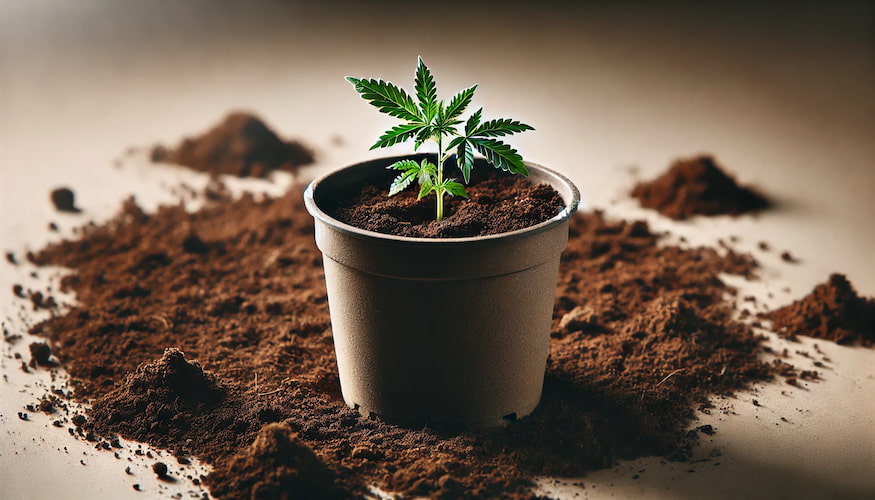
Knowing how to water cannabis clones correctly is the single most important skill for new growers — and the most common source of early plant loss. Rootless clones need only light misting and high humidity; freshly rooted clones need small, targeted water amounts with plenty of dry time between sessions. The wet-dry cycle — watering fully, then letting the medium dry 60-70% before watering again — prevents root rot and encourages deep, aggressive root growth.
At IWantClones.com, we field more questions about watering than any other topic. This guide covers exactly how much to water, how often, what the signs of overwatering look like versus underwatering, and how to dial in your approach across different growing media. Get this right and every other part of the grow gets easier.
Key Takeaways
- Rootless clones (freshly cut, unrooted) need only misting and dome humidity — do not water the medium directly until roots are established.
- Newly rooted clones should receive small, gentle waterings around the perimeter of the root zone — never saturate the full container.
- The wet-dry cycle means watering thoroughly, then waiting until the medium has dried 60-70% before watering again — this typically takes 2-4 days in soil depending on container size, temperature, and plant size.
- Overwatering is more common and more dangerous than underwatering — cannabis roots need oxygen, and waterlogged media suffocates them within 24-48 hours.
- Water pH for clones should be 6.0-6.8 for soil, 5.8-6.2 for coco coir or hydroponic media. Incorrect pH locks out nutrients even when they’re present in the water.
- Water temperature should be 65-75°F (room temperature) — cold water shocks clones and slows root development significantly.
Watering Rootless Clones: Misting Only
A freshly cut clone has no roots yet. It cannot uptake water through its base — it’s a severed branch keeping itself alive through its leaves. This is a critical distinction that new growers often miss: you do not water the medium of an unrooted clone. You maintain humidity.
Rootless clones stay alive through foliar absorption — taking in moisture through their stomata (the small pores on leaf surfaces). This is why humidity domes exist. A dome keeps relative humidity at 80-95% around the clone, allowing the leaves to absorb enough moisture to survive while the cutting develops roots. Your job is to:
- Mist the inside of the dome (not the clone directly) once or twice per day with plain, pH-corrected water at 68-72°F
- Keep the propagation medium (rockwool cube, peat pellet, or rooting plug) lightly moist — not wet, not dry. Squeeze it: it should feel like a wrung-out sponge
- Vent the dome for 10-15 minutes, once or twice per day, to prevent mold buildup
- Do not flood the propagation tray — standing water under the plugs drowns the developing root tips before they can establish
When roots appear at the outside of the plug or cube (typically 7-14 days depending on the strain, rooting hormone used, and temperature), the clone is ready for its first proper watering in a container. Check out our guide on what to do when your clones arrive for the complete first-48-hours protocol, including how we ship clones pre-rooted so you skip this stage entirely.
Watering Freshly Rooted Clones: Small and Targeted
A clone that has just been transplanted into its first container — whether a 4-inch pot, a solo cup, or a 1-gallon starter — has a small, fragile root system. The roots occupy only a fraction of the container’s volume at this point. This matters because the roots need to find water by growing toward it. That’s the entire logic behind careful, measured watering in early growth.
The Perimeter Watering Technique
In early growth (the first 1-2 weeks after transplant), water in a ring around the perimeter of the container rather than in the center over the stem. This encourages roots to grow outward toward the water source, spreading through the medium and building a wider, stronger root structure. If you always pour water at the base of the stem, roots concentrate there and the outer medium stays dry — limiting total root volume.
Start with small volumes: 1-4 oz of water per watering for a clone in a 4-inch pot, 4-8 oz for a 1-gallon container. You’re not trying to saturate the medium — you’re creating moist zones that roots will grow toward.
When to Water: The Lift Test
The most reliable way to know when to water a potted clone is to lift the container. A fully watered pot feels heavy; a dry pot feels significantly lighter. Pick up your pots before and after watering a few times to calibrate the feeling. Once you know what “light” feels like for your specific pot size and medium, the lift test is faster and more accurate than any scheduled watering interval.
The stick-your-finger-in-the-soil test also works: push your finger 2 inches into the medium. If it’s still moist at 2 inches, wait. If it’s dry at that depth, it’s time to water. In a small container with a small clone, this may mean watering every 1-2 days. In a 5-gallon pot with a large plant, it may be every 3-5 days.
The Wet-Dry Cycle: The Foundation of Healthy Roots
The wet-dry cycle is the deliberate practice of watering a cannabis plant thoroughly, then allowing the medium to dry significantly (60-70%) before watering again. This is the most important concept in cannabis watering and the one most beginners skip — to their plants’ detriment.
Here’s why it matters: cannabis roots need two things simultaneously — water and oxygen. In a fully saturated medium, water fills every pore in the growing medium, displacing all air. With no oxygen at the roots, aerobic bacteria — the beneficial kind — die, anaerobic bacteria proliferate, and root rot (Pythium) takes hold within 24-48 hours. Wet-dry cycling creates alternating periods of moisture (for water uptake and nutrient absorption) and air (for oxygen at the root zone and beneficial microbial activity).
The secondary benefit is root growth: roots actively search for water. In a partially dry medium, the roots grow aggressively toward the moisture-rich zones at the base of the container. This creates a much larger, more extensive root system than a clone sitting in constantly moist media — and a larger root system means faster growth, better nutrient uptake, and a more resilient plant overall.
How Long Does a Wet-Dry Cycle Take?
Cycle length depends on several variables:
- Container size: A 1-gallon pot may cycle in 1-2 days; a 5-gallon pot takes 3-5 days
- Plant size: A large plant in veg or flower transpires much more water than a small clone, shortening the cycle
- Medium: Coco coir retains less water than soil and may need daily watering; soil holds water longer
- Temperature and VPD: Higher temperatures and lower humidity increase transpiration and shorten cycles
- Root health: A healthy, root-bound plant drains its container fast; a newly transplanted clone with sparse roots will take longer
A general benchmark for freshly transplanted clones in 1-gallon soil containers: water every 2-3 days. As the plant grows and fills the container with roots, that interval will shorten. When you’re watering daily in a 1-gallon pot, it’s time to up-pot.
Signs of Overwatering Cannabis Clones
Overwatering is the number one clone killer for new growers. The symptoms can look surprisingly similar to underwatering — drooping leaves in both cases — which creates a dangerous feedback loop where the grower waters a drowning plant to try to fix what they assume is drought.
Key overwatering signs:
- Leaves droop but feel firm or fat — the cells are turgid (full of water) but the plant is still drooping due to root oxygen deprivation
- Leaves are uniformly yellow from the bottom up — not just the oldest leaves, but a general paleness progressing upward
- Medium feels wet or heavy days after watering
- Slow or stopped growth — the plant looks stalled even under good light
- Soil surface has a musty smell — anaerobic bacteria and mold are active
- Stem base is dark, soft, or slimy — this is damping off or early root rot, a serious emergency
Signs of Underwatering Cannabis Clones
Underwatering is less common but still a real issue, especially for growers who are afraid of overwatering and overcorrect. Clones are small and heat stress can drain a small container fast in a warm grow space.
Key underwatering signs:
- Leaves droop and feel thin or papery — the cells are deflated (unlike overwatering where they’re firm)
- Leaf edges are crispy or brown
- Medium is bone dry more than 2 inches deep
- Plant perks up quickly after watering — within 1-4 hours of a good drink, the leaves firm up and lift
- Lower leaves yellow and fall off in dry conditions (the plant sheds older leaves to reduce water demand)
Diagnostic Table: Symptoms, Causes, and Fixes
| Symptom | Likely Cause | Fix |
|---|---|---|
| Leaves drooping, feel firm/fat, medium is wet | Overwatering — root oxygen deprivation | Stop watering. Allow medium to dry 70-80%. Add air circulation at the base of the plant. Avoid watering again until the lift test shows the pot is light. |
| Leaves drooping, feel thin/papery, medium is dry | Underwatering — drought stress | Water thoroughly until 10-20% runoff. Plant should recover visibly within 1-4 hours. Check more frequently going forward — your cycle is too long. |
| Leaves yellowing from bottom up, growth stalled | Overwatering or root rot — roots can’t uptake nutrients | Dry out the medium aggressively. Check roots (lift out of pot if possible) — healthy roots are white; brown, slimy roots indicate Pythium. Treat with hydrogen peroxide drench (3% solution, 1 part to 35 parts water) if root rot is present. |
| Crispy brown leaf tips and edges | Underwatering or low humidity (especially in early clones) | Water more frequently. For fresh clones in a dome, increase misting frequency or check the dome seal. Also check if the issue is nutrient burn (look for tip burn on multiple leaves simultaneously). |
| Stem is soft, dark, or collapsing at the base | Damping off — fungal pathogen (Pythium, Fusarium) triggered by overwatering and poor airflow | Emergency: remove the affected plant immediately to prevent spread. The plant usually cannot be saved once stem rot reaches the main stem. Discard, disinfect the area, review your humidity and watering practices before starting the next clone. |
| Leaves pale green or light yellow overall, no drooping | Overwatering-induced nutrient lockout (pH issues secondary) OR true nitrogen deficiency | Check the last watering — was it recent? If the medium is still moist, wait and allow it to cycle dry. If the medium is dry and the plant has been underwatered, consider a light feed. Check runoff pH to rule out lockout. |
| Slow growth after transplant (3+ weeks with minimal new growth) | Overwatering preventing root development OR transplant shock | Back off watering significantly. Roots in a waterlogged medium cannot grow. Allow the medium to dry to 70% and see if growth resumes within a week. Also ensure the plant isn’t too cold — root zone below 65°F dramatically slows development. |
| Plant wilts in the afternoon even with moist soil | Heat stress combined with overwatering OR root issues limiting water uptake | Check grow space temperature (should be 70-85°F during lights-on). If temps are acceptable, suspect root health issues — check for root rot. Increase airflow and reduce watering frequency to help roots recover. |
| Medium surface covered in white mold or fungus gnats present | Medium staying too wet too long — overwatering or excessive surface moisture | Allow the top 1-2 inches of medium to dry completely between waterings. For fungus gnats, use yellow sticky traps and a top-dressing of diatomaceous earth. Bottom watering (see below) eliminates surface moisture and reduces gnat pressure significantly. |
Water Quality: pH, PPM, and Temperature
Water quality is as important as quantity and frequency. Giving your clones perfect amounts of water at the wrong pH still locks out nutrients. Here’s what to dial in:
pH
Cannabis roots can only uptake specific nutrients within specific pH ranges. Outside those ranges, nutrients are chemically unavailable — they’re present in the water or medium but the plant can’t absorb them. This is called nutrient lockout.
- Soil: target pH 6.0-6.8, optimal around 6.3-6.5
- Coco coir: target pH 5.8-6.2, optimal around 5.9-6.1
- Hydroponic / rockwool: target pH 5.5-6.2, optimal around 5.8-6.0
Get a digital pH meter and calibrate it monthly. Cheap pH meters drift and give false readings — one bad reading can send you chasing ghost deficiencies for weeks. pH meters worth using: Apera PH20, Bluelab pH Pen, or any meter with an electrode you can replace. Always pH your water after adding any nutrients or amendments.
EC/PPM for Clones
EC (electrical conductivity) and PPM (parts per million) measure dissolved solids in your water — essentially how nutrient-dense the solution is. Clones and recently rooted plants are sensitive to high EC. Recommended starting points:
- Rootless clones in dome: plain water only, pH-adjusted — no nutrients. Target EC: 0.0-0.4 (under 200 PPM on the 500 scale)
- Freshly rooted clones (first 1-2 weeks post-transplant): plain pH water or very light feed. Target EC: 0.4-0.8 (200-400 PPM)
- Established clones in early veg: begin introducing nutrients gradually. Target EC: 0.8-1.4 (400-700 PPM)
High-EC water burns delicate clone roots. When clones arrive stressed from shipping, start with plain water for the first 3-5 days before introducing any nutrients at all. See our comprehensive feeding guide for cannabis clones for the full nutrient ramp-up schedule.
Water Temperature
Water temperature matters more than most growers realize. Cold water — below 60°F — shocks root cells and dramatically slows uptake. It can also trigger temperature stress in the root zone that stunts development for days. Warm water — above 75°F — reduces dissolved oxygen and can encourage Pythium growth at the roots.
The target: 65-72°F. In practice, letting tap water sit out overnight usually brings it to room temperature, which is typically in the right range. If you’re in a cold basement grow space, briefly warming your water before use makes a real difference in clone recovery speed.
Watering by Medium
Soil
Soil is the most forgiving medium for beginners. It holds water longer and has more buffer than coco or hydro, giving you more time to correct mistakes. A high-quality, well-aerated soil mix — perlite at 20-30% by volume — drains well and supports the wet-dry cycle effectively. See our guide on best soil types for cannabis clones for specific mix recommendations.
In soil, clones typically need watering every 2-4 days in a 1-gallon container, every 3-5 days in a 3-gallon, and every 4-7 days in a 5-gallon during early growth. These intervals shorten as the plant grows and its roots fill the container.
Coco Coir
Coco coir (coconut husk fiber) behaves very differently from soil. It has almost no nutrient holding capacity of its own and drains fast — which is why it’s popular in high-yield, high-feed cultivation. In coco, you need to water more frequently — often daily or every other day — and always with a nutrient solution rather than plain water (plain water flushes buffered calcium and magnesium out of coco quickly, causing deficiencies).
For clones in coco, pre-buffer your coco with a calcium-magnesium solution before use. Water to 10-20% runoff with every watering to prevent salt buildup. Target pH: 5.8-6.1. Coco’s fast-drain nature makes overwatering less of a risk than in soil, but you can still drown roots in coco if you water too frequently in a small container.
Rockwool and Hydroponic Media
Rockwool cubes — the most common propagation medium for professional clone operations — need to be pre-soaked to pH 5.5-6.0 before use to neutralize their naturally alkaline pH. In a hydroponic system, the frequency of water/solution delivery depends entirely on the system type. In a deep water culture (DWC) setup, roots are in solution continuously; in a drain-to-waste or run-to-waste system, you’re irrigating several times per day in established growth.
For clones specifically in rockwool, the key is keeping the cube consistently moist — not wet — during rooting. Once transferred to a hydroponic system, follow your system’s specific watering protocol.
Bottom Watering: The Better Way to Build Roots
Bottom watering means placing your container in a shallow tray of water and allowing the medium to absorb moisture from the bottom up through capillary action, rather than pouring water in from the top. It’s one of the best techniques for clone care that most beginner guides skip entirely.
The benefits are significant:
- Encourages deep root growth: Roots grow downward toward the water source, building a deeper, more extensive root system than top-watered plants
- Eliminates surface moisture: The top inch or two of medium stays dry, which prevents fungus gnats, surface mold, and damping off
- Consistent absorption: The medium absorbs exactly as much water as it needs via capillary action — no guessing how much to pour
- Less disturbance to delicate clones: No pouring near fragile stems; no risk of waterlogging the stem base
How to bottom water: fill a shallow tray (1-2 inches deep) with pH-adjusted water at 68-72°F. Set your containers in the tray. Leave them for 20-30 minutes, then remove. Check the top of the medium — it should be slightly moist. If it’s still dry, give them another 15-20 minutes. Once absorbed, empty the tray to prevent standing water.
Bottom watering works best for small containers (1-gallon and under). For larger containers in full veg or flower, top watering with thorough run-off is more practical and ensures even saturation throughout the medium depth.
Avoiding Damping Off
Damping off is a catch-all term for a group of soil-borne fungal diseases — primarily Pythium and Fusarium — that attack cannabis seedlings and clones at the soil line. The stem turns brown or black, softens, and collapses. By the time you see the collapse, the plant is usually too far gone to save.
Damping off is almost always caused by a combination of overwatering, poor airflow, and high humidity at the soil surface. Prevention is the only real treatment:
- Never let the medium stay saturated — follow the wet-dry cycle strictly
- Maintain airflow at the base of the plant with a small oscillating fan — even gentle air movement dramatically reduces damping off risk
- Keep grow space humidity at 65-75% for rooted clones (higher for unrooted, but always with dome ventilation)
- Use bottom watering to keep the surface of the medium dry
- Add 20-30% perlite to any soil mix to improve drainage
- Disinfect all tools, trays, and containers with a bleach solution (1 tablespoon per gallon) between grows
For a full list of early clone problems and how to diagnose them, see our cannabis clone troubleshooting guide.
Building a Watering Schedule
There’s no universal watering schedule that works across all setups — medium, container size, plant size, temperature, and humidity all affect how fast a container dries out. But here’s a practical starting framework for clones in soil:
- Week 1 post-transplant (newly rooted clone in 1-gallon): Water 4-8 oz around the perimeter every 2-3 days. Use the lift test to confirm.
- Week 2-3 (clone establishing, visible new growth): Water 8-16 oz every 2-3 days. Roots are filling the container.
- Week 4+ (established veg, up-potted to 3-gallon): Water 16-32 oz (to 10-20% runoff) every 3-5 days depending on plant size.
- Full veg / flower in 5-gallon: Water 0.5-1.5 gallons to runoff every 3-5 days, increasing frequency as canopy expands and transpiration increases.
These are starting points — adjust based on what your specific medium, plant, and environment tells you. Trust the lift test and the finger test over any fixed schedule. Transplanting and up-potting at the right time also resets your watering needs — a clone moving into a significantly larger pot will cycle much more slowly until its roots fill the new container. Our guide on transplanting cannabis clones covers the timing and technique for moving up container sizes without stressing your plants.
A Note on Tap Water vs. Filtered Water
Municipal tap water varies widely across the US. Some city water has EC levels of 0.3-0.5 right out of the tap from dissolved minerals — that’s acceptable for mature plants but already a significant portion of the 0.4-0.8 target EC range for young clones. It also often contains chlorine or chloramine, which can inhibit beneficial soil microbes.
Options for improving your source water:
- Let tap water sit 24 hours uncovered — chlorine off-gases naturally. Chloramine (increasingly common) does not off-gas; for chloramine, use a campden tablet (potassium metabisulfite) or a carbon filter.
- Reverse osmosis (RO) water — removes virtually all dissolved solids, giving you a clean starting point. You add back exactly what you want. EC starts at 0.0, so you have full control. RO filters cost $50-200 for home units.
- Pre-filtered water — carbon-block filters reduce chlorine, sediment, and some dissolved minerals. Less thorough than RO but a significant improvement over straight tap.
For clones specifically, we recommend RO water or at minimum letting tap water sit overnight. The investment in a pH meter and a basic RO filter pays for itself in reduced plant loss and better growth rates within the first few grows.
Get Your Clones From a Reliable Source
Even perfect watering technique can’t compensate for starting with a stressed, poorly-handled clone. At IWantClones.com, our clones are rooted, hardened off, and packaged for overnight shipping — they arrive ready for their first proper watering in your setup, not fighting to survive transit damage. Every order comes with our 3-day no-bullshit guarantee.
Browse our current selection of premium cannabis clones — 70+ breeders, verified genetics, $98.88 per clone with overnight delivery to legal US states.
Frequently Asked Questions
How often should I water freshly rooted cannabis clones?
Freshly rooted clones in a 1-gallon container of soil typically need water every 2-3 days. Use the lift test — when the pot feels noticeably lighter than right after watering, it’s time. In coco coir, you may need to water every 1-2 days. Always let the medium dry 60-70% before the next watering to support the wet-dry cycle.
What does an overwatered cannabis clone look like?
An overwatered clone droops with leaves that feel firm or plump rather than papery. The medium is wet or heavy days after watering. Leaves may yellow from the bottom up, and growth stalls. Unlike underwatering, the plant doesn’t perk back up after a good watering — because the problem is too much water, not too little. The fix is stopping water and allowing the medium to dry.
What pH should water be for cannabis clones?
For clones in soil, target a water pH of 6.0-6.8, ideally around 6.3-6.5. For coco coir or hydroponic media, target 5.8-6.2, ideally around 5.9-6.1. Always pH your water after adding any nutrients or supplements. Incorrect pH causes nutrient lockout — nutrients are present but the plant cannot absorb them.
What is the wet-dry cycle and why does it matter for cannabis?
The wet-dry cycle means watering thoroughly, then waiting until the growing medium has dried approximately 60-70% before watering again. It matters because cannabis roots need both water and oxygen. A constantly wet medium has no air pockets, suffocates roots, and causes root rot (Pythium). The dry phase restores oxygen to the root zone and drives roots to grow deeper searching for moisture.
Can I use tap water to water cannabis clones?
Yes, but with preparation. Let tap water sit uncovered for 24 hours to off-gas chlorine. Then test and adjust pH to 6.0-6.8 for soil. If your tap water has high EC (over 0.4-0.5), consider using reverse osmosis water for young clones, which are sensitive to dissolved mineral buildup. Tap water EC and mineral content varies significantly by city and region.
What causes damping off in cannabis clones and how do I prevent it?
Damping off is a fungal disease (primarily Pythium or Fusarium) that attacks clones at the soil line, causing stem collapse. It’s almost always triggered by overwatering combined with poor airflow and high surface humidity. Prevent it by following the wet-dry cycle strictly, using well-draining medium with 20-30% perlite, maintaining constant airflow near the plant base, and using bottom watering to keep the soil surface dry.