


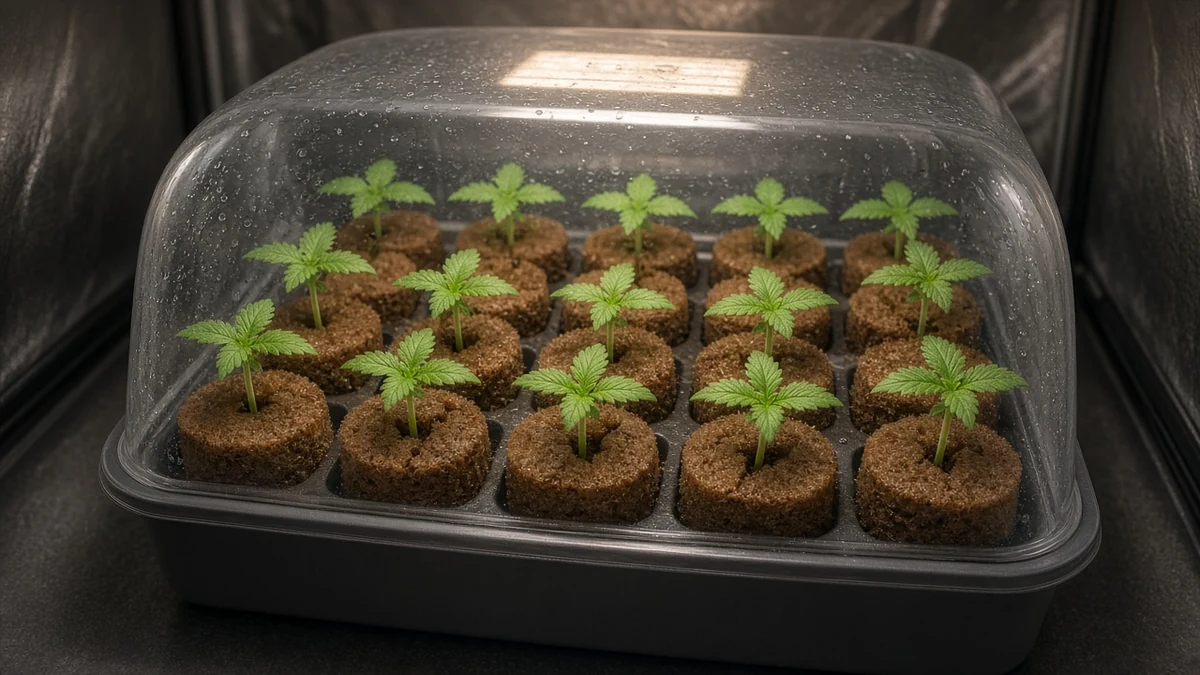
The medium a cannabis cutting roots in matters. Too wet and the stem suffocates; too dry and the cut end never makes the contact it needs. The Rapid Rooter® plug from General Hydroponics is a pre-formed starter cube that holds a cutting upright, keeps moisture against the stem, and goes straight into the next container once roots arrive. Here is how the plugs work, how to set them up for cuttings, and when they are the right tool for your garden.
What a Rapid Rooter Plug Is
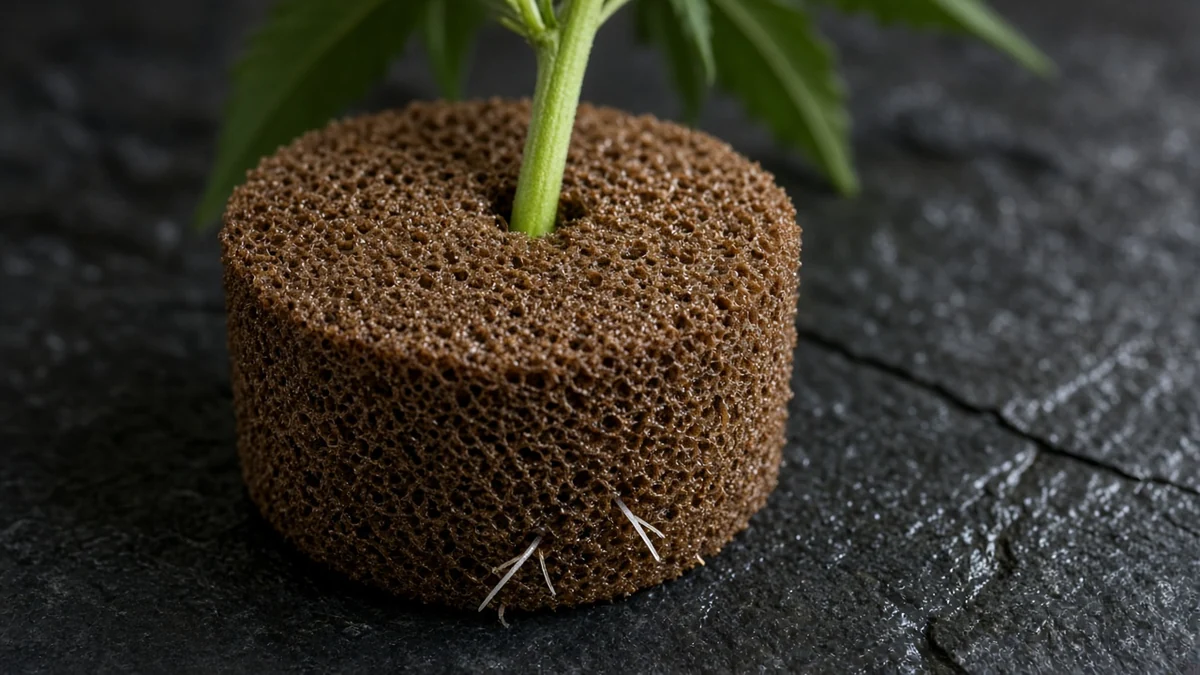
Rapid Rooter is a General Hydroponics brand name, so strictly speaking it refers to that company’s plug rather than to every peat or foam starter cube on the market. The plugs are made of sphagnum peat moss and composted tree bark, bound together with a plant-based foam polymer into a firm, soilless cube with a hole already formed in the top. The peat and bark give the cube its moisture-holding body, while the polymer keeps that mix in a shape you can set in a tray, pick up, and later plant without it crumbling in your hands. The result is a medium designed to hold a balance of air and water around a fresh stem.
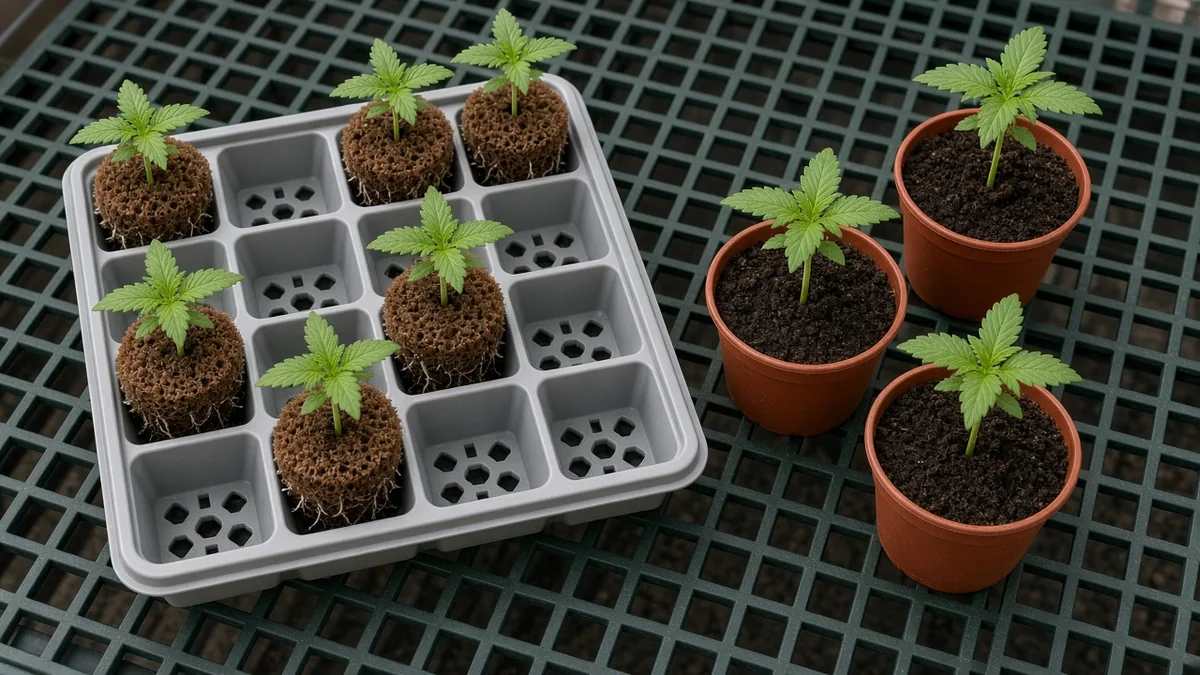
That construction also explains the plug’s biggest practical advantage. Because the cube stays with the plant, nothing has to be teased away from a fragile new root mass at transplant time. The cutting and its plug move together into soil, coco, or a hydroponic system as a single unit.
When Rapid Rooter Plugs Help (and When They Do Not)
The plugs are most useful when you have unrooted cuttings to stick and want every one of them to start under the same conditions. A uniform cube with a pre-formed hole makes it easy to fill a standard tray quickly, and that consistency helps when you are rooting several stems from the same mother and want to see how each one responds.
What a plug will not do is rescue a cutting that is struggling for other reasons. A weak or woody stem, a dome that is running too dry or too wet, or a room that is too cold can stall a cut in any medium, and swapping cubes rarely fixes those problems. If your cuttings are wilting or sitting still, our guide to why clones fail to root walks through the usual causes.
How To Prepare and Use Rapid Rooter Plugs for Cuttings
Preparation starts with a soak. General Hydroponics’ directions call for about two hours fully submerged in water adjusted to around pH 6.0, or in a very mild nutrient solution. During the soak, press each plug under and squeeze it four or five times so water reaches the center, then wring out the excess until the cubes are damp all the way through but not dripping. A cube that still sheds water leaves too little air around the stem, while one that is dry at the center will not hold steady contact with the cut end, so it is worth getting that balance right before the first cutting goes in.
General Hydroponics recommends a standard 10-by-20 tray with a humidity dome until roots appear. The cubes should stay moist without sitting submerged, and the company sets the limit at no more than 1/4 inch of standing water. That shallow reserve lets the plugs wick up moisture as they dry. Deeper water, the manufacturer warns, deprives young roots of oxygen and can lead to stunted growth, algae, or fatal root rot. Draining excess water is a better habit than topping the tray up by default.
For the cuttings themselves, the manufacturer recommends a 2- to 4-inch section cut at a 45-degree angle, with the leaves stripped from the bottom inch. Seat the stem in the pre-formed hole so the cut end sits firmly against the plug with no air pocket underneath, since the stem draws its water from the cube until roots take over. Which shoots to take is its own decision, and our cutting-selection guide covers it in detail. If you use a rooting gel, dip the cut end before it goes into the plug; our guide to rooting hormones for cannabis clones compares the options.
Under the dome, General Hydroponics calls for a stable 75 to 80 degrees and 16 to 18 hours of light a day. Keep the dome in place until roots begin to show so the leaves do not dry out before the stem can take up water on its own. Unused plugs keep best sealed in an airtight bag or container in a cool, dark spot, and any that develop white mildew should be thrown out rather than used.
Rapid Rooter Plugs and Rockwool
Rockwool is the medium most often weighed against these plugs, and the two are built from very different materials. A Rapid Rooter is an organic cube of peat and bark, while rockwool is an inorganic mineral wool, and oasis cubes are an inert foam used for the same job. General Hydroponics describes its plugs as chemically neutral and notes that rockwool and oasis often need a different kind of pre-soak before a cutting goes in.
In practice, either type of cube can carry a cutting through rooting, so the better choice usually comes down to the system you already run, how you like to water a tray, and how much prep you want to do before sticking cuts.
When the Plug Is Ready To Transplant
The signal to move a cutting is visible roots, not a date on the calendar. General Hydroponics advises waiting until roots show through the sides or bottom of the plug, which typically takes one to three weeks. If a cutting has not reached that point, leave it under the dome and check again in a few days. Pulling it out to look inside the cube can tear the first fragile roots and set the plant back.
Once roots are visible, set the plug, cube and all, into its new container. Pot size and the first watering after the move are covered in our guide to when to transplant clones.
Or Skip Rooting and Start From a Rooted Clone
Rooting your own cuttings is not the only way to start a garden. If you would rather skip the trays, the domes, and the wait for first roots, rooted clones from trusted vendors are listed on I Want Clones. To look for clones, visit the I Want Clones shop. Our rooted clones guide explains what arrives in that format and how to check the root mass once the plant is in your room.
Frequently Asked Questions
What is a Rapid Rooter plug made of?
A Rapid Rooter plug is made of sphagnum peat moss and composted tree bark, bound with a plant-based foam polymer into a soilless cube. The whole plug is transplanted with the plant once roots appear.
How do you use Rapid Rooter plugs for cannabis clones?
Soak the plugs first, then seat each cutting in the pre-formed hole so the cut end touches the plug. Keep the tray under a humidity dome at 75 to 80 degrees, and transplant the whole plug once roots show at the sides or bottom. Our cutting-selection guide and our guide to rooting hormones for cannabis clones cover those steps in more detail.
Do you need to soak Rapid Rooter plugs first?
Yes. Soak them for about two hours so the cube is wet through, then press out the leftover water before the cutting goes in.
How do Rapid Rooter plugs compare with rockwool?
Rapid Rooter plugs are organic peat-and-bark cubes, while rockwool is an inorganic mineral wool that often needs a different kind of pre-soak. Both can root cuttings, and the better fit depends on the system you already use.
When do roots typically appear in a Rapid Rooter plug?
Roots typically show through the sides or bottom of the plug within one to three weeks. A cutting that is well past that window or wilting under the dome may be stalling for reasons other than the plug.
Does I Want Clones sell Rapid Rooter plugs?
No, I Want Clones does not sell the plugs. If you would rather start with a plant that already has roots, browse the I Want Clones shop or see our guide to rooted clones.