
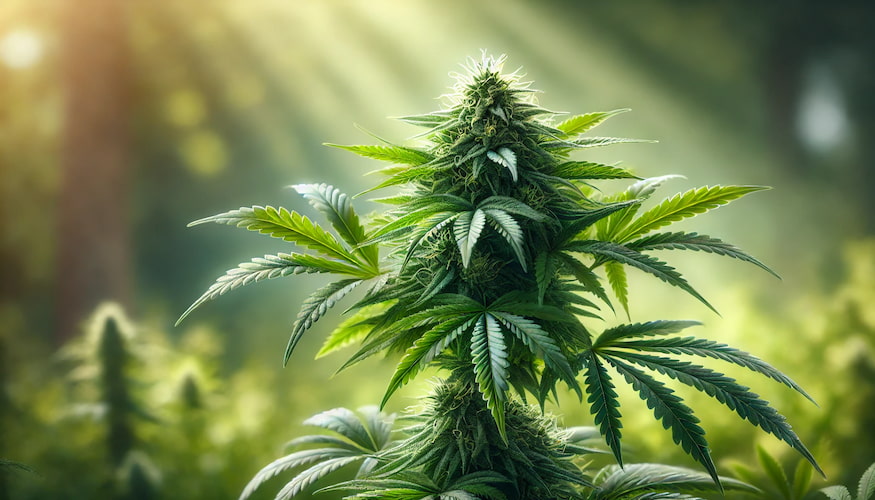
Cannabis clones typically cost between $15 and $50 at a local dispensary, while premium, tested, verified clones from a specialist vendor run higher—at IWantClones.com, that price is $98.88 per clone, which includes pathogen testing, documented genetics, overnight U.S. shipping, and a 3-day guarantee. Understanding what you are actually paying for at each price point is the difference between a bargain and an expensive mistake.
Key Takeaways
- Dispensary cannabis clone prices typically range from $15 to $50, but testing, genetic documentation, and guarantees are often absent at that price point.
- Premium, verified clones from a specialist vendor like IWantClones.com cost $98.88, which bundles testing, overnight shipping, verified breeder genetics, and a 3-day guarantee.
- The cost-per-harvest math nearly always favors clones over seeds when you factor in time saved, guaranteed female plants, and predictable yield from a known genetic.
- Genetics rarity, pathogen testing, chain-of-custody documentation, and overnight shipping infrastructure are the four main cost drivers for premium clones.
- The cheapest clone is not always the cheapest grow—a single untested clone carrying hop latent viroid (HLVd) can destroy an entire room and cost far more than the price difference.
- IWantClones.com sources from more than 70 elite breeders through SeedsHereNow’s 15-year genetics network, offering access to cuts unavailable at most dispensaries.
What Are Cannabis Clones and Why Does Price Vary So Much?
A cannabis clone is a rooted cutting (a stem taken from a living female mother plant) that carries the exact genetic profile of that mother. Unlike seeds, which have genetic variation even within the same strain, a clone is a perfect copy. You know exactly what you are growing before you plant it.
Clone prices vary this much because the word “clone” describes a spectrum of products, not a single standard. At one end is a cutting stuck in a rockwool cube at a dispensary, with no testing, no documented lineage, and no guarantee. At the other end is a fully rooted, pathogen-tested, genetically verified cutting from a tracked mother plant, packaged for overnight survival and backed by a vendor who will make it right if something goes wrong. Both are “clones.” Only one gives you reliable results.
To understand whether clones are worth it in the first place, see our in-depth answer at are cannabis clones worth it? This guide focuses specifically on the pricing question and how to evaluate value.
2026 Cannabis Clone Price Ranges by Source
Here is a realistic breakdown of what you will pay across different sources in 2026, and what you get at each price tier.
| Source | Typical Price Range | What’s Included | What’s Usually Missing |
|---|---|---|---|
| Local dispensary | $15—$50 | Rooted cutting, basic strain name | Pathogen testing, genetic documentation, guarantee, strain lineage verification |
| Grower-to-grower trade | $0—$30 (or trade) | Cutting, possibly mother plant history | Testing, chain of custody, any guarantee, professional packaging |
| Local clone-only shop (where licensed) | $25—$75 | Rooted clone, sometimes strain info | Varies widely—testing and documentation depend on the shop’s standards |
| Online specialist vendor (budget tier) | $40—$70 | Rooted clone, ship to U.S. | Often limited testing documentation, unclear guarantee terms |
| IWantClones.com (premium verified) | $98.88 | Tested, documented genetics; overnight U.S. shipping; 3-day guarantee; more than 70 breeder network; crypto accepted | Nothing critical—this is a complete product |
What Drives Cannabis Clone Prices Higher
Four factors push a clone’s price above the dispensary baseline. When a premium vendor charges more, it is because they are investing in at least some of these—and the best vendors invest in all of them.
1. Genetics Rarity and Breeder Relationships
Elite cannabis genetics have value the same way rare seeds or patented plant varieties do. A cut that has been circulating in the collector community for years—something like a verified Cookies original, a Jungle Boys exclusive, or a storied legacy cut that predates the legal market—costs more to source and more to maintain as a mother plant. Vendors with deep breeder relationships pay for the right to offer those genetics, and that cost is reflected in the clone price.
IWantClones.com is backed by SeedsHereNow’s network of more than 70 breeders built over 15 years. That network is the reason our catalog includes cuts you cannot walk into a dispensary and buy. The genetics rarity is part of the value proposition. To see what is currently available, browse our clone strain selection—and for the rarest available cuts specifically, see our rare cannabis clone strains page.
2. Pathogen Testing: The Hidden Cost That Protects You
Testing a mother plant—or a batch of clones—for hop latent viroid (HLVd), powdery mildew (PM), russet mites, broad mites, and other common cannabis pathogens costs real money per test. A serious operation tests regularly, not once. This is not a line item that shows up in a cheap clone’s price because cheap clone operations simply do not test.
HLVd (hop latent viroid) deserves special attention. It is a systemic plant pathogen with no cure. An infected plant can look completely healthy for weeks or months before symptoms appear—and by then, it may have infected everything in your space through shared tools and incidental contact. An infected clone from an untested source is one of the fastest ways to destroy a garden. The $98.88 you pay for a tested clone from IWantClones.com includes the cost of that testing. A $20 dispensary clone may cost far more if it is carrying HLVd.
For more on how we approach quality and what our testing covers, see our quality sourcing and reliability overview.
3. Plant Health, Root Development, and Pre-Shipment Care
A well-rooted clone with developed secondary roots, healthy coloration, and appropriate size for transplant has had weeks of care invested in it before it ships. Mother plant nutrition, lighting cycles, cutting technique, rooting hormone application, humidity management during the rooting phase—all of this contributes to a clone that will perform when it reaches you.
A mass-produced dispensary clone is often cut, dipped, and sold as fast as possible to move volume. The root system may be minimal. The cutting selection may not prioritize the most vigorous material. For a detailed look at what professional cutting selection looks like, see our cutting selection guide.
4. Overnight Shipping Infrastructure
Shipping a live plant overnight in the U.S. requires more than a priority mail label. It requires packaging materials engineered to maintain humidity, protect stems, and survive carrier handling; coordination with a carrier that actually delivers overnight reliably; and the logistics overhead of timing harvests and shipments so clones go out in the best possible condition.
This infrastructure has a real cost. Vendors who charge less often cut corners here—using standard shipping that takes 3 to 5 days, which is simply too long for most clones to survive in a box. At IWantClones.com, overnight shipping is non-negotiable and is built into the $98.88 price. For a full breakdown of how we handle transit, see our shipping and delivery guide.
The Real Cost of a Cheap Clone
Let us do a straightforward scenario comparison. You have two options:
- Option A: A $20 clone from a local dispensary. No testing documentation. Strain name is “Blue Dream” but no lineage is provided. No guarantee.
- Option B: A $98.88 clone from IWantClones.com. Fully tested. Documented genetics from a verified breeder. Overnight shipped. 3-day guarantee.
Option A looks like a $78.88 savings. Now add the variables:
- If the clone is male—impossible with a properly sourced clone, but dispensary operations are sometimes less rigorous. Even a small chance of a male plant wastes weeks of your time.
- If the clone carries HLVd, you may not know for 4 to 8 weeks. By then it has potentially spread. You lose not just one plant but potentially your entire room, plus the time invested.
- If the genetics are mislabeled—and this is common in the dispensary clone market—you will not know until harvest. You have grown the wrong plant under the assumption it was something else.
- If the root system is underdeveloped, the clone will take longer to establish, losing 1 to 2 weeks of potential grow time compared to a well-rooted cutting.
The $78.88 “savings” can easily become a multi-hundred-dollar loss in wasted nutrients, electricity, time, and lost harvest value. The math on a premium clone usually favors paying more upfront.
Cannabis Clones vs. Seeds: Cost-Per-Harvest Math
The clone vs. seeds cost comparison is one of the most common questions we get. Here is how the numbers actually work out for a typical home grower.
Starting from Seed
A pack of 5 feminized seeds from a quality breeder costs roughly $60–$120. At $90 for a pack of 5, that is $18 per seed. Germination rate for quality feminized seeds runs around 90% to 95%, so you realistically get 4 to 5 plants per pack.
From sprout to harvest for a typical indica-dominant cultivar: 4 to 6 weeks vegetative + 8 to 10 weeks flower = 12 to 16 weeks minimum. That is 3 to 4 months before you see a harvest from a seed start.
Feminized seeds do not guarantee phenotype consistency. Even two seeds from the same pack will express slightly different traits—size, structure, potency, flavor, and yield can vary meaningfully. You may grow 4 plants and get 3 that perform as expected and 1 that underperforms.
Starting from a Clone
At $98.88 for a verified IWantClones.com cut, you start with a plant that is already 3 to 4 weeks into its life cycle. You skip germination, you skip the seedling stage, and you start vegging a plant that is already established. That saves 4 to 6 weeks of grow time compared to a seed start.
More importantly, you know exactly what you are growing. The genetic profile, yield potential, cannabinoid content, terpene profile, and structure are all documented and consistent. There is no phenotype lottery.
If you are growing in a legal state and you can keep a mother plant, a single IWantClones.com cut that arrives in your garden becomes an indefinite source of free clones. The $98.88 is a one-time investment in that genetic line—the ongoing cost per clone from that mother approaches zero.
For a full head-to-head comparison of the two approaches, see our detailed guide: cannabis clones vs. seeds.
Cost-Per-Harvest Comparison Table
| Factor | Seed Start ($18/seed) | Dispensary Clone ($25 avg) | IWantClones.com ($98.88) |
|---|---|---|---|
| Upfront cost per plant | $18—$24 | $15—$50 | $98.88 |
| Time to first harvest | 16 to 20 weeks from sprout | 12 to 14 weeks from transplant | 10 to 14 weeks from transplant (well-rooted, faster establishment) |
| Guaranteed female | Yes (feminized) / No (reg) | Usually yes | Always yes |
| Genetic consistency | Varies by phenotype | Unknown—varies by source | Documented, verified, consistent |
| Pathogen testing | N/A (seed is pathogen-free) | Rarely | Yes—all stock tested |
| Mother plant potential | Yes (from a chosen pheno) | Possibly | Yes—known genetics, ideal mother candidate |
| Harvest predictability | Moderate | Low to moderate | High |
| Risk of pathogen introduction | Very low | Moderate to high (untested) | Very low (tested) |
When Are Clones More Expensive Than Seeds—and Why That Is Fine
Yes, a $98.88 clone costs more upfront than a $18 seed. That is not a value problem—it is a different product for a different purpose.
Seeds are for breeders, phenotype hunters, and growers who want to run a selection project. If you are popping 20 seeds to find the best female expression of a new cultivar, seeds are the right tool. The genetic variation is the point.
Clones are for growers who know what they want and want predictable results. If you are running a small home garden and you want to grow a specific, proven cut that a real breeder has validated—not a phenotype roulette—clones are the right tool. The consistency is the point.
The premium price on a verified clone reflects a product that has already done the selection work for you. You are not paying for a genetic lottery ticket. You are paying for a known winner.
Are Cannabis Clones Expensive Compared to the Value They Deliver?
Let us frame this with a concrete harvest scenario. A well-grown cannabis plant from a quality indoor clone in a 5-gallon container, under adequate lighting, can realistically yield 2 to 4 ounces (56 to 112 grams) of dried, cured flower. At a conservative dispensary retail price of $200 per ounce, that single plant yields $400–$800 in retail-equivalent value.
Even at the low end of that range, a $98.88 investment in a tested, verified clone returns 4 to 8x its cost in a single harvest—assuming the grow goes well and you start with a healthy, pathogen-free plant. Compare that to the scenario where a $25 untested clone introduces HLVd to your space, and suddenly the “expensive” premium clone is the obvious economic choice.
The question is not “are cannabis clones expensive?” The better question is: “what is the cost per successful harvest, and what risks am I accepting at each price point?” A good clone at a fair price, grown well, is one of the best returns on investment in the hobby.
The Value of the Guarantee in Real Dollar Terms
IWantClones.com’s 3-day no-bullshit guarantee is not just a marketing feature—it has real dollar value. Here is why.
Overnight shipping, even from the most professional vendor, is subject to carrier delays, temperature extremes, and rough handling. A guarantee means you are not personally absorbing the cost of a problem that happened outside your control. When you order from a vendor with no guarantee, you are implicitly accepting that the full purchase price is at risk.
With a $98.88 clone and a 3-day guarantee, your worst-case scenario is a replacement or refund. With a $25 clone and no guarantee, your worst case is $25 wasted plus whatever downstream damage the clone caused if it was unhealthy or pathogen-carrying. The guarantee is worth a meaningful fraction of the price premium on its own.
How To Get the Most Value from Your Clone Purchase
Paying for a premium clone and then under-investing in the grow negates the advantage. Here is how to protect your investment.
Set Up the Right Environment Before the Clone Arrives
A rooted clone that arrives to an unprepared environment—wrong humidity, wrong temperature, wrong light intensity—will stress immediately and recover slowly. Have your humidity at 65% to 75%, your temperature between 70 to 78°F, and your lights running at reduced intensity (50% to 60% if using LED) before the clone arrives. Our climate and environment guide has the specific targets for every growth stage.
Feed Correctly from Day One
New clones have small root systems. They do not need—and cannot handle—full-strength nutrient doses. Start at 25% to 50% of the recommended dose for your nutrient line and increase gradually over the first two weeks as the root system expands. The detailed schedule is in our clone feeding guide.
Up-Pot at the Right Time
One of the most common mistakes that limits clone performance is moving to a large container too early. An underdeveloped root system in a large volume of media is a recipe for overwatering and slow growth. Wait until roots are visible from the drainage holes or the plant shows signs of being root-bound in its current container. The full protocol is in our up-potting guide.
Dial In Lighting
Cannabis clones in veg need 18 hours of light and 6 hours of darkness to grow fast and stay in vegetative mode. The specific light intensity and spectrum recommendations vary by fixture type—our light requirements guide covers the details. Getting lighting right dramatically affects how fast a clone transitions from rooted cutting to a plant ready to flip to flower.
Is IWantClones.com Worth the Price?
We are going to answer this directly: yes, for a grower who values their time and wants predictable results, the $98.88 price on an IWantClones.com clone is worth it.
Here is the full value breakdown of what $98.88 buys you from us:
- A rooted, healthy cannabis clone from a verified, documented female mother plant
- Pathogen testing—the clone has been screened for HLVd, powdery mildew, and common pests
- Genetic documentation—you know the breeder, the lineage, and what to expect at harvest
- Access to genetics from more than 70 elite breeders that are not available at dispensaries
- Overnight U.S. shipping with packaging designed for live plant survival
- A 3-day no-bullshit guarantee—if there is a problem, we fix it
- Checkout through SeedsHereNow.com, a 15-year-old trusted platform with an established reputation
- Payment flexibility including BTC, LTC, BCH, and DOGE for growers who prefer discreet transactions
If you are serious about your grow, this is not a premium you pay for luxury. It is a premium you pay to eliminate the biggest risks in starting a garden from unverified plant material.
Ready to see what is available? Browse the IWantClones.com catalog and find the cut that fits your garden.
Frequently Asked Questions
How much do cannabis clones cost at a dispensary?
Dispensary cannabis clone prices typically range from $15 to $50 per clone in 2026, depending on the state, the dispensary’s pricing model, and whether the clone is a “house” cut or a named branded cultivar. This price rarely includes pathogen testing, genetic documentation, or any guarantee. It is a low entry price for a product with limited accountability.
Why do premium cannabis clones cost $98.88 at IWantClones.com?
The $98.88 price includes pathogen testing (HLVd, PM, mites), verified genetic documentation from a more than 70 breeder network, overnight US shipping in engineered live-plant packaging, and a 3-day guarantee. It reflects the full cost of delivering a clone that is consistently healthy, genetically verified, and backed by a vendor with 15 years of trust in the U.S. cannabis genetics market.
Are cannabis clones cheaper than growing from seed?
Upfront, seeds often cost less per plant—quality feminized seeds run $15–$25 each. But clones save 4–6 weeks of grow time by skipping germination and seedling stages, deliver genetic consistency seeds cannot guarantee, and eliminate pathogen risk when sourced from a tested vendor. The cost-per-successful-harvest often favors clones over seeds when all factors are considered. See our detailed comparison at cannabis clones vs. seeds.
What makes some cannabis clones more expensive than others?
Four main factors drive price up: genetics rarity and breeder relationships, the cost of pathogen testing, investment in root development and pre-ship plant health, and overnight shipping infrastructure. A clone with all four of these built in will cost more than a cutting pulled from a dispensary’s stock—and it will perform more reliably from the first day in your garden.
Is it worth buying expensive cannabis clones?
For most serious home growers, yes. A tested, verified $98.88 clone from a specialist vendor eliminates the three biggest risks of cheap clones: pathogen introduction, mislabeled or unknown genetics, and receiving a dead or stressed plant with no recourse. The cost difference is modest compared to the time, electricity, and nutrients invested in a full grow cycle. One failed crop from a bad cheap clone easily costs more than the premium.
Can I use an IWantClones.com clone as a mother plant to get more clones?
Yes—that is one of the best ways to maximize the value of a premium clone. Once your IWantClones.com cutting is established and thriving, you can keep it in vegetative growth indefinitely as a mother plant and take your own cuttings from it. A single $98.88 investment in a verified, elite genetic becomes a permanent part of your garden, producing free clones for every subsequent grow cycle. Our cannabis cloning techniques guide shows you exactly how to take and root cuts from a mother plant.