
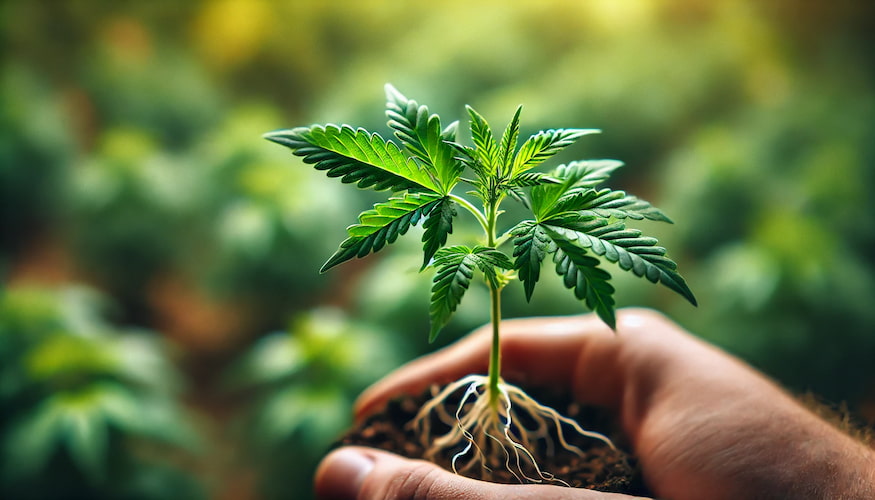
Cannabis Mother Plants 101: Preserving Genetics and Taking Cuttings

Cannabis cloning techniques

A cannabis mother plant is a female cannabis plant kept permanently in the vegetative stage—never flowered—and used exclusively as a source of genetically identical cuttings (clones). Once you find a phenotype worth keeping, a well-maintained mother lets you replicate it indefinitely without buying new genetics. This guide covers everything you need to build and run your first mother plant program the right way.

Key Takeaways

  • A cannabis mother plant lives in veg forever (18/6 or 20/4 light) and is never sent to flower.
  • Clones taken from a female mother are always female—no males, no guessing.
  • One healthy mother can produce 8 to 20 or more cuttings every 4 to 6 weeks, indefinitely.
  • Sanitation is non-negotiable: unsterile tools spread bacteria and hop latent viroid (HLVd), which silently destroys your harvest.
  • Most growers refresh their mother every 12 to 18 months; declining clone vigor is the clearest signal.
  • When a mother shows pathogen load or viroid symptoms, start fresh with a verified, lab-tested clone rather than trying to rescue her.

What Is a Cannabis Mother Plant?

The term gets thrown around loosely, so let’s define it precisely. A cannabis mother plant is a confirmed-female cannabis plant that is maintained in the vegetative growth stage indefinitely by keeping it on a light schedule of 18 hours on / 6 hours off (or longer). She is never flipped to 12/12 and never flowers. Her entire purpose is to supply cuttings—genetically identical clones—for your grow.

Every cutting you take from a mother inherits her exact genetic profile: her cannabinoid ratios, terpene expression, growth structure, yield potential, and pest resistance. That’s the power of a mother plant program. You’re not hoping a new batch of seeds comes close to last run’s winner. You know exactly what you’re getting, every single time.

Because photoperiod cannabis plants only flower when the daily light period drops below roughly 14 hours, a perpetual 18/6 schedule keeps them in a juvenile, vegetative state indefinitely. Under proper care, a mother plant can live for multiple years and produce hundreds of cuttings over her lifetime.

Why Keep a Cannabis Mother Plant?

The simple answer: you found something special and you don’t want to lose it.

When you run a seed pack, you might pop ten beans and find one phenotype (the specific physical and chemical expression of a genetic strain in a given environment) that stands out dramatically—exceptional resin production, a terpene profile that stops you in your tracks, or a growth structure that fits your canopy perfectly. That specific plant will never grow from seed again. Seeds, even from the same pack, produce variation. The only way to preserve that exact genetic expression is to keep a cutting—or keep the plant itself as a mother.

Here’s what a mother plant program actually does for you:

  • Locks in proven performance. You’re not gambling on phenotype variation with each new run. You already know this plant’s numbers.
  • Eliminates the cost of buying replacements. One well-sourced clone or one winner from a seed run, kept as a mother, can supply your operation for a year or more.
  • Guarantees female plants. Clones from a confirmed female mother are always female. No males sneaking into your flower room. No hermaphrodites—unless the mother herself herms, which is a reason to retire her immediately.
  • Speeds up production cycles. Rooted clones go into veg or straight to flower faster than seedlings. You’re not waiting on germination or the seedling stage.
  • Gives you genetic insurance. If you lose a crop to pests, disease, or a power failure, the mother is untouched. You rebuild from her.

Selecting the Right Plant as a Mother

This is where most growers make their first mistake: they keep the wrong plant. Picking a mother is a high-stakes decision because you’ll be working with her genetics for months or years. Don’t rush it.

Start From the Best Candidate

Your mother should come from one of two places: the standout plant from a seed run that you’ve observed through at least one full flower cycle, or a verified rooted clone from a source you trust. If you’re running seeds, don’t select your mother from appearance alone in veg. Veg your candidates, take cuttings from each one, flower the cuttings, and then decide which mother to keep based on actual harvest results.

This means your selection process takes time. That’s not wasted time—it’s due diligence that pays off every run thereafter.

What To Look For

A good mother candidate shows these traits consistently:

  • Strong internodal spacing. Tight nodes in veg indicate vigorous growth and good branching structure, which translates to more cutting sites.
  • Healthy, deep green leaf color. No yellowing, mottling, or spots. Leaf color is one of the earliest indicators of nutrient issues or disease.
  • Zero signs of pests or disease. Mites, aphids, fungus gnats, powdery mildew—none of it. A pest problem in your mother room contaminates every cutting you take.
  • Fast root establishment. When you take a test cutting, does it root within 7 to 10 days? Mothers that produce fast-rooting clones are more productive and give you more scheduling flexibility.
  • Desirable traits confirmed through flower. Aroma, structure, resin production, yield—confirmed, not assumed.

Never keep a sick, stressed, or slow plant as a mother. Stress-related traits—slow rooting, weak canopy development, susceptibility to pests—are passed to every clone she produces. You’ll spend months fighting problems that were baked in from the start.

Keeping Her in Veg: Light Schedule and Environment

The foundation of a mother plant program is simple: keep her in the vegetative stage permanently. For photoperiod cannabis, that means maintaining a light schedule of at least 18 hours of light per day.

Most dedicated mother rooms run 18 hours on / 6 hours off. Some growers push to 20/4. The extra two hours of darkness at 18/6 gives plants a slight rest period that many cultivators believe supports root health and metabolic recovery without any risk of triggering flower. Running 24/0 (continuous light) can cause light stress in some strains and isn’t recommended for long-term mothers.

For a deeper look at how light cycles affect vegetative and reproductive phases, see our guide on optimal light schedules for cannabis and how to dial them in by growth stage.

Light Intensity

Mother plants don’t need the same intensity as a flowering canopy. They’re not trying to produce dense buds—they’re building structure and producing cutting material. A PPFD (photosynthetic photon flux density—a measure of the number of light particles hitting a square meter per second) of 400 to 600 µmol/m²/s is appropriate for most mother plants. This is roughly equivalent to a 200 to 315W CMH or a modest LED setup.

More light isn’t better here. Excessive intensity on a vegetating mother can cause heat stress, bleaching, and unnecessarily accelerate water and nutrient consumption without improving cutting quality.

Mother Plant Care: Feeding, Pruning, and Root Management

Nutrient Feeding

A cannabis mother plant in veg needs a steady, moderate supply of nitrogen (N) to support continuous vegetative growth. She also needs balanced phosphorus (P) and potassium (K), plus a full suite of micronutrients—calcium, magnesium, iron, and manganese especially.

Don’t overfeed. A mother that’s been overfed with nitrogen grows lush and dark but may produce cuttings that root slowly or show nutrient excess symptoms in the clone tray. Aim for an EC (electrical conductivity—a measure of dissolved nutrient salt concentration in solution) of 1.4 to 2.0 mS/cm for most soil-grown mothers, slightly higher in hydro. Keep pH in range: 6.0 to 7.0 for soil, 5.5 to 6.5 for hydro or coco.

For more detail on feeding schedules that apply from clone through veg, our comprehensive nutrient guide for cannabis clones covers the transition from rooting media into full vegetative feeds.

Pruning

Regular pruning does two things: it keeps the canopy manageable and it creates more cutting sites. Every time you top or remove a branch tip, the plant responds by pushing growth at lateral nodes below the cut. A properly pruned mother becomes bushy, dense, and highly productive.

Prune your mother every 4 to 6 weeks, roughly in sync with your cutting harvest. Remove crossing branches, any dead or yellowing growth, and any branches that are becoming too woody to take good cuttings from. Maintain an open canopy that lets light and air penetrate to lower growth sites.

Root Zone Management

Roots don’t stop growing just because the plant is in veg. A mother plant that’s been in the same container for 12 months will become severely rootbound—circling roots choke oxygen flow and limit nutrient uptake, which shows up as slow growth, yellowing, and poor clone quality.

Up-pot your mother as needed. A good rule of thumb: when you see roots emerging from drainage holes or the plant wilts rapidly after watering, it’s time to move up a container size. Many growers run mothers in 5- to 10-gallon fabric pots, which provide good air pruning at the root periphery and reduce the severity of rootbinding.

How Many Cuttings Can One Mother Produce?

A healthy, well-maintained mother plant of moderate size (kept in a 5-gallon container and topped regularly) can yield 8 to 15 cuttings per harvest cycle, every 4 to 6 weeks. A larger, more established mother in a more than 10 gallon container with aggressive pruning and training can push more than 20 cuttings per cycle.

The variables that determine cutting yield are:

  • Plant size and container volume. More root mass = more canopy = more cutting sites.
  • Pruning and training history. A mother that’s been topped repeatedly develops far more lateral branches than one allowed to grow naturally.
  • Feeding consistency. Nutrient-stressed mothers produce fewer, lower-quality cuttings.
  • Age and overall health. A vigorous two-year-old mother in good health outproduces a sickly six-month-old every time.

Never strip a mother bare. Leave enough foliage that she can photosynthesize, recover, and rebuild in time for the next cutting cycle. A good target is taking no more than 30% to 40% of the canopy at any one time.

How To Take Cuttings From a Cannabis Mother Plant: Step-by-Step

Taking cuttings is a skill. Done right, you’ll have more than 90% rooting rates consistently. Done sloppily, you’ll lose half your clones to rot, wilting, or failure to root. Here’s how we do it.

For a deeper dive into technique variables, see our full guide on cannabis cloning techniques, which covers everything from traditional stem cuttings to aeroponic cloning setups.

What You’ll Need

  • Sterile, sharp razor blade or scalpel
  • Isopropyl alcohol (more than 91%) for sterilization
  • Rooting hormone gel (preferred over powder for cuttings)
  • Rooting medium: Rapid Rooter plugs, rockwool cubes, or compressed peat pellets
  • Humidity dome with vents
  • Seedling heat mat (optional but helpful)
  • Spray bottle with plain, pH-adjusted water

Step 1: Select the Right Branch

Look for healthy, vigorous branch tips with 2 to 3 nodes and a total length of 4 to 6 inches. The stem should be green and slightly firm—not too woody (harder to root) and not too soft (prone to wilting and rot). Avoid any branches showing signs of stress, yellowing, or pest damage.

Our guide on cutting selection for cannabis cloning covers what to look for in more detail, including how branch maturity affects rooting speed.

Step 2: Make the Cut

Wipe your blade with isopropyl alcohol and let it air-dry for 30 seconds. Make a clean cut at a 45-degree angle, just below the lowest node you want to keep. The angled cut increases the surface area of the wound, which gives rooting hormone more contact with the stem and encourages faster root initiation.

One clean cut. Don’t saw back and forth—that crushes stem tissue and creates an irregular wound surface.

Step 3: Prepare the Cutting

Remove the lowest set of leaves and any fan leaves that would be buried in your rooting medium. Leave 2 to 3 leaves at the top to allow photosynthesis while roots develop. If the remaining leaves are large, you can trim them in half to reduce transpiration (water loss through leaves), which helps the cutting stay turgid before roots form.

Step 4: Apply Rooting Hormone

Dip the cut end of the stem into rooting hormone gel immediately after cutting. Gel formulations (like Clonex) coat the stem more evenly than powder and form a protective seal over the wound. Don’t wipe off excess—let the gel coat the bottom inch of the stem.

Rooting hormones typically contain indole-3-butyric acid (IBA), a synthetic auxin that triggers root cell differentiation at the wound site.

Step 5: Insert Into Rooting Medium

Push the hormone-coated stem into a pre-moistened Rapid Rooter plug, rockwool cube, or peat pellet. Insert deep enough that the bottom node is buried in the medium—roots often initiate from nodes as well as the cut end. Don’t bury so deep that the foliage touches the medium surface.

Step 6: Into the Dome

Place cuttings under a humidity dome. Target conditions:

  • Relative humidity: 70% to 80%. High humidity reduces transpiration demand, buying the cutting time before roots form.
  • Temperature: 72 to 78°F air temperature. Root zone temperature ideally 70 to 75°F. A seedling mat under the tray helps.
  • Light: indirect or low intensity. Cuttings don’t need strong light—100 to 200 µmol/m²/s is plenty. Direct, intense light before roots form will stress and wilt them.

Mist the dome walls (not the plants) once or twice daily to maintain humidity. Crack dome vents slightly after day 5 to begin hardening cuttings off before roots appear. For more on environment during the rooting phase, our guide on light requirements for cannabis clones covers the transition from dome to open environment.

Step 7: Wait for Roots

Under proper conditions, most strains show root emergence in 7 to 14 days. Some fast-rooting strains go in 5 to 7 days. Slower or more finicky strains may take up to 21 days. You’ll know roots are establishing when cuttings begin showing new growth at the top—a reliable indicator that roots have formed and the plant is actively transporting water and nutrients again.

Sanitation: The Rule You Can’t Break

Sanitation isn’t optional in a mother plant program. It’s the difference between a clean, productive operation and a contaminated one that silently destroys itself over months.

Sterilize every blade between every cut. Wipe with more than 91% isopropyl alcohol. Let it air-dry. Cut. This takes ten seconds and eliminates the primary transmission route for bacterial pathogens and—critically—hop latent viroid (HLVd).

Hop Latent Viroid: The Hidden Killer

Hop latent viroid is one of the most serious threats in modern cannabis production, and mother plant programs are especially vulnerable. HLVd is a sub-viral pathogen—smaller than a virus—that spreads almost exclusively through contaminated cutting tools, infected clones, and infected pollen. It does not spread through air or water contact.

What makes HLVd particularly dangerous is its hallmark symptom: “dudding.” Infected plants often look nearly normal in vegetative growth. The damage becomes apparent in flower—dramatically reduced trichome production, loose, airy buds, significantly lower yields, and muted terpene expression. A crop that should have yielded two pounds per light might yield half that, with substantially lower potency. Growers sometimes run infected plants for multiple cycles before connecting the dots.

HLVd spreads through unsterile cuts. One contaminated blade used on an infected plant and then used on your mother—without sterilization—is all it takes. Once your mother is infected, every clone she produces carries the viroid. By the time you identify the problem in a harvest, you may have been propagating infected clones for months.

The defense is simple and absolute: clean blades, every cut, no exceptions. Dedicated tools for your mother room that never touch your flower room are even better.

Mother Plant Care Specs: Quick Reference Table

Parameter Vegetative Stage (Mother) Notes
Light schedule 18/6 or 20/4 (hours on/off) Never drop below ~16h or photoperiod strains may start to flower
Light intensity (PPFD) 400 to 600 µmol/m²/s CMH, T5 HO, or modest LED. Avoid intensity of a flower room.
Air temperature 72 to 80°F (22 to 27°C) Consistent temps reduce stress; wide swings slow growth
Relative humidity 50% to 70% Higher RH than flower room; support healthy transpiration
pH—soil 6.0 to 7.0 Test runoff, not just input water
pH—hydro/coco 5.5 to 6.5 Tighter range; check daily in recirculating systems
EC/TDS target 1.4 to 2.0 mS/cm Moderate N; avoid heavy bloom formulas
Container size 5- to 10-gallon fabric pot Up-pot when rootbound; fabric pots air-prune roots
Pruning frequency Every 4 to 6 weeks Coincides with cutting harvest; maintains open canopy
Cutting yield per cycle 8 to 20 or more cuttings Depends on plant size, age, and canopy management

Refreshing Your Mother: When To Replace Her

Even a perfectly maintained mother plant doesn’t last forever. Most experienced growers plan to refresh their mother—either replacing her with a clone taken off her at her peak, or sourcing fresh verified genetics—every 12 to 18 months.

Why does this happen? A few reasons:

  • Accumulated epigenetic stress. Long-term vegetative growth under artificial conditions gradually shifts how gene expression is regulated. This isn’t a genetic mutation, but it can manifest as subtle changes in vigor and clone performance over time.
  • Root system limitations. Even in large containers with proper up-potting, root systems eventually become dense and stressed. This affects nutrient and water uptake, which translates to reduced clone quality.
  • Accumulated microbial load. The root zone and growing medium accumulate microbial activity over time. Even beneficial microbes can become overwhelming in an aged system.
  • Increased pathogen exposure. The longer a plant lives in a shared growing environment, the more opportunity it has to encounter and harbor latent pathogens.

Signs It’s Time To Retire a Mother

Watch for these signals:

  • Cuttings that once rooted in 7 days now take 14 to 21 days
  • Lower overall rooting success rates, even with the same technique
  • Reduced vigor in rooted clones—slower veg growth, smaller canopy development
  • Increased susceptibility to pests or diseases that didn’t used to be problems
  • Noticeable decline in flower performance from clones compared to earlier runs

If you’re seeing these signs, don’t try to nurse a declining mother back to full production. The time and inputs required rarely justify the effort compared to starting fresh.

When To Buy a Fresh Clone Instead of Running a Mother

There are specific situations where the right move is to stop relying on your current mother and source a verified replacement from outside your operation.

The clearest trigger: suspected or confirmed hop latent viroid (HLVd) or other systemic pathogen. If your harvest quality has dropped unexpectedly, your clones are rooting poorly despite good technique, and you haven’t been able to identify a clear environmental cause—viroid should be near the top of your suspect list. There is no cure. If your mother is infected, every clone she’s produced is infected. Your only real option is to end that genetic line and start clean.

Other reasons to source fresh:

  • You want to add a new strain to your program and don’t want to run a seed pack to find the phenotype yourself
  • Your current mother’s clone quality has declined to the point where she’s no longer productive
  • You want verified genetics from a trusted source with documented pathogen testing

At IWantClones.com, we sell verified, rooted cannabis clones for $98.88, shipped overnight to your door. Every clone comes with our 3-day no-bullshit guarantee, and we accept crypto payments. All orders check out through SeedsHereNow.com. If you’re starting a new mother plant program or resetting after a viroid situation, starting from a verified clone gives you a clean genetic baseline that a compromised mother can’t.

Browse available clones at IWantClones.com and find the right genetic to anchor your next mother plant program.

A verified, lab-sourced clone resets the genetic clock. When your mother’s performance starts declining—especially if you suspect HLVd—the smartest move is a clean start, not a rescue attempt.

Legal Note on Cannabis Cultivation

Cannabis cultivation laws vary significantly by state, county, and municipality in the United States. On April 23, 2026, the DEA/DOJ moved FDA-approved marijuana products and state-licensed medical marijuana into Schedule III under the Controlled Substances Act. Recreational and adult-use cannabis remains Schedule I at the federal level. IWantClones.com ships within the U.S. only. Always verify your own state and local laws before cultivating cannabis. This article is for educational purposes in jurisdictions where cultivation is legal.

Building a Long-Term Mother Plant Program: Practical Tips

Here’s what separates a sustainable mother plant program from one that creates constant headaches:

Keep Mothers Isolated

Your mother room should be separate from your flower room and your clone nursery. Pests, disease spores, and pathogens move through shared air spaces. A dedicated mother room with its own HVAC, its own tools, and its own entry protocol dramatically reduces contamination risk.

Label Everything

If you’re maintaining multiple mothers, label every single plant with the strain name, the source of the original cut, and the date she was established. When you’re harvesting cuttings from three different plants, unlabeled mothers create genetic confusion fast.

Maintain Backup Cuttings

Before anything goes wrong with your mother, take a cutting and root it as a backup. Keep a rooted backup of each mother in a small 1-gallon pot under the same light cycle. If your mother gets sick, crashes from a power failure, or needs to be retired unexpectedly, your backup clone bridges the gap while you build her back up or source a replacement.

Document Clone Performance

Keep a simple log: date cuttings were taken, rooting time, any issues observed in the clone tray, and performance notes from the harvest. Over time this record becomes invaluable—you’ll see exactly when clone rooting time started creeping up, when yields started dipping, and when the mother’s performance peaked. That data makes the retire/replace decision much easier.

Frequently Asked Questions

How long can a cannabis mother plant live?

Under proper care—consistent 18/6 light, moderate feeding, regular pruning, and timely up-potting — a cannabis mother plant can live for 2–5 years or longer. Most growers choose to refresh their mother every 12 to 18 months to prevent declining clone quality, even when the plant appears healthy. Genetic drift and accumulated stress are the primary reasons to refresh rather than biological lifespan.

Can I take a mother plant into flower after using her for cuttings?

Yes. If you’ve rooted backup clones and no longer need her as a mother, you can flip her to 12/12 and flower her out. Keep in mind that large, heavily pruned mothers often produce lower-quality flowers than well-structured plants grown specifically for flowering. It’s a useful option but not ideal for your best harvest results.

How do I know if my mother plant has hop latent viroid (HLVd)?

Visual symptoms are unreliable—HLVd-infected plants often look normal in veg. The signs appear in flower: dramatically reduced trichome production, airy buds, lower-than-expected yields, and muted aroma. The only reliable diagnosis is a PCR lab test. If you suspect HLVd, stop taking cuttings from that plant immediately and get her tested before continuing your program.

Do I need a separate room for my mother plant?

A separate room is ideal but not always practical for home growers. At minimum, your mother plant needs a space where the light cycle is independently controlled at 18/6 and she won’t be accidentally exposed to 12/12 light periods from an adjoining flower room. A tent within a room, with a dedicated timer, is a workable solution for smaller operations.

Why are my clones taking longer to root than they used to?

Slow rooting in clones is often the first sign of a declining mother. Common causes include: the mother is becoming rootbound and nutrient-stressed; she has accumulated pathogen load (including possible HLVd); or the mother is simply aging past her productive peak. Check your technique and environment first. If those are solid and rooting times are still creeping up, it’s likely time to refresh your mother.

How many mother plants do I need?

For most home growers, one mother per strain is sufficient. A well-managed mother producing 10 to 15 cuttings every 4–6 weeks will supply more clones than the average home grow needs. Small commercial operations typically maintain 2–4 mothers per strain: a primary production mother, a backup mother, and sometimes a phenotype variation kept for comparison. Scale to your actual clone demand rather than maintaining more plants than you need.

Share

Comments are closed.

Also recommended

Cannabis Mother Plants 101: Preserving Genetics and Taking Cuttings

July 3, 2026
Cannabis cloning techniques

A cannabis mother plant is a female cannabis plant kept permanently in the vegetative stage—never flowered—and used exclusively as a source of genetically identical cuttings (clones). Once you find a phenotype worth keeping, a well-maintained mother lets you replicate it indefinitely without buying new genetics. This guide covers everything you need to build and run your first mother plant program the right way.

Key Takeaways

  • A cannabis mother plant lives in veg forever (18/6 or 20/4 light) and is never sent to flower.
  • Clones taken from a female mother are always female—no males, no guessing.
  • One healthy mother can produce 8 to 20 or more cuttings every 4 to 6 weeks, indefinitely.
  • Sanitation is non-negotiable: unsterile tools spread bacteria and hop latent viroid (HLVd), which silently destroys your harvest.
  • Most growers refresh their mother every 12 to 18 months; declining clone vigor is the clearest signal.
  • When a mother shows pathogen load or viroid symptoms, start fresh with a verified, lab-tested clone rather than trying to rescue her.

What Is a Cannabis Mother Plant?

The term gets thrown around loosely, so let’s define it precisely. A cannabis mother plant is a confirmed-female cannabis plant that is maintained in the vegetative growth stage indefinitely by keeping it on a light schedule of 18 hours on / 6 hours off (or longer). She is never flipped to 12/12 and never flowers. Her entire purpose is to supply cuttings—genetically identical clones—for your grow.

Every cutting you take from a mother inherits her exact genetic profile: her cannabinoid ratios, terpene expression, growth structure, yield potential, and pest resistance. That’s the power of a mother plant program. You’re not hoping a new batch of seeds comes close to last run’s winner. You know exactly what you’re getting, every single time.

Because photoperiod cannabis plants only flower when the daily light period drops below roughly 14 hours, a perpetual 18/6 schedule keeps them in a juvenile, vegetative state indefinitely. Under proper care, a mother plant can live for multiple years and produce hundreds of cuttings over her lifetime.

Why Keep a Cannabis Mother Plant?

The simple answer: you found something special and you don’t want to lose it.

When you run a seed pack, you might pop ten beans and find one phenotype (the specific physical and chemical expression of a genetic strain in a given environment) that stands out dramatically—exceptional resin production, a terpene profile that stops you in your tracks, or a growth structure that fits your canopy perfectly. That specific plant will never grow from seed again. Seeds, even from the same pack, produce variation. The only way to preserve that exact genetic expression is to keep a cutting—or keep the plant itself as a mother.

Here’s what a mother plant program actually does for you:

  • Locks in proven performance. You’re not gambling on phenotype variation with each new run. You already know this plant’s numbers.
  • Eliminates the cost of buying replacements. One well-sourced clone or one winner from a seed run, kept as a mother, can supply your operation for a year or more.
  • Guarantees female plants. Clones from a confirmed female mother are always female. No males sneaking into your flower room. No hermaphrodites—unless the mother herself herms, which is a reason to retire her immediately.
  • Speeds up production cycles. Rooted clones go into veg or straight to flower faster than seedlings. You’re not waiting on germination or the seedling stage.
  • Gives you genetic insurance. If you lose a crop to pests, disease, or a power failure, the mother is untouched. You rebuild from her.

Selecting the Right Plant as a Mother

This is where most growers make their first mistake: they keep the wrong plant. Picking a mother is a high-stakes decision because you’ll be working with her genetics for months or years. Don’t rush it.

Start From the Best Candidate

Your mother should come from one of two places: the standout plant from a seed run that you’ve observed through at least one full flower cycle, or a verified rooted clone from a source you trust. If you’re running seeds, don’t select your mother from appearance alone in veg. Veg your candidates, take cuttings from each one, flower the cuttings, and then decide which mother to keep based on actual harvest results.

This means your selection process takes time. That’s not wasted time—it’s due diligence that pays off every run thereafter.

What To Look For

A good mother candidate shows these traits consistently:

  • Strong internodal spacing. Tight nodes in veg indicate vigorous growth and good branching structure, which translates to more cutting sites.
  • Healthy, deep green leaf color. No yellowing, mottling, or spots. Leaf color is one of the earliest indicators of nutrient issues or disease.
  • Zero signs of pests or disease. Mites, aphids, fungus gnats, powdery mildew—none of it. A pest problem in your mother room contaminates every cutting you take.
  • Fast root establishment. When you take a test cutting, does it root within 7 to 10 days? Mothers that produce fast-rooting clones are more productive and give you more scheduling flexibility.
  • Desirable traits confirmed through flower. Aroma, structure, resin production, yield—confirmed, not assumed.

Never keep a sick, stressed, or slow plant as a mother. Stress-related traits—slow rooting, weak canopy development, susceptibility to pests—are passed to every clone she produces. You’ll spend months fighting problems that were baked in from the start.

Keeping Her in Veg: Light Schedule and Environment

The foundation of a mother plant program is simple: keep her in the vegetative stage permanently. For photoperiod cannabis, that means maintaining a light schedule of at least 18 hours of light per day.

Most dedicated mother rooms run 18 hours on / 6 hours off. Some growers push to 20/4. The extra two hours of darkness at 18/6 gives plants a slight rest period that many cultivators believe supports root health and metabolic recovery without any risk of triggering flower. Running 24/0 (continuous light) can cause light stress in some strains and isn’t recommended for long-term mothers.

For a deeper look at how light cycles affect vegetative and reproductive phases, see our guide on optimal light schedules for cannabis and how to dial them in by growth stage.

Light Intensity

Mother plants don’t need the same intensity as a flowering canopy. They’re not trying to produce dense buds—they’re building structure and producing cutting material. A PPFD (photosynthetic photon flux density—a measure of the number of light particles hitting a square meter per second) of 400 to 600 µmol/m²/s is appropriate for most mother plants. This is roughly equivalent to a 200 to 315W CMH or a modest LED setup.

More light isn’t better here. Excessive intensity on a vegetating mother can cause heat stress, bleaching, and unnecessarily accelerate water and nutrient consumption without improving cutting quality.

Mother Plant Care: Feeding, Pruning, and Root Management

Nutrient Feeding

A cannabis mother plant in veg needs a steady, moderate supply of nitrogen (N) to support continuous vegetative growth. She also needs balanced phosphorus (P) and potassium (K), plus a full suite of micronutrients—calcium, magnesium, iron, and manganese especially.

Don’t overfeed. A mother that’s been overfed with nitrogen grows lush and dark but may produce cuttings that root slowly or show nutrient excess symptoms in the clone tray. Aim for an EC (electrical conductivity—a measure of dissolved nutrient salt concentration in solution) of 1.4 to 2.0 mS/cm for most soil-grown mothers, slightly higher in hydro. Keep pH in range: 6.0 to 7.0 for soil, 5.5 to 6.5 for hydro or coco.

For more detail on feeding schedules that apply from clone through veg, our comprehensive nutrient guide for cannabis clones covers the transition from rooting media into full vegetative feeds.

Pruning

Regular pruning does two things: it keeps the canopy manageable and it creates more cutting sites. Every time you top or remove a branch tip, the plant responds by pushing growth at lateral nodes below the cut. A properly pruned mother becomes bushy, dense, and highly productive.

Prune your mother every 4 to 6 weeks, roughly in sync with your cutting harvest. Remove crossing branches, any dead or yellowing growth, and any branches that are becoming too woody to take good cuttings from. Maintain an open canopy that lets light and air penetrate to lower growth sites.

Root Zone Management

Roots don’t stop growing just because the plant is in veg. A mother plant that’s been in the same container for 12 months will become severely rootbound—circling roots choke oxygen flow and limit nutrient uptake, which shows up as slow growth, yellowing, and poor clone quality.

Up-pot your mother as needed. A good rule of thumb: when you see roots emerging from drainage holes or the plant wilts rapidly after watering, it’s time to move up a container size. Many growers run mothers in 5- to 10-gallon fabric pots, which provide good air pruning at the root periphery and reduce the severity of rootbinding.

How Many Cuttings Can One Mother Produce?

A healthy, well-maintained mother plant of moderate size (kept in a 5-gallon container and topped regularly) can yield 8 to 15 cuttings per harvest cycle, every 4 to 6 weeks. A larger, more established mother in a more than 10 gallon container with aggressive pruning and training can push more than 20 cuttings per cycle.

The variables that determine cutting yield are:

  • Plant size and container volume. More root mass = more canopy = more cutting sites.
  • Pruning and training history. A mother that’s been topped repeatedly develops far more lateral branches than one allowed to grow naturally.
  • Feeding consistency. Nutrient-stressed mothers produce fewer, lower-quality cuttings.
  • Age and overall health. A vigorous two-year-old mother in good health outproduces a sickly six-month-old every time.

Never strip a mother bare. Leave enough foliage that she can photosynthesize, recover, and rebuild in time for the next cutting cycle. A good target is taking no more than 30% to 40% of the canopy at any one time.

How To Take Cuttings From a Cannabis Mother Plant: Step-by-Step

Taking cuttings is a skill. Done right, you’ll have more than 90% rooting rates consistently. Done sloppily, you’ll lose half your clones to rot, wilting, or failure to root. Here’s how we do it.

For a deeper dive into technique variables, see our full guide on cannabis cloning techniques, which covers everything from traditional stem cuttings to aeroponic cloning setups.

What You’ll Need

  • Sterile, sharp razor blade or scalpel
  • Isopropyl alcohol (more than 91%) for sterilization
  • Rooting hormone gel (preferred over powder for cuttings)
  • Rooting medium: Rapid Rooter plugs, rockwool cubes, or compressed peat pellets
  • Humidity dome with vents
  • Seedling heat mat (optional but helpful)
  • Spray bottle with plain, pH-adjusted water

Step 1: Select the Right Branch

Look for healthy, vigorous branch tips with 2 to 3 nodes and a total length of 4 to 6 inches. The stem should be green and slightly firm—not too woody (harder to root) and not too soft (prone to wilting and rot). Avoid any branches showing signs of stress, yellowing, or pest damage.

Our guide on cutting selection for cannabis cloning covers what to look for in more detail, including how branch maturity affects rooting speed.

Step 2: Make the Cut

Wipe your blade with isopropyl alcohol and let it air-dry for 30 seconds. Make a clean cut at a 45-degree angle, just below the lowest node you want to keep. The angled cut increases the surface area of the wound, which gives rooting hormone more contact with the stem and encourages faster root initiation.

One clean cut. Don’t saw back and forth—that crushes stem tissue and creates an irregular wound surface.

Step 3: Prepare the Cutting

Remove the lowest set of leaves and any fan leaves that would be buried in your rooting medium. Leave 2 to 3 leaves at the top to allow photosynthesis while roots develop. If the remaining leaves are large, you can trim them in half to reduce transpiration (water loss through leaves), which helps the cutting stay turgid before roots form.

Step 4: Apply Rooting Hormone

Dip the cut end of the stem into rooting hormone gel immediately after cutting. Gel formulations (like Clonex) coat the stem more evenly than powder and form a protective seal over the wound. Don’t wipe off excess—let the gel coat the bottom inch of the stem.

Rooting hormones typically contain indole-3-butyric acid (IBA), a synthetic auxin that triggers root cell differentiation at the wound site.

Step 5: Insert Into Rooting Medium

Push the hormone-coated stem into a pre-moistened Rapid Rooter plug, rockwool cube, or peat pellet. Insert deep enough that the bottom node is buried in the medium—roots often initiate from nodes as well as the cut end. Don’t bury so deep that the foliage touches the medium surface.

Step 6: Into the Dome

Place cuttings under a humidity dome. Target conditions:

  • Relative humidity: 70% to 80%. High humidity reduces transpiration demand, buying the cutting time before roots form.
  • Temperature: 72 to 78°F air temperature. Root zone temperature ideally 70 to 75°F. A seedling mat under the tray helps.
  • Light: indirect or low intensity. Cuttings don’t need strong light—100 to 200 µmol/m²/s is plenty. Direct, intense light before roots form will stress and wilt them.

Mist the dome walls (not the plants) once or twice daily to maintain humidity. Crack dome vents slightly after day 5 to begin hardening cuttings off before roots appear. For more on environment during the rooting phase, our guide on light requirements for cannabis clones covers the transition from dome to open environment.

Step 7: Wait for Roots

Under proper conditions, most strains show root emergence in 7 to 14 days. Some fast-rooting strains go in 5 to 7 days. Slower or more finicky strains may take up to 21 days. You’ll know roots are establishing when cuttings begin showing new growth at the top—a reliable indicator that roots have formed and the plant is actively transporting water and nutrients again.

Sanitation: The Rule You Can’t Break

Sanitation isn’t optional in a mother plant program. It’s the difference between a clean, productive operation and a contaminated one that silently destroys itself over months.

Sterilize every blade between every cut. Wipe with more than 91% isopropyl alcohol. Let it air-dry. Cut. This takes ten seconds and eliminates the primary transmission route for bacterial pathogens and—critically—hop latent viroid (HLVd).

Hop Latent Viroid: The Hidden Killer

Hop latent viroid is one of the most serious threats in modern cannabis production, and mother plant programs are especially vulnerable. HLVd is a sub-viral pathogen—smaller than a virus—that spreads almost exclusively through contaminated cutting tools, infected clones, and infected pollen. It does not spread through air or water contact.

What makes HLVd particularly dangerous is its hallmark symptom: “dudding.” Infected plants often look nearly normal in vegetative growth. The damage becomes apparent in flower—dramatically reduced trichome production, loose, airy buds, significantly lower yields, and muted terpene expression. A crop that should have yielded two pounds per light might yield half that, with substantially lower potency. Growers sometimes run infected plants for multiple cycles before connecting the dots.

HLVd spreads through unsterile cuts. One contaminated blade used on an infected plant and then used on your mother—without sterilization—is all it takes. Once your mother is infected, every clone she produces carries the viroid. By the time you identify the problem in a harvest, you may have been propagating infected clones for months.

The defense is simple and absolute: clean blades, every cut, no exceptions. Dedicated tools for your mother room that never touch your flower room are even better.

Mother Plant Care Specs: Quick Reference Table

Parameter Vegetative Stage (Mother) Notes
Light schedule 18/6 or 20/4 (hours on/off) Never drop below ~16h or photoperiod strains may start to flower
Light intensity (PPFD) 400 to 600 µmol/m²/s CMH, T5 HO, or modest LED. Avoid intensity of a flower room.
Air temperature 72 to 80°F (22 to 27°C) Consistent temps reduce stress; wide swings slow growth
Relative humidity 50% to 70% Higher RH than flower room; support healthy transpiration
pH—soil 6.0 to 7.0 Test runoff, not just input water
pH—hydro/coco 5.5 to 6.5 Tighter range; check daily in recirculating systems
EC/TDS target 1.4 to 2.0 mS/cm Moderate N; avoid heavy bloom formulas
Container size 5- to 10-gallon fabric pot Up-pot when rootbound; fabric pots air-prune roots
Pruning frequency Every 4 to 6 weeks Coincides with cutting harvest; maintains open canopy
Cutting yield per cycle 8 to 20 or more cuttings Depends on plant size, age, and canopy management

Refreshing Your Mother: When To Replace Her

Even a perfectly maintained mother plant doesn’t last forever. Most experienced growers plan to refresh their mother—either replacing her with a clone taken off her at her peak, or sourcing fresh verified genetics—every 12 to 18 months.

Why does this happen? A few reasons:

  • Accumulated epigenetic stress. Long-term vegetative growth under artificial conditions gradually shifts how gene expression is regulated. This isn’t a genetic mutation, but it can manifest as subtle changes in vigor and clone performance over time.
  • Root system limitations. Even in large containers with proper up-potting, root systems eventually become dense and stressed. This affects nutrient and water uptake, which translates to reduced clone quality.
  • Accumulated microbial load. The root zone and growing medium accumulate microbial activity over time. Even beneficial microbes can become overwhelming in an aged system.
  • Increased pathogen exposure. The longer a plant lives in a shared growing environment, the more opportunity it has to encounter and harbor latent pathogens.

Signs It’s Time To Retire a Mother

Watch for these signals:

  • Cuttings that once rooted in 7 days now take 14 to 21 days
  • Lower overall rooting success rates, even with the same technique
  • Reduced vigor in rooted clones—slower veg growth, smaller canopy development
  • Increased susceptibility to pests or diseases that didn’t used to be problems
  • Noticeable decline in flower performance from clones compared to earlier runs

If you’re seeing these signs, don’t try to nurse a declining mother back to full production. The time and inputs required rarely justify the effort compared to starting fresh.

When To Buy a Fresh Clone Instead of Running a Mother

There are specific situations where the right move is to stop relying on your current mother and source a verified replacement from outside your operation.

The clearest trigger: suspected or confirmed hop latent viroid (HLVd) or other systemic pathogen. If your harvest quality has dropped unexpectedly, your clones are rooting poorly despite good technique, and you haven’t been able to identify a clear environmental cause—viroid should be near the top of your suspect list. There is no cure. If your mother is infected, every clone she’s produced is infected. Your only real option is to end that genetic line and start clean.

Other reasons to source fresh:

  • You want to add a new strain to your program and don’t want to run a seed pack to find the phenotype yourself
  • Your current mother’s clone quality has declined to the point where she’s no longer productive
  • You want verified genetics from a trusted source with documented pathogen testing

At IWantClones.com, we sell verified, rooted cannabis clones for $98.88, shipped overnight to your door. Every clone comes with our 3-day no-bullshit guarantee, and we accept crypto payments. All orders check out through SeedsHereNow.com. If you’re starting a new mother plant program or resetting after a viroid situation, starting from a verified clone gives you a clean genetic baseline that a compromised mother can’t.

Browse available clones at IWantClones.com and find the right genetic to anchor your next mother plant program.

A verified, lab-sourced clone resets the genetic clock. When your mother’s performance starts declining—especially if you suspect HLVd—the smartest move is a clean start, not a rescue attempt.

Legal Note on Cannabis Cultivation

Cannabis cultivation laws vary significantly by state, county, and municipality in the United States. On April 23, 2026, the DEA/DOJ moved FDA-approved marijuana products and state-licensed medical marijuana into Schedule III under the Controlled Substances Act. Recreational and adult-use cannabis remains Schedule I at the federal level. IWantClones.com ships within the U.S. only. Always verify your own state and local laws before cultivating cannabis. This article is for educational purposes in jurisdictions where cultivation is legal.

Building a Long-Term Mother Plant Program: Practical Tips

Here’s what separates a sustainable mother plant program from one that creates constant headaches:

Keep Mothers Isolated

Your mother room should be separate from your flower room and your clone nursery. Pests, disease spores, and pathogens move through shared air spaces. A dedicated mother room with its own HVAC, its own tools, and its own entry protocol dramatically reduces contamination risk.

Label Everything

If you’re maintaining multiple mothers, label every single plant with the strain name, the source of the original cut, and the date she was established. When you’re harvesting cuttings from three different plants, unlabeled mothers create genetic confusion fast.

Maintain Backup Cuttings

Before anything goes wrong with your mother, take a cutting and root it as a backup. Keep a rooted backup of each mother in a small 1-gallon pot under the same light cycle. If your mother gets sick, crashes from a power failure, or needs to be retired unexpectedly, your backup clone bridges the gap while you build her back up or source a replacement.

Document Clone Performance

Keep a simple log: date cuttings were taken, rooting time, any issues observed in the clone tray, and performance notes from the harvest. Over time this record becomes invaluable—you’ll see exactly when clone rooting time started creeping up, when yields started dipping, and when the mother’s performance peaked. That data makes the retire/replace decision much easier.

Frequently Asked Questions

How long can a cannabis mother plant live?

Under proper care—consistent 18/6 light, moderate feeding, regular pruning, and timely up-potting — a cannabis mother plant can live for 2–5 years or longer. Most growers choose to refresh their mother every 12 to 18 months to prevent declining clone quality, even when the plant appears healthy. Genetic drift and accumulated stress are the primary reasons to refresh rather than biological lifespan.

Can I take a mother plant into flower after using her for cuttings?

Yes. If you’ve rooted backup clones and no longer need her as a mother, you can flip her to 12/12 and flower her out. Keep in mind that large, heavily pruned mothers often produce lower-quality flowers than well-structured plants grown specifically for flowering. It’s a useful option but not ideal for your best harvest results.

How do I know if my mother plant has hop latent viroid (HLVd)?

Visual symptoms are unreliable—HLVd-infected plants often look normal in veg. The signs appear in flower: dramatically reduced trichome production, airy buds, lower-than-expected yields, and muted aroma. The only reliable diagnosis is a PCR lab test. If you suspect HLVd, stop taking cuttings from that plant immediately and get her tested before continuing your program.

Do I need a separate room for my mother plant?

A separate room is ideal but not always practical for home growers. At minimum, your mother plant needs a space where the light cycle is independently controlled at 18/6 and she won’t be accidentally exposed to 12/12 light periods from an adjoining flower room. A tent within a room, with a dedicated timer, is a workable solution for smaller operations.

Why are my clones taking longer to root than they used to?

Slow rooting in clones is often the first sign of a declining mother. Common causes include: the mother is becoming rootbound and nutrient-stressed; she has accumulated pathogen load (including possible HLVd); or the mother is simply aging past her productive peak. Check your technique and environment first. If those are solid and rooting times are still creeping up, it’s likely time to refresh your mother.

How many mother plants do I need?

For most home growers, one mother per strain is sufficient. A well-managed mother producing 10 to 15 cuttings every 4–6 weeks will supply more clones than the average home grow needs. Small commercial operations typically maintain 2–4 mothers per strain: a primary production mother, a backup mother, and sometimes a phenotype variation kept for comparison. Scale to your actual clone demand rather than maintaining more plants than you need.

Written by James Bean

Recent Posts

Cannabis Mother Plants 101: Preserving Genetics and Taking Cuttings

Learn how to keep a cannabis mother plant, take cuttings, and preserve your best genetics indefinitely. Expert guide from IWantClones.com.

Read More
How Cannabis Clones Are Shipped and How To Inspect Them on Arrival

How cannabis clones are shipped: overnight packaging, transit stress, inspection checklist & guarantee claims. Know what to expect before your box arrives.

Read More
Transplanting Cannabis Clones Into Soil, Coco and Hydro: Step-by-Step

Learn exactly when and how to transplant cannabis clones into soil, coco coir, or hydro. Step-by-step instructions to avoid transplant shock and maximize growth.

Read More

Subscribe Today!

Get 10% off when you sign up for our weekly updates!

About Us

At IWantClones.com, we are dedicated to providing top-quality cannabis clones to growers of all levels.

Subscribe Today!

Subscribe our newsletter to get our latest update & news
We currently accept credit/debit card payments, cash, check, money order, bitcoin (BTC), litecoin (LTE), bitcoin cash (BCH), and dogecoin (DOGE).
© 2026 seedsherenow.com All Rights Reserved
magnifiercross linkedin facebook pinterest youtube rss twitter instagram facebook-blank rss-blank linkedin-blank pinterest youtube twitter instagram