
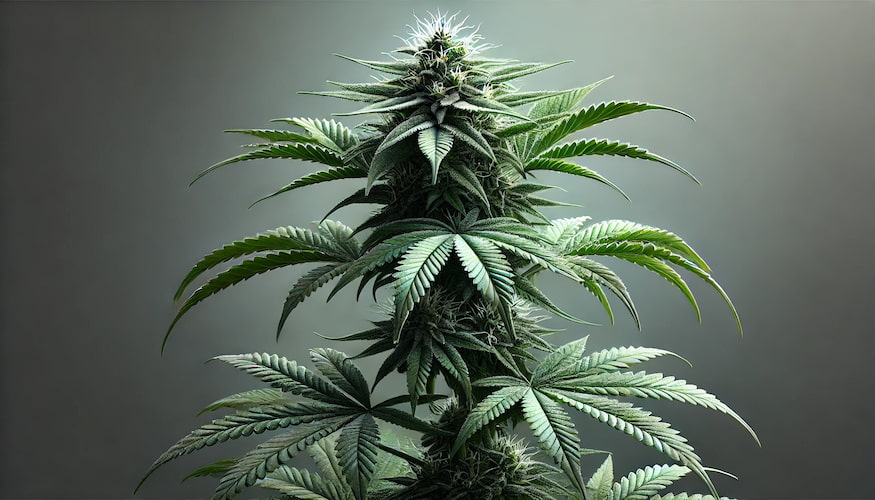
Defoliation & Lollipopping Cannabis for Bigger Yields

Cannabis clone growth stages

Defoliation cannabis growers swear by means strategically removing fan leaves and lower growth to push the plant’s energy into its top colas. Done at the right time — late vegetation and again around day 21 of flower — controlled leaf removal dramatically improves light penetration, airflow, and bud density. The result is heavier, tighter upper colas and less wasted plant energy on bud sites that will never amount to anything.

At IWantClones.com, we grow out every cultivar we sell. We’ve run defoliation and lollipopping on hundreds of plants across dozens of strains. This guide covers exactly what to remove, when to remove it, how much is too much, and the schedule that works in real grows — not just theory.

Key Takeaways

  • Defoliation means removing fan leaves to improve light penetration and airflow; lollipopping means stripping the lower one-third of the plant of all bud sites and foliage.
  • The two best defoliation windows are late vegetation (final 3-5 days before flip) and day 18-21 of flower — outside those windows, the risk-to-reward ratio drops significantly.
  • Remove no more than 20-30% of foliage per session; overdoing it puts the plant into stress recovery instead of productive growth.
  • Schwazzing — an aggressive form of defoliation popularized by commercial growers — removes nearly all large fan leaves at the start of flower and again at week 3, but is best suited to proven photoperiod strains under dialed-in conditions.
  • Autoflowers should not be heavily defoliated — their fixed life cycle leaves no recovery time, and stress translates directly to smaller yields.
  • Clones from genetically uniform mother plants respond more predictably to defoliation than seed-grown plants, making them the ideal candidate for advanced canopy management.

What Is Defoliation Cannabis? Definitions First

Defoliation is the deliberate removal of fan leaves (the large, flat leaves on cannabis) to allow light to reach bud sites that would otherwise sit in shadow. Those lower bud sites — starved of direct light — produce loose, airy, low-quality buds called “larf.” Removing the canopy cover that blocks them forces the plant to redirect resources upward.

Lollipopping is a specific form of defoliation focused on the bottom third of the plant. You strip everything — leaves, bud sites, and small branches — below the point where light realistically reaches. The finished plant looks like a lollipop: a clean bare stem with a full canopy on top. The name says it all.

Schwazzing is an aggressive, commercial-scale defoliation method developed by Joshua Haupt and described in his book Three a Light. It involves removing virtually all large fan leaves at the start of flower (day 1) and again at day 20. Schwazzing is controversial because it’s stressful — it works well under high-intensity lighting (1,000W HPS or equivalent LED) and experienced hands, but it can wreck yields if applied casually.

For most home growers, standard defoliation combined with lollipopping delivers excellent results without the stress risk of full schwazzing.

Why Defoliation Increases Yields: The Logic

Cannabis is a photoperiod-driven plant (outside of autoflowers). It evolved to push energy into reproduction — making seeds — when light cycles change. In cultivation, we exploit that drive to produce large, resinous colas instead. The problem is that a bushy, untrained cannabis plant wastes enormous energy on dozens of low-quality bud sites that get no direct light.

Light Penetration

Large fan leaves act like solar panels — they capture light efficiently. But when they overlap and shade the canopy below, the bud sites under them receive only a fraction of usable light. Cannabis bud sites need at least 400-600 µmol/m²/s of photosynthetically active radiation (PAR) to develop properly. Interior bud sites in an untrained, undefoliated plant often receive less than 100 µmol/m²/s. That’s enough to stay alive but not enough to produce dense, heavy buds.

Selectively removing leaves that block light — especially large fans angled horizontally across the canopy — opens up light lanes to middle and lower bud sites.

Airflow and Disease Prevention

A dense, leafy canopy traps humidity and heat. Stagnant air near the buds promotes powdery mildew, botrytis (bud rot), and other moisture-related problems. Defoliation opens the canopy so your fans can circulate air through the plant — not just around it. This is especially critical in late flower when buds are dense and most vulnerable.

Energy Redirection

Every leaf and bud site on a cannabis plant is a sink — it demands resources. Photosynthate (sugar produced by leaves), water, and nutrients flow toward active growth sites. The more low-value sinks you eliminate, the more the plant pushes resources into the premium bud sites at the top of the canopy. Lollipopping targets this directly: you’re not just removing leaves, you’re eliminating entire low-priority bud sites so the plant has no choice but to feed the top.

When to Defoliate Cannabis: The Two Key Windows

Timing is the most important variable in defoliation cannabis. Defoliate at the wrong time and you waste valuable growing days on stress recovery. Defoliate at the right time and the plant integrates the work seamlessly.

Window 1: Late Vegetation (3-5 Days Before Flip)

The final few days of vegetative growth are ideal for a light-to-moderate defoliation. The plant is in its most vigorous growth phase and can recover fast — often within 48-72 hours. At this point you want to:

  • Remove any large fan leaves blocking interior bud sites on trained branches
  • Strip the bottom third of the plant entirely (lollipopping)
  • Remove any dead, yellowing, or damaged leaves
  • Thin out crossing or overlapping branches at the base

This sets up your plant for the light flip in a clean, open state. When it enters flower, every bud site that remains is one you’ve chosen to prioritize.

Understanding cannabis clone growth stages helps you gauge exactly when your plant is ready for this pre-flip work. Clones typically need 3-5 weeks of vegetative growth before they’re ready to flip, depending on the target canopy size.

Window 2: Day 18-21 of Flower

The second key window opens around day 18-21 of flowering. By this point the plant has committed its resources to bud production — the “stretch” phase is largely over, sites are stacking, and you can see clearly which bud sites have good light exposure and which are getting buried. This is when a second, more targeted defoliation pays off.

At day 21, you’re still early enough in flower that the plant can recover without compromising bud development. Remove large fan leaves that have grown up and over bud sites since the flip. Avoid touching the small sugar leaves immediately surrounding the developing buds — those are photosynthetically active and protect the bud.

After day 42 of flower (roughly week 6), stop all defoliation. The plant needs every leaf it has left to power the final swell. Stressing it in late flower leads to premature fade and lower terpene production.

If you’re navigating the transition from veg to flower for the first time, pair that guide with this one — the pre-flip defoliation and the flip itself need to be coordinated.

How Much to Remove: The 20-30% Rule

The most common defoliation mistake is removing too much at once. A useful rule: never remove more than 20-30% of the plant’s total foliage in a single session. That ceiling applies across both defoliation windows.

Here’s what 20-30% looks like in practice:

  • A large, bushy photoperiod plant might have 60-80 large fan leaves. Removing 15-20 of them (the largest, most obstructing ones) hits the 20-30% range.
  • A smaller clone in a 3-gallon pot might have 25-40 fan leaves. Removing 8-12 is appropriate.
  • Focus on leaves that are blocking two or more bud sites, not just any leaf you can reach.

After each defoliation session, wait at least 72 hours before evaluating whether another pass is needed. The plant will show you within 2-3 days how it responded — if new growth tips are pushing hard and leaves are perky, it handled the stress well. If growth has stalled and the plant looks tired, give it more time.

What to Target (and What to Leave Alone)

Target these first:

  • Large fan leaves angled horizontally across the top of the canopy
  • Leaves shading two or more bud sites directly below
  • Any leaf that has turned yellow, brown, or shows signs of damage
  • Lower growth receiving less than a few hours of good light per day

Leave these alone:

  • Small sugar leaves surrounding bud sites
  • Any leaf on a branch you’ve recently topped or LST’d (it needs those leaves to recover)
  • Healthy fan leaves that aren’t blocking anything specific

Step-by-Step: How to Defoliate Cannabis

  1. Gather clean tools. Use sharp, clean scissors or small pruning shears. Wipe them with 70% isopropyl alcohol before starting. Dirty blades introduce pathogens at the cut site.
  2. Water your plants 24 hours before. A well-hydrated plant handles stress better. Don’t defoliate a plant that’s already stressed from drought or heat.
  3. Start from the bottom, work up. Begin by stripping the bottom third of the plant for the lollipop. Cut leaves and bud sites cleanly at the branch, not mid-stem.
  4. Move to the canopy. Stand above the plant and look down. Identify leaves that are creating a ceiling over interior bud sites. Remove those first.
  5. Step back, assess. After each handful of leaves, step back. You want to open the canopy — not denude the plant. Stop when you can see light lanes to all major bud sites.
  6. Clean up cuttings. Remove all leaf debris from the pot and grow space. Decaying plant matter invites pests and mold.
  7. Support recovery. Drop humidity slightly (by 5%) for 24-48 hours post-defoliation and ensure strong airflow. Don’t feed immediately — let the plant stabilize.

Step-by-Step: How to Lollipop Cannabis

  1. Identify the “lollipop line.” This is roughly the bottom one-third to one-half of the plant’s height. Below this line, no bud site will receive enough light to develop into a quality cola.
  2. Remove all material below the line. This includes fan leaves, small bud sites, and any underdeveloped branches. Cut cleanly at the main stem or branch junction.
  3. Taper the transition zone. The zone just above your lollipop line may have bud sites receiving marginal light. You can leave these if they’re on main branches and have decent exposure, or remove them too for a cleaner structure.
  4. Count your remaining tops. After lollipopping, you should have a defined number of productive bud sites — typically 4-16 depending on training method. Each one should have clear light access.
  5. Pair with topping or LST if applicable. Lollipopping works best when paired with topping and LST techniques that have already created an even canopy. A lollipopped plant that wasn’t trained still has a Christmas-tree shape that limits how many tops you’re working with.

Schwazzing: The Aggressive Version

Schwazzing takes the concept further. The protocol: at day 1 of flower, remove virtually all fan leaves (leaving only the very small leaves and any leaf directly protecting a bud site). Then again at day 20, do another nearly complete strip. The theory is that the plant, forced to photosynthesize with less leaf mass, develops more resinous buds and pushes energy hard into the remaining bud sites.

The catch: schwazzing requires high-powered lighting (1,000W HPS or 800W+ LED), a proven high-yield strain, and experience reading plant stress. Under a 600W or smaller setup, you’ll reduce yields by removing more leaf surface area than your lighting can compensate for. We don’t recommend schwazzing for first-time growers or anyone growing under lower-powered lights.

Defoliation Schedule: What to Do and When

Stage Timing What to Remove How Much Notes
Mid-Veg Week 3-4 of veg Damaged/yellowing leaves only; any clearly light-blocking fans 10-15% max Optional; focus on plant health more than yield at this stage
Late Veg / Pre-Flip 3-5 days before flipping to 12/12 Bottom-third lollipop; large canopy-blocking fan leaves 20-30% Most important session; opens the plant for flower development
Early Flower Day 1-7 of flower Any leaves missed pre-flip; newly blocking growth from the stretch 10-15% Only if pre-flip defoliation was conservative; plants are stretching fast
Mid-Flower Day 18-21 of flower Large fan leaves blocking developed bud sites; any remaining lower larf sites 20-25% Second major session; stretch is complete, bud sites visible and established
Late Flower Day 35-42 of flower Dead/dying leaves only As needed, minimal No defoliation beyond removing genuinely dead material; buds are in final swell
Final Weeks Day 42 through harvest Nothing — hands off 0% The plant needs every remaining leaf for the final push; defoliation at this stage reduces yield and terpenes

Risks of Over-Defoliation

Over-defoliation is the most common mistake new growers make when they first learn about these techniques. It’s easy to get carried away — and the damage isn’t always obvious immediately. Here’s what happens when you strip too much:

Stress and Stunted Growth

Cannabis responds to severe leaf loss by going into a defensive state. Growth slows or stops entirely as the plant reallocates resources to producing new leaf material instead of developing buds. In vegetative growth, a full recovery from over-defoliation can take 7-14 days — time you simply don’t get back. In flower, recovery is even slower because the plant’s hormonal balance has shifted away from vegetative growth.

Reduced Photosynthesis

Leaves are where photosynthesis happens. Remove too many and the plant literally cannot produce enough energy to support the bud sites it has. The result: smaller, lighter buds than you’d have gotten with no defoliation at all. This is the cruel irony of over-defoliation — you were trying to get bigger yields and ended up with smaller ones.

Hermaphroditism in Stressed Plants

Severe stress — including aggressive defoliation — can trigger genetic hermaphroditism in susceptible strains. A hermie plant produces pollen sacs that can pollinate your entire crop. This risk varies by strain: stable, select genetics are more stress-tolerant. That’s one reason we prioritize sourcing clones from proven, stable cultivars — you know exactly how the genetics will respond.

Recovery Signs vs. Danger Signs

After defoliation, watch for these indicators:

  • Good recovery: New growth tips push within 48-72 hours, existing leaves stay firm and green, plant resumes normal growth trajectory within a week.
  • Stress warning: Growth tips are small and pale, existing leaves wilt slightly or develop unusual coloration, bud sites stop stacking for more than 5 days after defoliation.
  • Danger sign: Leaves are curling, yellowing en masse, or the plant shows signs of nutrient issues that weren’t present before. Back off entirely and give the plant 2 weeks to recover before considering any more work.

Autoflower Caution: Why Less Is More

Autoflowering cannabis operates on a fixed internal clock — it begins flowering automatically based on age, not light cycle. That clock doesn’t pause for stress recovery. When you over-defoliate an autoflower, the plant is still moving through its life cycle even while it’s trying to grow new leaves. The result is a stressed plant that enters flower without adequate leaf mass.

At IWantClones.com we generally advise against aggressive defoliation on autoflowering cannabis clones. If you want to use defoliation with autos:

  • Limit removal to clearly dead or dying leaves and leaves obviously blocking major bud sites
  • Keep each session to 10% or less of total foliage
  • Only defoliate in the first half of the plant’s life (before day 25 for most autos)
  • Never schwazze an autoflower

Photoperiod clones are a far better candidate for serious defoliation work. You control the timeline, you can extend veg if the plant needs more recovery time, and you can tailor each session to how the plant responds.

Defoliation With Other Training Methods

Defoliation and lollipopping don’t exist in a vacuum — they work best as part of a complete training strategy. Here’s how they integrate with other techniques:

Topping + Defoliation

Topping creates multiple main colas instead of one dominant apical tip. Once you’ve topped and the plant has recovered, defoliation helps ensure all those colas have equal light access. The combination — top early in veg, LST the branches flat, then defoliate before flip — is the most common high-yield approach for photoperiod plants in tent grows.

SCROG + Defoliation

A screen of green (SCROG) spreads the canopy horizontally across a net. Once the canopy is woven and the plant fills the net, defoliating everything below the screen is standard practice. The screen becomes the new “floor” and everything below it becomes larf territory. Stripping it all before flip lets the plant focus entirely on the even canopy above the net.

LST + Defoliation

Low-stress training (LST) bends branches rather than cutting them. After LST, new growth points will push up from all along the bent branches — some of which will shade each other. Periodic light defoliation throughout veg keeps the canopy open as the plant fills in. This is gentler than topping-based approaches and well-suited to growers who are new to canopy management.

For a full breakdown of topping, LST, and how they combine, see our guide on topping and LST techniques for cannabis clones.

Getting Started: Which Clones Respond Best?

Genetically stable, vigorous photoperiod clones are the ideal candidates for defoliation and lollipopping. Clones from a proven mother plant have a known stress tolerance — you’ve already seen how the genetics respond to training in previous runs. That predictability is a major advantage over seed-grown plants, where each individual plant has a different genetic makeup and may respond differently to the same treatment.

High-vigor strains like Amherst Sour Diesel, Gorilla Glue, and most Gelato crosses handle defoliation well. More delicate or sativa-dominant strains may need a lighter touch — they tend to stretch more aggressively and take longer to recover from stress.

Ready to try defoliation on a proven, vigorous clone? Browse our current clone selection at IWantClones.com and find a cultivar bred for high yield and stress tolerance.

Frequently Asked Questions

When should I defoliate cannabis for the best results?

The two best windows are the final 3-5 days of vegetative growth (just before flipping to 12/12) and day 18-21 of flower. These windows let the plant recover quickly while maximizing the impact on bud development. Avoid heavy defoliation outside these windows, especially after week 6 of flower.

How much of the plant should I remove during defoliation?

Remove no more than 20-30% of total foliage per session. Focus on large fan leaves that are directly blocking two or more bud sites. After each session, wait at least 72 hours before evaluating whether more removal is needed. Over-defoliation causes stress that costs more yield than it saves.

What is lollipopping and how does it differ from defoliation?

Lollipopping is a specific technique where you remove all leaves, bud sites, and small branches from the lower one-third of the plant. Regular defoliation targets fan leaves throughout the plant. Lollipopping eliminates low-quality bud sites entirely so the plant focuses energy on the productive upper canopy, while defoliation improves light and airflow for existing bud sites.

Can I defoliate autoflowering cannabis plants?

Yes, but very conservatively. Autoflowers have a fixed life cycle that doesn’t pause for stress recovery. Remove only dead or clearly obstructing leaves, keep each session to 10% or less of foliage, and only work in the first half of the plant’s life. Never use aggressive techniques like schwazzing on autoflowering plants.

What happens if I remove too many leaves at once?

Over-defoliation triggers a stress response — the plant slows or stops bud development and redirects energy to producing new leaves. In flower, this can cost you several days of bud stacking. In severe cases, stressed plants may produce hermaphrodite pollen sacs. Stick to the 20-30% rule per session to avoid this outcome.

Does defoliation work for all cannabis strains?

Most photoperiod strains respond well to moderate defoliation, especially high-vigor hybrids. Sativa-dominant strains with long internodes may need a lighter touch since they already have natural airflow through a more open structure. Indica-dominant plants with tight node spacing benefit most from defoliation since their dense foliage blocks light more severely.

Share

Comments are closed.

Also recommended

Defoliation & Lollipopping Cannabis for Bigger Yields

July 15, 2026
Cannabis clone growth stages

Defoliation cannabis growers swear by means strategically removing fan leaves and lower growth to push the plant’s energy into its top colas. Done at the right time — late vegetation and again around day 21 of flower — controlled leaf removal dramatically improves light penetration, airflow, and bud density. The result is heavier, tighter upper colas and less wasted plant energy on bud sites that will never amount to anything.

At IWantClones.com, we grow out every cultivar we sell. We’ve run defoliation and lollipopping on hundreds of plants across dozens of strains. This guide covers exactly what to remove, when to remove it, how much is too much, and the schedule that works in real grows — not just theory.

Key Takeaways

  • Defoliation means removing fan leaves to improve light penetration and airflow; lollipopping means stripping the lower one-third of the plant of all bud sites and foliage.
  • The two best defoliation windows are late vegetation (final 3-5 days before flip) and day 18-21 of flower — outside those windows, the risk-to-reward ratio drops significantly.
  • Remove no more than 20-30% of foliage per session; overdoing it puts the plant into stress recovery instead of productive growth.
  • Schwazzing — an aggressive form of defoliation popularized by commercial growers — removes nearly all large fan leaves at the start of flower and again at week 3, but is best suited to proven photoperiod strains under dialed-in conditions.
  • Autoflowers should not be heavily defoliated — their fixed life cycle leaves no recovery time, and stress translates directly to smaller yields.
  • Clones from genetically uniform mother plants respond more predictably to defoliation than seed-grown plants, making them the ideal candidate for advanced canopy management.

What Is Defoliation Cannabis? Definitions First

Defoliation is the deliberate removal of fan leaves (the large, flat leaves on cannabis) to allow light to reach bud sites that would otherwise sit in shadow. Those lower bud sites — starved of direct light — produce loose, airy, low-quality buds called “larf.” Removing the canopy cover that blocks them forces the plant to redirect resources upward.

Lollipopping is a specific form of defoliation focused on the bottom third of the plant. You strip everything — leaves, bud sites, and small branches — below the point where light realistically reaches. The finished plant looks like a lollipop: a clean bare stem with a full canopy on top. The name says it all.

Schwazzing is an aggressive, commercial-scale defoliation method developed by Joshua Haupt and described in his book Three a Light. It involves removing virtually all large fan leaves at the start of flower (day 1) and again at day 20. Schwazzing is controversial because it’s stressful — it works well under high-intensity lighting (1,000W HPS or equivalent LED) and experienced hands, but it can wreck yields if applied casually.

For most home growers, standard defoliation combined with lollipopping delivers excellent results without the stress risk of full schwazzing.

Why Defoliation Increases Yields: The Logic

Cannabis is a photoperiod-driven plant (outside of autoflowers). It evolved to push energy into reproduction — making seeds — when light cycles change. In cultivation, we exploit that drive to produce large, resinous colas instead. The problem is that a bushy, untrained cannabis plant wastes enormous energy on dozens of low-quality bud sites that get no direct light.

Light Penetration

Large fan leaves act like solar panels — they capture light efficiently. But when they overlap and shade the canopy below, the bud sites under them receive only a fraction of usable light. Cannabis bud sites need at least 400-600 µmol/m²/s of photosynthetically active radiation (PAR) to develop properly. Interior bud sites in an untrained, undefoliated plant often receive less than 100 µmol/m²/s. That’s enough to stay alive but not enough to produce dense, heavy buds.

Selectively removing leaves that block light — especially large fans angled horizontally across the canopy — opens up light lanes to middle and lower bud sites.

Airflow and Disease Prevention

A dense, leafy canopy traps humidity and heat. Stagnant air near the buds promotes powdery mildew, botrytis (bud rot), and other moisture-related problems. Defoliation opens the canopy so your fans can circulate air through the plant — not just around it. This is especially critical in late flower when buds are dense and most vulnerable.

Energy Redirection

Every leaf and bud site on a cannabis plant is a sink — it demands resources. Photosynthate (sugar produced by leaves), water, and nutrients flow toward active growth sites. The more low-value sinks you eliminate, the more the plant pushes resources into the premium bud sites at the top of the canopy. Lollipopping targets this directly: you’re not just removing leaves, you’re eliminating entire low-priority bud sites so the plant has no choice but to feed the top.

When to Defoliate Cannabis: The Two Key Windows

Timing is the most important variable in defoliation cannabis. Defoliate at the wrong time and you waste valuable growing days on stress recovery. Defoliate at the right time and the plant integrates the work seamlessly.

Window 1: Late Vegetation (3-5 Days Before Flip)

The final few days of vegetative growth are ideal for a light-to-moderate defoliation. The plant is in its most vigorous growth phase and can recover fast — often within 48-72 hours. At this point you want to:

  • Remove any large fan leaves blocking interior bud sites on trained branches
  • Strip the bottom third of the plant entirely (lollipopping)
  • Remove any dead, yellowing, or damaged leaves
  • Thin out crossing or overlapping branches at the base

This sets up your plant for the light flip in a clean, open state. When it enters flower, every bud site that remains is one you’ve chosen to prioritize.

Understanding cannabis clone growth stages helps you gauge exactly when your plant is ready for this pre-flip work. Clones typically need 3-5 weeks of vegetative growth before they’re ready to flip, depending on the target canopy size.

Window 2: Day 18-21 of Flower

The second key window opens around day 18-21 of flowering. By this point the plant has committed its resources to bud production — the “stretch” phase is largely over, sites are stacking, and you can see clearly which bud sites have good light exposure and which are getting buried. This is when a second, more targeted defoliation pays off.

At day 21, you’re still early enough in flower that the plant can recover without compromising bud development. Remove large fan leaves that have grown up and over bud sites since the flip. Avoid touching the small sugar leaves immediately surrounding the developing buds — those are photosynthetically active and protect the bud.

After day 42 of flower (roughly week 6), stop all defoliation. The plant needs every leaf it has left to power the final swell. Stressing it in late flower leads to premature fade and lower terpene production.

If you’re navigating the transition from veg to flower for the first time, pair that guide with this one — the pre-flip defoliation and the flip itself need to be coordinated.

How Much to Remove: The 20-30% Rule

The most common defoliation mistake is removing too much at once. A useful rule: never remove more than 20-30% of the plant’s total foliage in a single session. That ceiling applies across both defoliation windows.

Here’s what 20-30% looks like in practice:

  • A large, bushy photoperiod plant might have 60-80 large fan leaves. Removing 15-20 of them (the largest, most obstructing ones) hits the 20-30% range.
  • A smaller clone in a 3-gallon pot might have 25-40 fan leaves. Removing 8-12 is appropriate.
  • Focus on leaves that are blocking two or more bud sites, not just any leaf you can reach.

After each defoliation session, wait at least 72 hours before evaluating whether another pass is needed. The plant will show you within 2-3 days how it responded — if new growth tips are pushing hard and leaves are perky, it handled the stress well. If growth has stalled and the plant looks tired, give it more time.

What to Target (and What to Leave Alone)

Target these first:

  • Large fan leaves angled horizontally across the top of the canopy
  • Leaves shading two or more bud sites directly below
  • Any leaf that has turned yellow, brown, or shows signs of damage
  • Lower growth receiving less than a few hours of good light per day

Leave these alone:

  • Small sugar leaves surrounding bud sites
  • Any leaf on a branch you’ve recently topped or LST’d (it needs those leaves to recover)
  • Healthy fan leaves that aren’t blocking anything specific

Step-by-Step: How to Defoliate Cannabis

  1. Gather clean tools. Use sharp, clean scissors or small pruning shears. Wipe them with 70% isopropyl alcohol before starting. Dirty blades introduce pathogens at the cut site.
  2. Water your plants 24 hours before. A well-hydrated plant handles stress better. Don’t defoliate a plant that’s already stressed from drought or heat.
  3. Start from the bottom, work up. Begin by stripping the bottom third of the plant for the lollipop. Cut leaves and bud sites cleanly at the branch, not mid-stem.
  4. Move to the canopy. Stand above the plant and look down. Identify leaves that are creating a ceiling over interior bud sites. Remove those first.
  5. Step back, assess. After each handful of leaves, step back. You want to open the canopy — not denude the plant. Stop when you can see light lanes to all major bud sites.
  6. Clean up cuttings. Remove all leaf debris from the pot and grow space. Decaying plant matter invites pests and mold.
  7. Support recovery. Drop humidity slightly (by 5%) for 24-48 hours post-defoliation and ensure strong airflow. Don’t feed immediately — let the plant stabilize.

Step-by-Step: How to Lollipop Cannabis

  1. Identify the “lollipop line.” This is roughly the bottom one-third to one-half of the plant’s height. Below this line, no bud site will receive enough light to develop into a quality cola.
  2. Remove all material below the line. This includes fan leaves, small bud sites, and any underdeveloped branches. Cut cleanly at the main stem or branch junction.
  3. Taper the transition zone. The zone just above your lollipop line may have bud sites receiving marginal light. You can leave these if they’re on main branches and have decent exposure, or remove them too for a cleaner structure.
  4. Count your remaining tops. After lollipopping, you should have a defined number of productive bud sites — typically 4-16 depending on training method. Each one should have clear light access.
  5. Pair with topping or LST if applicable. Lollipopping works best when paired with topping and LST techniques that have already created an even canopy. A lollipopped plant that wasn’t trained still has a Christmas-tree shape that limits how many tops you’re working with.

Schwazzing: The Aggressive Version

Schwazzing takes the concept further. The protocol: at day 1 of flower, remove virtually all fan leaves (leaving only the very small leaves and any leaf directly protecting a bud site). Then again at day 20, do another nearly complete strip. The theory is that the plant, forced to photosynthesize with less leaf mass, develops more resinous buds and pushes energy hard into the remaining bud sites.

The catch: schwazzing requires high-powered lighting (1,000W HPS or 800W+ LED), a proven high-yield strain, and experience reading plant stress. Under a 600W or smaller setup, you’ll reduce yields by removing more leaf surface area than your lighting can compensate for. We don’t recommend schwazzing for first-time growers or anyone growing under lower-powered lights.

Defoliation Schedule: What to Do and When

Stage Timing What to Remove How Much Notes
Mid-Veg Week 3-4 of veg Damaged/yellowing leaves only; any clearly light-blocking fans 10-15% max Optional; focus on plant health more than yield at this stage
Late Veg / Pre-Flip 3-5 days before flipping to 12/12 Bottom-third lollipop; large canopy-blocking fan leaves 20-30% Most important session; opens the plant for flower development
Early Flower Day 1-7 of flower Any leaves missed pre-flip; newly blocking growth from the stretch 10-15% Only if pre-flip defoliation was conservative; plants are stretching fast
Mid-Flower Day 18-21 of flower Large fan leaves blocking developed bud sites; any remaining lower larf sites 20-25% Second major session; stretch is complete, bud sites visible and established
Late Flower Day 35-42 of flower Dead/dying leaves only As needed, minimal No defoliation beyond removing genuinely dead material; buds are in final swell
Final Weeks Day 42 through harvest Nothing — hands off 0% The plant needs every remaining leaf for the final push; defoliation at this stage reduces yield and terpenes

Risks of Over-Defoliation

Over-defoliation is the most common mistake new growers make when they first learn about these techniques. It’s easy to get carried away — and the damage isn’t always obvious immediately. Here’s what happens when you strip too much:

Stress and Stunted Growth

Cannabis responds to severe leaf loss by going into a defensive state. Growth slows or stops entirely as the plant reallocates resources to producing new leaf material instead of developing buds. In vegetative growth, a full recovery from over-defoliation can take 7-14 days — time you simply don’t get back. In flower, recovery is even slower because the plant’s hormonal balance has shifted away from vegetative growth.

Reduced Photosynthesis

Leaves are where photosynthesis happens. Remove too many and the plant literally cannot produce enough energy to support the bud sites it has. The result: smaller, lighter buds than you’d have gotten with no defoliation at all. This is the cruel irony of over-defoliation — you were trying to get bigger yields and ended up with smaller ones.

Hermaphroditism in Stressed Plants

Severe stress — including aggressive defoliation — can trigger genetic hermaphroditism in susceptible strains. A hermie plant produces pollen sacs that can pollinate your entire crop. This risk varies by strain: stable, select genetics are more stress-tolerant. That’s one reason we prioritize sourcing clones from proven, stable cultivars — you know exactly how the genetics will respond.

Recovery Signs vs. Danger Signs

After defoliation, watch for these indicators:

  • Good recovery: New growth tips push within 48-72 hours, existing leaves stay firm and green, plant resumes normal growth trajectory within a week.
  • Stress warning: Growth tips are small and pale, existing leaves wilt slightly or develop unusual coloration, bud sites stop stacking for more than 5 days after defoliation.
  • Danger sign: Leaves are curling, yellowing en masse, or the plant shows signs of nutrient issues that weren’t present before. Back off entirely and give the plant 2 weeks to recover before considering any more work.

Autoflower Caution: Why Less Is More

Autoflowering cannabis operates on a fixed internal clock — it begins flowering automatically based on age, not light cycle. That clock doesn’t pause for stress recovery. When you over-defoliate an autoflower, the plant is still moving through its life cycle even while it’s trying to grow new leaves. The result is a stressed plant that enters flower without adequate leaf mass.

At IWantClones.com we generally advise against aggressive defoliation on autoflowering cannabis clones. If you want to use defoliation with autos:

  • Limit removal to clearly dead or dying leaves and leaves obviously blocking major bud sites
  • Keep each session to 10% or less of total foliage
  • Only defoliate in the first half of the plant’s life (before day 25 for most autos)
  • Never schwazze an autoflower

Photoperiod clones are a far better candidate for serious defoliation work. You control the timeline, you can extend veg if the plant needs more recovery time, and you can tailor each session to how the plant responds.

Defoliation With Other Training Methods

Defoliation and lollipopping don’t exist in a vacuum — they work best as part of a complete training strategy. Here’s how they integrate with other techniques:

Topping + Defoliation

Topping creates multiple main colas instead of one dominant apical tip. Once you’ve topped and the plant has recovered, defoliation helps ensure all those colas have equal light access. The combination — top early in veg, LST the branches flat, then defoliate before flip — is the most common high-yield approach for photoperiod plants in tent grows.

SCROG + Defoliation

A screen of green (SCROG) spreads the canopy horizontally across a net. Once the canopy is woven and the plant fills the net, defoliating everything below the screen is standard practice. The screen becomes the new “floor” and everything below it becomes larf territory. Stripping it all before flip lets the plant focus entirely on the even canopy above the net.

LST + Defoliation

Low-stress training (LST) bends branches rather than cutting them. After LST, new growth points will push up from all along the bent branches — some of which will shade each other. Periodic light defoliation throughout veg keeps the canopy open as the plant fills in. This is gentler than topping-based approaches and well-suited to growers who are new to canopy management.

For a full breakdown of topping, LST, and how they combine, see our guide on topping and LST techniques for cannabis clones.

Getting Started: Which Clones Respond Best?

Genetically stable, vigorous photoperiod clones are the ideal candidates for defoliation and lollipopping. Clones from a proven mother plant have a known stress tolerance — you’ve already seen how the genetics respond to training in previous runs. That predictability is a major advantage over seed-grown plants, where each individual plant has a different genetic makeup and may respond differently to the same treatment.

High-vigor strains like Amherst Sour Diesel, Gorilla Glue, and most Gelato crosses handle defoliation well. More delicate or sativa-dominant strains may need a lighter touch — they tend to stretch more aggressively and take longer to recover from stress.

Ready to try defoliation on a proven, vigorous clone? Browse our current clone selection at IWantClones.com and find a cultivar bred for high yield and stress tolerance.

Frequently Asked Questions

When should I defoliate cannabis for the best results?

The two best windows are the final 3-5 days of vegetative growth (just before flipping to 12/12) and day 18-21 of flower. These windows let the plant recover quickly while maximizing the impact on bud development. Avoid heavy defoliation outside these windows, especially after week 6 of flower.

How much of the plant should I remove during defoliation?

Remove no more than 20-30% of total foliage per session. Focus on large fan leaves that are directly blocking two or more bud sites. After each session, wait at least 72 hours before evaluating whether more removal is needed. Over-defoliation causes stress that costs more yield than it saves.

What is lollipopping and how does it differ from defoliation?

Lollipopping is a specific technique where you remove all leaves, bud sites, and small branches from the lower one-third of the plant. Regular defoliation targets fan leaves throughout the plant. Lollipopping eliminates low-quality bud sites entirely so the plant focuses energy on the productive upper canopy, while defoliation improves light and airflow for existing bud sites.

Can I defoliate autoflowering cannabis plants?

Yes, but very conservatively. Autoflowers have a fixed life cycle that doesn’t pause for stress recovery. Remove only dead or clearly obstructing leaves, keep each session to 10% or less of foliage, and only work in the first half of the plant’s life. Never use aggressive techniques like schwazzing on autoflowering plants.

What happens if I remove too many leaves at once?

Over-defoliation triggers a stress response — the plant slows or stops bud development and redirects energy to producing new leaves. In flower, this can cost you several days of bud stacking. In severe cases, stressed plants may produce hermaphrodite pollen sacs. Stick to the 20-30% rule per session to avoid this outcome.

Does defoliation work for all cannabis strains?

Most photoperiod strains respond well to moderate defoliation, especially high-vigor hybrids. Sativa-dominant strains with long internodes may need a lighter touch since they already have natural airflow through a more open structure. Indica-dominant plants with tight node spacing benefit most from defoliation since their dense foliage blocks light more severely.

Written by James Bean

Recent Posts

Defoliation & Lollipopping Cannabis for Bigger Yields

Learn when and how to defoliate cannabis and lollipop your plants for bigger top colas. Expert schedule, step-by-step guide, and autoflower cautions inside.

Read More
Mendo Breath Strain & Clone Grow Guide: Genetics, Effects & Growing

Mendo Breath strain is an OGKB x Mendo Montage indica by Gage Green. Learn its genetics, vanilla-caramel terps, growing tips, and where to get verified clones.

Read More
Why Cannabis Clones Fail to Root (and How to Fix It)

Find out why clones fail to root — humidity, light, hormones & more. Fix rooting problems fast or skip the hassle with pre-rooted clones from IWantClones.com.

Read More

Subscribe Today!

Get 10% off when you sign up for our weekly updates!

About Us

At IWantClones.com, we are dedicated to providing top-quality cannabis clones to growers of all levels.

Subscribe Today!

Subscribe our newsletter to get our latest update & news
We currently accept credit/debit card payments, cash, check, money order, bitcoin (BTC), litecoin (LTE), bitcoin cash (BCH), and dogecoin (DOGE).
© 2026 seedsherenow.com All Rights Reserved
magnifiercross linkedin facebook pinterest youtube rss twitter instagram facebook-blank rss-blank linkedin-blank pinterest youtube twitter instagram