
Why Cannabis Clones Fail to Root (and How to Fix It)

Cannabis cloning techniques

Most cannabis clones fail to root because of humidity that’s too low, light that’s too intense, or skipping rooting hormone altogether. The good news: most rooting failures can be fixed by dialing in 75–85% relative humidity, dimming lights to 200–400 lux, and using a quality rooting gel or powder with IBA as the active ingredient.

We’ve seen this play out thousands of times at IWantClones.com. The difference between a tray of thriving clones and a tray of drooping, yellowing sticks is almost always something simple — and completely avoidable once you know what to look for.

Key Takeaways

  • Clones transpire through their leaves before roots form — low humidity (below 70% RH) kills them fast.
  • Intense light stresses unrooted cuttings; keep lux at 200–400 and distance at 18–24 inches from a low-power LED.
  • Rooting gel outperforms powder and liquid because it seals the cut end and delivers IBA directly to the wound site.
  • Unsterilized tools introduce bacteria that cause stem rot within days — always wipe blades with isopropyl alcohol before every cut.
  • Most healthy strains root in 7–14 days under proper conditions; if you see no progress by day 21, it’s time to evaluate and likely cull.
  • Pre-rooted clones from IWantClones.com arrive already past this phase — no guessing, no losses, no waiting.

Why Clones Can’t Root Like Seeds

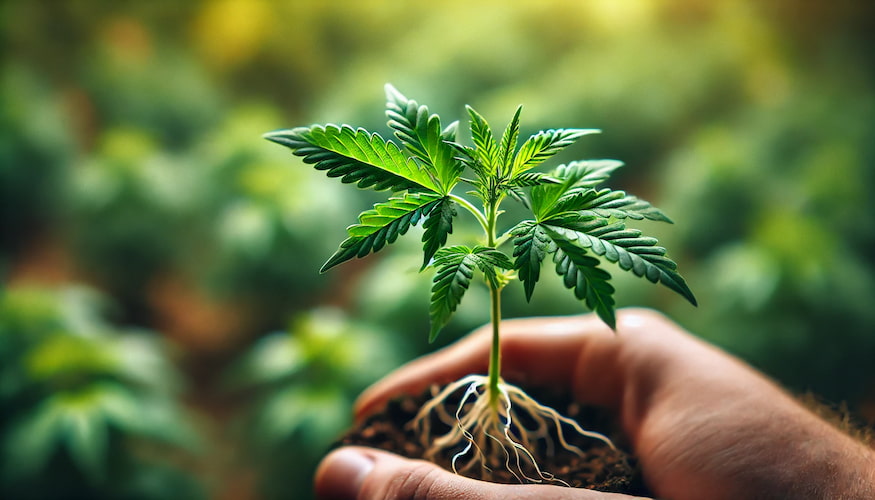
A seedling has a radicle — a dedicated root embryo that pushes down the moment it germinates. A clone has none of that. It’s a severed stem that has to generate an entirely new root system from scratch using a process called adventitious rooting, where callus tissue forms at the wound site and eventually differentiates into root primordia.

That process is delicate. The cutting has no roots yet, so it can’t pull water from the medium. It loses moisture through its leaves constantly. Every hour it spends outside the right conditions is an hour it’s fighting to stay alive instead of growing roots. Get the environment wrong, and it simply runs out of energy before roots ever form.

Understanding that is the foundation for fixing — and preventing — every rooting failure on this list.

The Top Reasons Cannabis Clones Fail to Root

1. Humidity Too Low

This is the number-one killer of unrooted clones, and it’s the first thing we check when someone tells us their cuttings are wilting or dying. Without roots, a clone can’t replace the water it loses through its leaves. Transpiration keeps happening regardless. If ambient humidity is below 70%, the cutting is in a constant water deficit it can’t recover from.

Target 75–85% relative humidity throughout the rooting phase. A humidity dome over your propagation tray is the simplest way to get there. Crack the dome slightly after day 7 to begin hardening off, but don’t drop below 70% until roots are established. A cheap digital hygrometer — placed inside the dome, not outside — is a must-have. Don’t guess.

2. Light Too Strong

Unrooted clones don’t need photosynthesis. They need to survive, not grow. Blasting them with full-intensity grow lights during the rooting phase stresses the plant, increases transpiration demand, and accelerates wilting. We’ve seen growers fry their entire tray by putting it directly under a 600W HPS or a high-power LED at close range.

Keep intensity at 200–400 lux during rooting. If you’re using a dedicated propagation light, follow the manufacturer’s distance recommendation. If you’re using a full-size LED, hang it at 18–24 inches and dim it down. A photoperiod of 18/6 or 24/0 is fine — the light cycle matters less than the intensity at this stage. Soft, diffused light is your friend.

3. No Rooting Hormone — or the Wrong Type

Rooting hormone isn’t optional if you want consistent results. The active ingredient to look for is IBA — Indole-3-butyric acid — which is the synthetic auxin that signals the cutting to generate root tissue. Without it, rooting relies entirely on the plant’s internal auxin levels, which varies widely by strain and cutting health.

In terms of format, gel beats powder beats liquid for most growers. Gel coats the wound site completely, seals out contaminants, and doesn’t wash off when you insert the cutting into the medium. Powder works but can flake off. Liquids require you to soak the stem, which can introduce waterlogging issues. For a deeper breakdown of what to use and when, check out our guide on rooting hormones for cannabis clones.

Apply hormone immediately after the final cut — within seconds. Exposure to air starts oxidizing the wound almost immediately, and delaying hormone application means you’re applying it to a compromised surface.

4. Dirty Tools and Contaminated Cuts

This one is unforgiving. Bacteria on your scissors or blade transfer directly into the open wound at the cut end. Within 24–48 hours you can have a black, mushy stem base — not from overwatering, but from bacterial infection that killed the callus tissue before it ever got started.

Use a single-edge razor blade or a surgical scalpel, not scissors. Scissors crush the vascular tissue as they cut; a blade gives you a clean, open wound that’s ready to callus. Wipe the blade with 91%+ isopropyl alcohol before each cut, and let it air dry for 30 seconds before use. If you’re taking 20 cuts, wipe the blade between every single one. It takes 10 seconds and it’s non-negotiable.

5. Bad Cutting Selection

The quality of the cut determines the ceiling on what’s possible. Cuttings from stressed plants, plants in early flower, or extremely woody old-growth stems root poorly or not at all. Stressed mother plants produce cuttings with compromised auxin signaling. Flowering tissue has already been chemically redirected and will struggle to revert to vegetative rooting mode. Woody stems have limited meristematic tissue at the wound site.

The ideal cutting is 4–6 inches long, taken from soft green tip growth in the middle or upper canopy of a healthy, actively vegetating mother plant. It should have 2–3 nodes, a stem diameter around 3–5mm, and no signs of pests, disease, or nutrient burn. For everything you need to know about picking the right cut, read our full guide on cutting selection for cannabis cloning.

6. Temperature Too Low or Too High

Temperature drives the speed of callus formation. Too cold and the biological processes that produce root tissue slow to a crawl. Too hot and the cutting is in heat stress while simultaneously dealing with increased transpiration demand.

The target root zone temperature is 70–77°F (21–25°C). A heat mat under your propagation tray helps maintain this in cooler environments. Ambient air temperature inside the dome should be 70–75°F — slightly lower than the root zone. If ambient temperature climbs above 80°F, you’re adding heat stress on top of everything else. Keep a thermometer at canopy level, not just at room temperature.

7. Overwatering the Rooting Medium

This is counterintuitive for new growers: a cutting does not need a wet medium. It needs a moist medium. The difference matters enormously. Soggy medium chokes out oxygen at the root initiation zone. Root development requires oxygen — that’s why aeroponics and misting cloners work so well, because the cut ends are suspended in air with intermittent moisture rather than submerged.

For rockwool, rapid rooter plugs, or soil-based propagation, squeeze the medium before use until no more water drips out and it feels like a wrung-out sponge. That’s the target moisture level. Don’t water again until the medium starts to feel light or slightly dry at the edges. If you’re using a propagation tray with a humidity dome, you won’t need to water often — the dome recirculates moisture.

8. pH Out of Range

Rooting tissue is sensitive to pH. If your water or medium pH is significantly outside the 5.5–6.5 range, the developing root cells can’t properly uptake minerals or regulate cell chemistry. In practice this shows up as slow rooting, discolored callus tissue, or cuts that look fine on the surface but never produce visible roots.

If you’re using rockwool, pre-soak it in pH 5.5 water for at least an hour before use — rockwool is naturally high pH out of the bag. For rapid rooter or coco-based plugs, pH 6.0–6.2 is the sweet spot. Test your water with a calibrated digital pH meter, not pH drops or strips — the margin of error matters here.

9. Stems Too Short

A cutting that’s only 2–3 inches long has limited surface area for root initiation and fewer stored carbohydrates to fuel the process. Short cuttings also tend to tip over in the medium, break the wound site contact, and generally produce fewer, weaker roots even when they do root.

Minimum cutting length is 4 inches. Optimal is 5–6 inches. The additional stem length gives you more internodal tissue that can throw adventitious roots, more carbohydrate reserves in the stem, and better stability in the rooting plug or medium. If your mother plant is too short or too branchy to take a proper cut, that’s a mother plant management issue to fix before the next cycle.

10. Too Much Foliage Left On

Every leaf on an unrooted cutting is a transpiration surface. More leaf surface area means more water loss. If you leave 4–5 full fan leaves on a cutting, it will wilt faster than a cutting with 2–3 leaves trimmed to half their size.

Strip all leaves from the bottom two-thirds of the stem before inserting it into the medium — those leaves would be buried anyway and will rot if left on. Leave the top 2–3 leaves, and trim the largest ones by about half. This reduces the total transpiration load without removing all the leaf tissue the cutting needs for light absorption and carbohydrate production.

Rooting Troubleshooting Table

Use this table to diagnose what you’re seeing and act on it fast. Time is your enemy once something goes wrong with unrooted clones.

Symptom Most Likely Cause Fix
Yellow, wilting leaves Humidity too low — clone is losing water faster than it can hold Raise RH to 75–85% immediately; check dome seal; mist inside dome lightly
Stem base turns black or mushy Pythium or bacterial stem rot from contamination, overwatering, or dirty tools Remove from medium immediately, recut 1–2 inches above rot, sanitize tools, use clean medium, apply fresh rooting gel
No roots after 14+ days Low temperature, no hormone applied, or bad cutting from stressed mother Check root zone temp (target 72–77°F), confirm hormone was used, evaluate mother plant health
Brown crispy leaf tips Light intensity too high — photoinhibition and heat stress at leaf margins Reduce to 200–400 lux, increase distance to 18–24 inches from LED, check for hot spots
Leaves cupping downward Combination of heat stress and low humidity Lower ambient temp to 70–75°F, raise RH to 80%+, shade the dome from direct light
Stem feels hollow or soft to the touch Overwatering combined with early rot — oxygen deprivation at wound site Remove from medium, recut cleanly, let cut end air dry for 15–20 minutes, restart in fresh moist medium
White fuzz or white nubs on stem base Healthy callus tissue forming — this is the beginning of root development Do nothing — maintain your current conditions; roots typically emerge within 3–5 more days
Clone looks healthy but won’t root after 21 days Mother plant genetics stressed, over-mature, or recently flowered — poor auxin signaling Cull these cuts; take fresh cuttings from a different, actively vegetating mother plant
Leggy stretch toward light Light too dim or positioned too far away Raise light intensity slightly or reduce distance by 4–6 inches; don’t overcompensate into high-stress range

Ideal Rooting Conditions at a Glance

If you want one reference to bookmark, this is it. These are the conditions that produce consistent rooting across most indica, sativa, and hybrid strains.

  • Relative Humidity: 75–85% inside the dome
  • Root Zone Temperature: 72–77°F (22–25°C)
  • Ambient Air Temperature: 70–75°F (21–24°C)
  • Light Intensity: 200–400 lux
  • Light Cycle: 18/6 or 24/0 — either works
  • Rooting Medium Moisture: Moist, not wet — wrung-out sponge consistency
  • Water/Medium pH: 5.5–6.5
  • Rooting Hormone: IBA-based gel, applied immediately after the final cut

Every variable on that list is within your control. There’s no luck involved in rooting clones successfully — it’s entirely an environment and technique game. We walk through how to set all of this up in detail in our cannabis cloning techniques guide.

How Long Should Rooting Take?

Rooting timelines vary by genetics, but here’s what you should realistically expect under proper conditions.

Indica-dominant strains are typically the fastest rooters. Most indica-leaning cuts show root emergence in 5–10 days under ideal conditions. Their shorter internodes, denser stem structure, and generally vigorous vegetative growth contribute to faster callus formation and root development.

Hybrid strains — which is most of what the modern cannabis market produces — typically root in 7–14 days. This is the standard benchmark. If your hybrids are consistently taking longer than 14 days, something in your environment or technique is off.

Sativa-dominant strains are the outliers. Longer internodes, thinner stems, and sometimes finicky genetics mean rooting can take 14–21 days even under excellent conditions. This is normal — not a sign of failure. Patience pays off with sativa cuts. Don’t disturb them, don’t change your conditions unnecessarily, and let them do their thing.

Day 21 is the hard line. If you have no visible root emergence, no new leaf growth, and the stem base still looks clean but unproductive after three full weeks, that cut is almost certainly not going to root. Evaluate and cull at that point.

When to Cut Your Losses and Cull

Culling is hard when you’ve put two or three weeks into a tray. But holding onto non-rooting cuts wastes tray space, medium, water, electricity, and your time. It also risks spreading disease if any of them have rot or fungal issues.

Cull immediately if you see any of these:

  • Black stem rot at or above the medium line — that tissue is dead and the infection can spread
  • Mushy, collapsing stem base with foul smell — pythium or bacterial rot; gone
  • Complete leaf drop with no new growth after 10+ days — the cutting has depleted its energy reserves

Cull after 21 days if you see any of these:

  • No root emergence and no new leaf growth — no progress means no rooting
  • Stagnant but still green — the cutting is surviving but not developing; these rarely catch up
  • Healthy appearance with no root evidence and a healthy mother plant — likely a genetics or technique issue; take fresh cuts and start over

When you cull, look at the cut end before you throw it away. If you see brown discoloration inside the stem (vascular tissue), you had contamination. If the stem was completely clean with a white wound site but no callus, you likely had a temperature or hormone issue. Culling teaches you something every time if you pay attention.

Why We Built IWantClones.com Around This Problem

Rooting failure is the single biggest barrier new and intermediate cannabis growers face. You can nail your environment, use the right hormone, take clean cuts from healthy mothers — and still have a 20–30% failure rate on any given tray. That’s just the reality of propagation.

Pre-rooted clones from IWantClones.com eliminate that entire phase. When your order arrives, the hard work is already done. Every clone in our catalog has been rooted, inspected, and verified healthy before it ships. You’re not starting from a severed stem hoping for the best — you’re starting from an established, actively growing plant ready to go into your next container or system.

No dome setup. No rooting hormone guessing. No two weeks of watching cuttings and hoping. And no 20% tray loss to factor into your planning. You get consistent, verified plants every time. When you’re ready to skip the rooting phase entirely, browse our available clones and see what’s in stock. If your order is on the way, our guide on what to do when clones arrive has everything you need for a smooth transition.

For growers who want to keep running their own propagation program, we get it — knowing how to root your own clones is a valuable skill and gives you full control over your genetics. Our full cannabis clone troubleshooting guide covers scenarios beyond rooting if you run into issues later in the cycle.

Frequently Asked Questions

Why are my clones wilting even inside a humidity dome?

Check the RH inside the dome with a digital hygrometer — not just room humidity. Dome humidity should be 75–85%. If the dome has gaps or the vents are open too wide, RH drops fast. Also confirm your lights aren’t generating excess heat inside the dome, which drives transpiration up and kills wilting clones faster.

Can I root clones without rooting hormone?

Yes, but success rates drop significantly and rooting takes longer. Some strains root easily without hormone; others won’t root at all. IBA-based rooting gel is inexpensive and reliable — there’s no reason to skip it. It closes the wound site, reduces contamination risk, and directly triggers root initiation. Use it every time.

My clones look healthy but haven’t rooted after 2 weeks — what’s wrong?

Two weeks with no roots but a healthy-looking clone is usually a temperature or mother plant issue. Confirm root zone temp is 72–77°F. Also assess the mother — if she was recently stressed, in pre-flower, or hasn’t been in active veg for at least 2–3 weeks, her cuttings will root slowly or not at all. Consider taking fresh cuts after letting her recover.

How do I know when my clones are actually rooted?

The clearest sign is new leaf growth — when a cutting starts pushing new foliage, it has established enough root mass to support active growth. You may also see small white root tips emerging from the bottom of rockwool or rapid rooter plugs. Avoid pulling cuttings out of the medium to check — you risk damaging developing roots and setting the process back by days.

What’s the best rooting medium for cannabis clones?

Rapid rooter plugs (made from composted bark bound with polymer) are our top pick — they have excellent air-to-water ratio, buffer pH naturally, and transplant cleanly. Rockwool cubes work well if pre-soaked properly. Straight coco or perlite mixes can work but require more precise watering. Avoid dense soil during rooting — it holds too much water and not enough oxygen for wound-site root initiation.

Share

Comments are closed.

Also recommended

Why Cannabis Clones Fail to Root (and How to Fix It)

July 14, 2026
Cannabis cloning techniques

Most cannabis clones fail to root because of humidity that’s too low, light that’s too intense, or skipping rooting hormone altogether. The good news: most rooting failures can be fixed by dialing in 75–85% relative humidity, dimming lights to 200–400 lux, and using a quality rooting gel or powder with IBA as the active ingredient.

We’ve seen this play out thousands of times at IWantClones.com. The difference between a tray of thriving clones and a tray of drooping, yellowing sticks is almost always something simple — and completely avoidable once you know what to look for.

Key Takeaways

  • Clones transpire through their leaves before roots form — low humidity (below 70% RH) kills them fast.
  • Intense light stresses unrooted cuttings; keep lux at 200–400 and distance at 18–24 inches from a low-power LED.
  • Rooting gel outperforms powder and liquid because it seals the cut end and delivers IBA directly to the wound site.
  • Unsterilized tools introduce bacteria that cause stem rot within days — always wipe blades with isopropyl alcohol before every cut.
  • Most healthy strains root in 7–14 days under proper conditions; if you see no progress by day 21, it’s time to evaluate and likely cull.
  • Pre-rooted clones from IWantClones.com arrive already past this phase — no guessing, no losses, no waiting.

Why Clones Can’t Root Like Seeds

A seedling has a radicle — a dedicated root embryo that pushes down the moment it germinates. A clone has none of that. It’s a severed stem that has to generate an entirely new root system from scratch using a process called adventitious rooting, where callus tissue forms at the wound site and eventually differentiates into root primordia.

That process is delicate. The cutting has no roots yet, so it can’t pull water from the medium. It loses moisture through its leaves constantly. Every hour it spends outside the right conditions is an hour it’s fighting to stay alive instead of growing roots. Get the environment wrong, and it simply runs out of energy before roots ever form.

Understanding that is the foundation for fixing — and preventing — every rooting failure on this list.

The Top Reasons Cannabis Clones Fail to Root

1. Humidity Too Low

This is the number-one killer of unrooted clones, and it’s the first thing we check when someone tells us their cuttings are wilting or dying. Without roots, a clone can’t replace the water it loses through its leaves. Transpiration keeps happening regardless. If ambient humidity is below 70%, the cutting is in a constant water deficit it can’t recover from.

Target 75–85% relative humidity throughout the rooting phase. A humidity dome over your propagation tray is the simplest way to get there. Crack the dome slightly after day 7 to begin hardening off, but don’t drop below 70% until roots are established. A cheap digital hygrometer — placed inside the dome, not outside — is a must-have. Don’t guess.

2. Light Too Strong

Unrooted clones don’t need photosynthesis. They need to survive, not grow. Blasting them with full-intensity grow lights during the rooting phase stresses the plant, increases transpiration demand, and accelerates wilting. We’ve seen growers fry their entire tray by putting it directly under a 600W HPS or a high-power LED at close range.

Keep intensity at 200–400 lux during rooting. If you’re using a dedicated propagation light, follow the manufacturer’s distance recommendation. If you’re using a full-size LED, hang it at 18–24 inches and dim it down. A photoperiod of 18/6 or 24/0 is fine — the light cycle matters less than the intensity at this stage. Soft, diffused light is your friend.

3. No Rooting Hormone — or the Wrong Type

Rooting hormone isn’t optional if you want consistent results. The active ingredient to look for is IBA — Indole-3-butyric acid — which is the synthetic auxin that signals the cutting to generate root tissue. Without it, rooting relies entirely on the plant’s internal auxin levels, which varies widely by strain and cutting health.

In terms of format, gel beats powder beats liquid for most growers. Gel coats the wound site completely, seals out contaminants, and doesn’t wash off when you insert the cutting into the medium. Powder works but can flake off. Liquids require you to soak the stem, which can introduce waterlogging issues. For a deeper breakdown of what to use and when, check out our guide on rooting hormones for cannabis clones.

Apply hormone immediately after the final cut — within seconds. Exposure to air starts oxidizing the wound almost immediately, and delaying hormone application means you’re applying it to a compromised surface.

4. Dirty Tools and Contaminated Cuts

This one is unforgiving. Bacteria on your scissors or blade transfer directly into the open wound at the cut end. Within 24–48 hours you can have a black, mushy stem base — not from overwatering, but from bacterial infection that killed the callus tissue before it ever got started.

Use a single-edge razor blade or a surgical scalpel, not scissors. Scissors crush the vascular tissue as they cut; a blade gives you a clean, open wound that’s ready to callus. Wipe the blade with 91%+ isopropyl alcohol before each cut, and let it air dry for 30 seconds before use. If you’re taking 20 cuts, wipe the blade between every single one. It takes 10 seconds and it’s non-negotiable.

5. Bad Cutting Selection

The quality of the cut determines the ceiling on what’s possible. Cuttings from stressed plants, plants in early flower, or extremely woody old-growth stems root poorly or not at all. Stressed mother plants produce cuttings with compromised auxin signaling. Flowering tissue has already been chemically redirected and will struggle to revert to vegetative rooting mode. Woody stems have limited meristematic tissue at the wound site.

The ideal cutting is 4–6 inches long, taken from soft green tip growth in the middle or upper canopy of a healthy, actively vegetating mother plant. It should have 2–3 nodes, a stem diameter around 3–5mm, and no signs of pests, disease, or nutrient burn. For everything you need to know about picking the right cut, read our full guide on cutting selection for cannabis cloning.

6. Temperature Too Low or Too High

Temperature drives the speed of callus formation. Too cold and the biological processes that produce root tissue slow to a crawl. Too hot and the cutting is in heat stress while simultaneously dealing with increased transpiration demand.

The target root zone temperature is 70–77°F (21–25°C). A heat mat under your propagation tray helps maintain this in cooler environments. Ambient air temperature inside the dome should be 70–75°F — slightly lower than the root zone. If ambient temperature climbs above 80°F, you’re adding heat stress on top of everything else. Keep a thermometer at canopy level, not just at room temperature.

7. Overwatering the Rooting Medium

This is counterintuitive for new growers: a cutting does not need a wet medium. It needs a moist medium. The difference matters enormously. Soggy medium chokes out oxygen at the root initiation zone. Root development requires oxygen — that’s why aeroponics and misting cloners work so well, because the cut ends are suspended in air with intermittent moisture rather than submerged.

For rockwool, rapid rooter plugs, or soil-based propagation, squeeze the medium before use until no more water drips out and it feels like a wrung-out sponge. That’s the target moisture level. Don’t water again until the medium starts to feel light or slightly dry at the edges. If you’re using a propagation tray with a humidity dome, you won’t need to water often — the dome recirculates moisture.

8. pH Out of Range

Rooting tissue is sensitive to pH. If your water or medium pH is significantly outside the 5.5–6.5 range, the developing root cells can’t properly uptake minerals or regulate cell chemistry. In practice this shows up as slow rooting, discolored callus tissue, or cuts that look fine on the surface but never produce visible roots.

If you’re using rockwool, pre-soak it in pH 5.5 water for at least an hour before use — rockwool is naturally high pH out of the bag. For rapid rooter or coco-based plugs, pH 6.0–6.2 is the sweet spot. Test your water with a calibrated digital pH meter, not pH drops or strips — the margin of error matters here.

9. Stems Too Short

A cutting that’s only 2–3 inches long has limited surface area for root initiation and fewer stored carbohydrates to fuel the process. Short cuttings also tend to tip over in the medium, break the wound site contact, and generally produce fewer, weaker roots even when they do root.

Minimum cutting length is 4 inches. Optimal is 5–6 inches. The additional stem length gives you more internodal tissue that can throw adventitious roots, more carbohydrate reserves in the stem, and better stability in the rooting plug or medium. If your mother plant is too short or too branchy to take a proper cut, that’s a mother plant management issue to fix before the next cycle.

10. Too Much Foliage Left On

Every leaf on an unrooted cutting is a transpiration surface. More leaf surface area means more water loss. If you leave 4–5 full fan leaves on a cutting, it will wilt faster than a cutting with 2–3 leaves trimmed to half their size.

Strip all leaves from the bottom two-thirds of the stem before inserting it into the medium — those leaves would be buried anyway and will rot if left on. Leave the top 2–3 leaves, and trim the largest ones by about half. This reduces the total transpiration load without removing all the leaf tissue the cutting needs for light absorption and carbohydrate production.

Rooting Troubleshooting Table

Use this table to diagnose what you’re seeing and act on it fast. Time is your enemy once something goes wrong with unrooted clones.

Symptom Most Likely Cause Fix
Yellow, wilting leaves Humidity too low — clone is losing water faster than it can hold Raise RH to 75–85% immediately; check dome seal; mist inside dome lightly
Stem base turns black or mushy Pythium or bacterial stem rot from contamination, overwatering, or dirty tools Remove from medium immediately, recut 1–2 inches above rot, sanitize tools, use clean medium, apply fresh rooting gel
No roots after 14+ days Low temperature, no hormone applied, or bad cutting from stressed mother Check root zone temp (target 72–77°F), confirm hormone was used, evaluate mother plant health
Brown crispy leaf tips Light intensity too high — photoinhibition and heat stress at leaf margins Reduce to 200–400 lux, increase distance to 18–24 inches from LED, check for hot spots
Leaves cupping downward Combination of heat stress and low humidity Lower ambient temp to 70–75°F, raise RH to 80%+, shade the dome from direct light
Stem feels hollow or soft to the touch Overwatering combined with early rot — oxygen deprivation at wound site Remove from medium, recut cleanly, let cut end air dry for 15–20 minutes, restart in fresh moist medium
White fuzz or white nubs on stem base Healthy callus tissue forming — this is the beginning of root development Do nothing — maintain your current conditions; roots typically emerge within 3–5 more days
Clone looks healthy but won’t root after 21 days Mother plant genetics stressed, over-mature, or recently flowered — poor auxin signaling Cull these cuts; take fresh cuttings from a different, actively vegetating mother plant
Leggy stretch toward light Light too dim or positioned too far away Raise light intensity slightly or reduce distance by 4–6 inches; don’t overcompensate into high-stress range

Ideal Rooting Conditions at a Glance

If you want one reference to bookmark, this is it. These are the conditions that produce consistent rooting across most indica, sativa, and hybrid strains.

  • Relative Humidity: 75–85% inside the dome
  • Root Zone Temperature: 72–77°F (22–25°C)
  • Ambient Air Temperature: 70–75°F (21–24°C)
  • Light Intensity: 200–400 lux
  • Light Cycle: 18/6 or 24/0 — either works
  • Rooting Medium Moisture: Moist, not wet — wrung-out sponge consistency
  • Water/Medium pH: 5.5–6.5
  • Rooting Hormone: IBA-based gel, applied immediately after the final cut

Every variable on that list is within your control. There’s no luck involved in rooting clones successfully — it’s entirely an environment and technique game. We walk through how to set all of this up in detail in our cannabis cloning techniques guide.

How Long Should Rooting Take?

Rooting timelines vary by genetics, but here’s what you should realistically expect under proper conditions.

Indica-dominant strains are typically the fastest rooters. Most indica-leaning cuts show root emergence in 5–10 days under ideal conditions. Their shorter internodes, denser stem structure, and generally vigorous vegetative growth contribute to faster callus formation and root development.

Hybrid strains — which is most of what the modern cannabis market produces — typically root in 7–14 days. This is the standard benchmark. If your hybrids are consistently taking longer than 14 days, something in your environment or technique is off.

Sativa-dominant strains are the outliers. Longer internodes, thinner stems, and sometimes finicky genetics mean rooting can take 14–21 days even under excellent conditions. This is normal — not a sign of failure. Patience pays off with sativa cuts. Don’t disturb them, don’t change your conditions unnecessarily, and let them do their thing.

Day 21 is the hard line. If you have no visible root emergence, no new leaf growth, and the stem base still looks clean but unproductive after three full weeks, that cut is almost certainly not going to root. Evaluate and cull at that point.

When to Cut Your Losses and Cull

Culling is hard when you’ve put two or three weeks into a tray. But holding onto non-rooting cuts wastes tray space, medium, water, electricity, and your time. It also risks spreading disease if any of them have rot or fungal issues.

Cull immediately if you see any of these:

  • Black stem rot at or above the medium line — that tissue is dead and the infection can spread
  • Mushy, collapsing stem base with foul smell — pythium or bacterial rot; gone
  • Complete leaf drop with no new growth after 10+ days — the cutting has depleted its energy reserves

Cull after 21 days if you see any of these:

  • No root emergence and no new leaf growth — no progress means no rooting
  • Stagnant but still green — the cutting is surviving but not developing; these rarely catch up
  • Healthy appearance with no root evidence and a healthy mother plant — likely a genetics or technique issue; take fresh cuts and start over

When you cull, look at the cut end before you throw it away. If you see brown discoloration inside the stem (vascular tissue), you had contamination. If the stem was completely clean with a white wound site but no callus, you likely had a temperature or hormone issue. Culling teaches you something every time if you pay attention.

Why We Built IWantClones.com Around This Problem

Rooting failure is the single biggest barrier new and intermediate cannabis growers face. You can nail your environment, use the right hormone, take clean cuts from healthy mothers — and still have a 20–30% failure rate on any given tray. That’s just the reality of propagation.

Pre-rooted clones from IWantClones.com eliminate that entire phase. When your order arrives, the hard work is already done. Every clone in our catalog has been rooted, inspected, and verified healthy before it ships. You’re not starting from a severed stem hoping for the best — you’re starting from an established, actively growing plant ready to go into your next container or system.

No dome setup. No rooting hormone guessing. No two weeks of watching cuttings and hoping. And no 20% tray loss to factor into your planning. You get consistent, verified plants every time. When you’re ready to skip the rooting phase entirely, browse our available clones and see what’s in stock. If your order is on the way, our guide on what to do when clones arrive has everything you need for a smooth transition.

For growers who want to keep running their own propagation program, we get it — knowing how to root your own clones is a valuable skill and gives you full control over your genetics. Our full cannabis clone troubleshooting guide covers scenarios beyond rooting if you run into issues later in the cycle.

Frequently Asked Questions

Why are my clones wilting even inside a humidity dome?

Check the RH inside the dome with a digital hygrometer — not just room humidity. Dome humidity should be 75–85%. If the dome has gaps or the vents are open too wide, RH drops fast. Also confirm your lights aren’t generating excess heat inside the dome, which drives transpiration up and kills wilting clones faster.

Can I root clones without rooting hormone?

Yes, but success rates drop significantly and rooting takes longer. Some strains root easily without hormone; others won’t root at all. IBA-based rooting gel is inexpensive and reliable — there’s no reason to skip it. It closes the wound site, reduces contamination risk, and directly triggers root initiation. Use it every time.

My clones look healthy but haven’t rooted after 2 weeks — what’s wrong?

Two weeks with no roots but a healthy-looking clone is usually a temperature or mother plant issue. Confirm root zone temp is 72–77°F. Also assess the mother — if she was recently stressed, in pre-flower, or hasn’t been in active veg for at least 2–3 weeks, her cuttings will root slowly or not at all. Consider taking fresh cuts after letting her recover.

How do I know when my clones are actually rooted?

The clearest sign is new leaf growth — when a cutting starts pushing new foliage, it has established enough root mass to support active growth. You may also see small white root tips emerging from the bottom of rockwool or rapid rooter plugs. Avoid pulling cuttings out of the medium to check — you risk damaging developing roots and setting the process back by days.

What’s the best rooting medium for cannabis clones?

Rapid rooter plugs (made from composted bark bound with polymer) are our top pick — they have excellent air-to-water ratio, buffer pH naturally, and transplant cleanly. Rockwool cubes work well if pre-soaked properly. Straight coco or perlite mixes can work but require more precise watering. Avoid dense soil during rooting — it holds too much water and not enough oxygen for wound-site root initiation.

Written by James Bean

Recent Posts

Why Cannabis Clones Fail to Root (and How to Fix It)

Find out why clones fail to root — humidity, light, hormones & more. Fix rooting problems fast or skip the hassle with pre-rooted clones from IWantClones.com.

Read More
Dosi Punch Strain & Clone Grow Guide (Do-Si-Dos Lineage)

Dosi Punch strain is a potent indica cross of Do-Si-Dos x Purple Punch. Learn its lineage, effects, growing tips, and where to buy verified clones.

Read More
THC vs THCA vs CBD vs CBG: Cannabinoids Made Simple

Learn the difference between THC, THCA, CBD, CBG, CBN, and more. Plain-language cannabinoid guide for cannabis growers and buyers. Updated 2026.

Read More

Subscribe Today!

Get 10% off when you sign up for our weekly updates!

About Us

At IWantClones.com, we are dedicated to providing top-quality cannabis clones to growers of all levels.

Subscribe Today!

Subscribe our newsletter to get our latest update & news
We currently accept credit/debit card payments, cash, check, money order, bitcoin (BTC), litecoin (LTE), bitcoin cash (BCH), and dogecoin (DOGE).
© 2026 seedsherenow.com All Rights Reserved
magnifiercross linkedin facebook pinterest youtube rss twitter instagram facebook-blank rss-blank linkedin-blank pinterest youtube twitter instagram