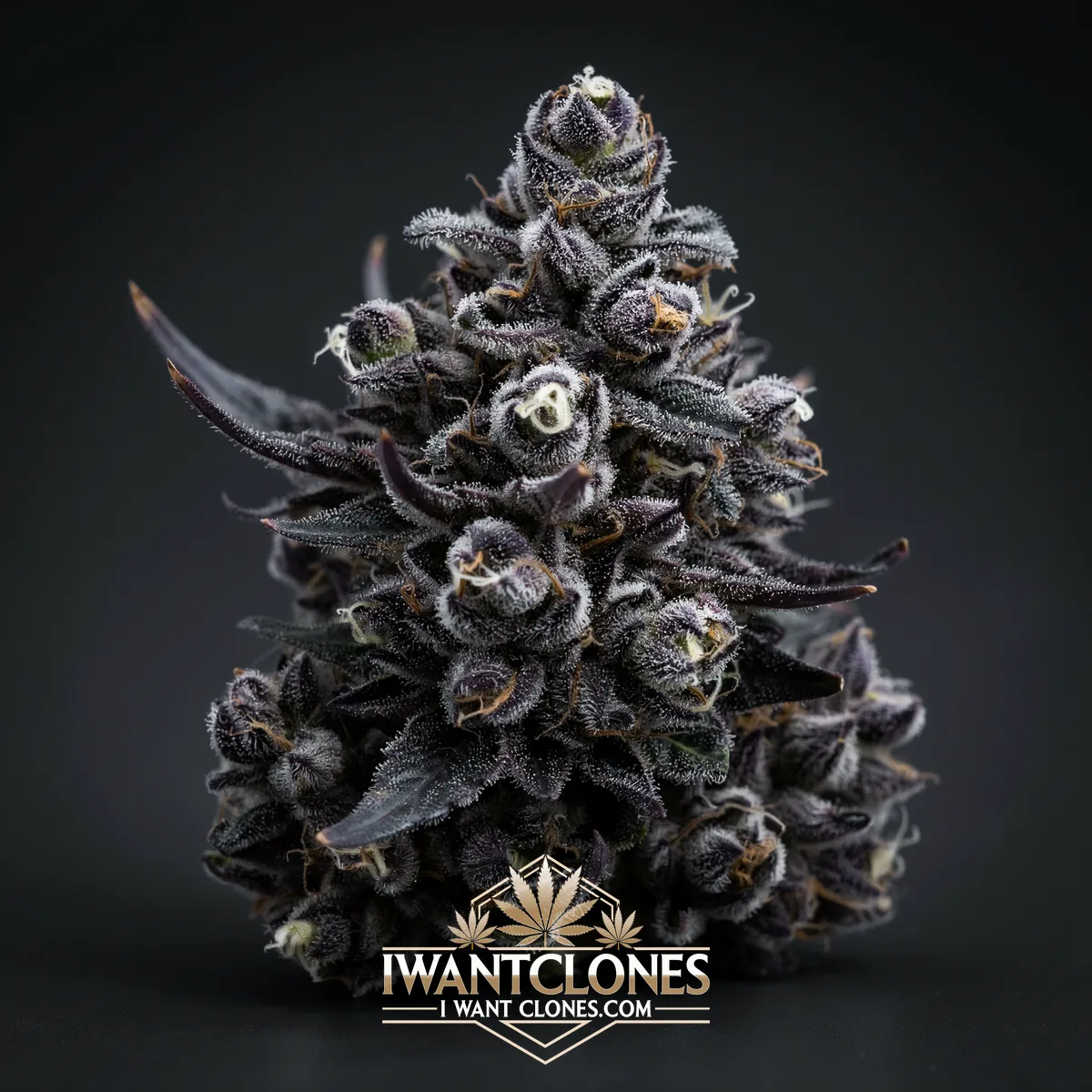

Bag appeal sells, and PinkRuntz has it in stacks. This candy-sweet hybrid is a phenotype selection from Runtz — the Zkittlez x Gelato cross that dominated hype boards for years — picked for its pink-blushed purple flower and a dialed-up candy nose, with THC sitting at 23-25%. It is one of the most requested cuts in our library, and this PinkRuntz strain and clone guide covers what is actually documented about the genetics, what the high does, and how to grow flower that looks as good as the name promises. PinkRuntz clones are available here, freshly rooted and screened for HLVd before they ship.
Key Takeaways
- PinkRuntz is a phenotype selection from Runtz (Zkittlez x Gelato); the exact selector of the original cut is not definitively documented, and we say so rather than inventing a story.
- THC tests at 23-25% with a long-lasting euphoric high that stays social instead of putting you on the couch.
- The visual is the selling point: pink-tinted purple flower with heavy frost, the kind of jar that moves itself.
- Flowering runs a manageable 8-9 weeks with medium yields around 450 g/m2 reported indoors.
- Cooler night temperatures in late flower are what bring out the pink and purple expression — this is a technique, not luck.
- Because PinkRuntz is a selected cut, clones are the only way to guarantee you are growing the real thing.
PinkRuntz Genetics
PinkRuntz descends from Runtz, the Zkittlez x Gelato cross that came out of the Cookies and Runtz camp in California and went on to put candy strains at the top of the market for years. Behind those parents sit two of the most influential flavor lines in modern cannabis: the Zkittlez side carries tropical fruit-punch sweetness, and the Gelato side brings creamy dessert gas and the Cookies-family potency.
Now the straight talk, because this is where a lot of strain writeups start making things up: nobody has published a definitive paper trail on who selected the original PinkRuntz cut, and some outlets float an alternate parentage story entirely. The Zkittlez x Gelato foundation is what the major databases agree on, so that is what we put our name behind — PinkRuntz is best understood as a selected Runtz phenotype, chosen for pink-purple expression and a louder candy nose. What matters for your room is that this is a verified, consistent cut, not a random bagseed pheno with a pretty name. For the broader family context, our White Runtz strain and clone guide covers the most famous sibling selection from the same line.
Aroma, Flavor and Terpene Profile
Limonene, caryophyllene, and linalool lead the profile. The nose is pure candy shop — sweet fruit, sugary berry, a floral edge from the linalool — with a creamy Gelato undertone that keeps it from being one-dimensional. Compared to standard Runtz, the selected cut leans harder into the sweet-floral end of the spectrum, which is exactly what it was picked for.
The flavor tracks the nose closely: fruity candy on the inhale, smooth cream on the exhale, very little of the gas or funk that dominates other corners of the market. This is the profile that made the entire Runtz family a phenomenon, and PinkRuntz is one of the prettier expressions of it. In the jar, the pink-blushed purple flower with bright orange pistils and heavy frost does half the selling before anyone smells a thing.
PinkRuntz Effects: What To Expect
PinkRuntz hits with a fast euphoric lift that turns giggly and talkative before easing into relaxation. The lean is slightly indica, but it never gets heavy-handed, which makes it a genuine anytime hybrid — weekend afternoons, social sessions, creative work you actually enjoy.
Databases log the high as long-lasting, and the growers we talk to agree: this is a two-hour ride, not a twenty-minute spike. At 23-25% THC it has real horsepower under the candy exterior, so newer smokers should treat it with respect and start slow. The social, functional character is a big part of why it outsells sleepier strains at the same potency level.
PinkRuntz Stats at a Glance
| Stat | Detail |
|---|---|
| Type | Hybrid, slight indica lean |
| Lineage | Runtz phenotype (Zkittlez x Gelato) |
| THC range | 23-25% |
| Flowering time | 8-9 weeks |
| Yield | Medium — around 450 g/m2 reported indoors |
| Difficulty | Moderate |
Growing PinkRuntz: What You Need To Know
PinkRuntz grows like a well-mannered Runtz: medium height, hybrid structure, moderate stretch, and dense, resinous flower on a manageable frame. It suits tents and small rooms well, runs indoors or out, and finishes outdoor harvests around mid October.
The headline technique for this strain is color. The pink and purple expression is genetic, but it is unlocked by environment — specifically, cooler night temperatures in the last two to three weeks of flower. Drop nights into the low 60s Fahrenheit while keeping days normal, and the anthocyanins come forward; run a hot room around the clock and you will harvest green flower that shortchanges the strain’s whole commercial point. Do not chase color with gimmicks like ice water or starving the plant — temperature differential is the honest lever.
Beyond color, treat it like the dessert strain it is: moderate humidity in flower, steady airflow through a dense canopy, and no drastic environmental swings. Get the first week right when your clone lands — the acclimation steps in what to do when clones arrive apply verbatim — and this cut settles in fast.
Container and medium choices are standard-issue: quality soil or coco in 3 to 5 gallon containers indoors covers most setups, and the plant transplants without sulking. Outdoors it stays a manageable size compared to sprawling sativas, making it a realistic greenhouse or backyard plant anywhere with a dry, mild October. If your fall runs humid, favor the indoor room — dense purple flower plus wet autumn air is a rot story you have already read the ending of.
Training for Maximum Yield
The 450 g/m2 reported figure is a midfield number, and training is how you beat it. PinkRuntz takes topping well — once at node four or five in veg — and its moderate stretch makes it easy to shape with LST into a flat, even table of colas. In a small tent, one topped and trained plant fills a square meter neatly over a four-to-five week veg.
Mainlining and SCROG both work if you want more structure, though neither is mandatory at this plant’s scale. What earns its keep is a defoliation pass around day 21 of flower: the leaf set is dense, interior bud sites shade out easily, and clearing the blockers improves both yield and the airflow that keeps dense purple buds rot-free. Support the main colas by week six; the buds are heavier than the pretty pictures suggest.
Feeding and Nutrition
PinkRuntz is a moderate feeder that behaves like most of the Gelato-descended family: it likes a steady, balanced diet and sulks under extremes. Standard veg nutrition at moderate EC, then a clean transition to bloom ratios with elevated P and K from week two of flower. Cal-mag is cheap insurance, particularly in coco and under LED.
Two notes specific to this cut. First, ease off nitrogen sooner than you would with a hungrier hybrid — lingering N keeps flower leafy and delays the fade that makes the final product photogenic. Second, when you drop night temperatures for color, uptake slows; cut feed strength 10-20% in those final weeks or you will bank salts the plant no longer uses. Watch runoff EC and let the plant fade naturally into its pinks and purples.
Common Problems
The most common complaint is green flower from growers who expected automatic pink — covered above, and fixable with night-time temperature control. Second is bud rot in the dense colas when late-flower humidity runs high; the cool nights that bring color also raise relative humidity, so run the dehumidifier harder exactly when you drop the temps. Third is overfeeding: dark, clawed leaves and burnt tips on a strain whose value is partly visual is an expensive cosmetic mistake.
Pest-wise, nothing unusual — standard vigilance for mites and gnats applies. The cut is a consistent, predictable grower, which is exactly what you want from a strain selected for commercial appeal.
Why Buy PinkRuntz as a Clone Instead of Seeds
PinkRuntz is a selected phenotype, and that sentence settles the seeds-versus-clones question by itself. There is no such thing as true PinkRuntz seed — anything sold under the name is a cross or an S1, and a pack of Runtz-family seeds will throw phenos across the whole spectrum: some pink, most not, with candy noses ranging from loud to barely there. The pink-purple, high-frost, 23-25% expression that the name promises lives in the cut.
A verified clone gives you that exact plant, every run — the color genetics, the candy terps, the known 8-9 week finish — with no males, no pheno hunt, and a two-to-three week head start over germination. Ours ships freshly rooted with HLVd screening, which matters double for hype-family strains that have been passed hand to hand for years. Order the PinkRuntz clone here, or browse the full shelf of hybrid clones to pair it with. If the dessert lane is your market, the Lemon Cherry Gelato guide covers a natural companion cut.
A note on naming, because the Runtz family invites confusion: PinkRuntz, White Runtz, and standard Runtz are distinct selections, and menus mix them up constantly. If a jar or a cut cannot be traced to a verified source, assume nothing about what it actually is. That verification gap is most of the reason hype-family clones from random sources disappoint — the name travels faster than the genetics do.
Who Is PinkRuntz For?
Anyone growing for bag appeal — caregivers, small commercial rooms, and home growers who care what the jar looks like when friends open it. Social smokers who want potency without paralysis. Growers of moderate experience who want a hype-family strain that does not demand expert-level skills. And photographers, honestly, because well-finished PinkRuntz is one of the best-looking plants you can put under a lens.
Look elsewhere if you want maximum-tonnage commodity yields, a fuel-and-funk flavor profile, or a heavy nighttime sedative — that is not what this selection was picked for.
Harvesting, Drying, and Curing
Harvest lands at week eight to nine indoors, around mid October outdoors. Take trichome checks from actual bud sites, not sugar leaves, and pull at cloudy-with-first-amber for the social, euphoric profile the strain is known for. The final two weeks are when the color show peaks — if the fade is running, let it finish, because those photos are worth real money at sale time.
Dry slow and cool, ten to fourteen days at 60/60. The candy terps are volatile and heat is their enemy; a rushed hot dry turns a bag of candy into a bag of hay faster than almost any other profile. Cure at 62% humidity for two weeks minimum. Handled right, the buds keep their pink-purple color through the cure and the nose gets sweeter and rounder — which is the whole product this strain exists to deliver.
If you plan to photograph the harvest for a menu or social feed, shoot within the first two weeks of the cure while the pinks are at their most saturated, and use neutral lighting — the color sells itself and does not need a filter. Flower stored properly in dark glass holds its hue well, but light exposure will slowly brown out the anthocyanin display.
FAQ
What is the difference between PinkRuntz and regular Runtz?
PinkRuntz is a phenotype selection from the Runtz line, picked for pink-tinted purple flower and a louder candy nose. Same Zkittlez x Gelato foundation, different selected expression — think of it as one keeper cut from a famous family.
Will my PinkRuntz buds actually turn pink?
With the genetics in this cut and cooler night temperatures in the last two to three weeks of flower, yes — expect pink-blushed purples over green. Keep the room hot around the clock and the color mostly stays hidden.
Is PinkRuntz a strong strain?
At 23-25% THC, it is stronger than the candy nose suggests. The high stays social and functional rather than sedative, but newer consumers should pace themselves.
How much does PinkRuntz yield?
Around 450 g/m2 indoors is the reported benchmark. Topping, LST, and a day-21 defoliation pass are the reliable ways to push above it in a home setup.