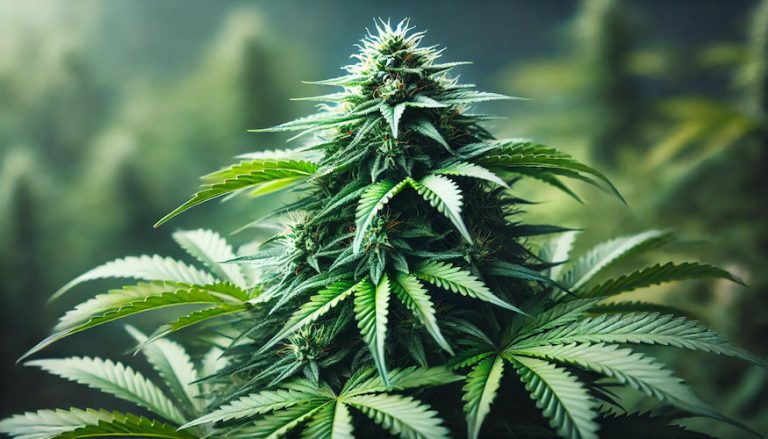


Most of the strains dominating exotic menus right now taste like candy. White Truffle doesn’t. It’s savory, dark, and almost umami — a strain that sits closer to GMO than to the cake-and-fruit crowd, wrapped in foliage so deeply purple it photographs black. That combination of flavor and looks made it a social-media star, but the plant underneath the hype is a cut with a strong hash pedigree. To look for White Truffle clones, visit the I Want Clones shop. Below is the full grower’s picture: where it comes from, how it behaves, and how to pull the near-black, frost-heavy flower it’s famous for.
Key Takeaways
- White Truffle is a phenotype of Gorilla Butter — Fresh Coast Seed Co.’s cross of Gorilla Glue #4 and Peanut Butter Breath — with the famous cut popularized out of Michigan by Parliament.
- The profile is savory, not sweet: earthy, nutty, garlic-butter funk driven by caryophyllene.
- It’s a 60/40 indica-leaning plant commonly reported around 24% THC (per Leafly).
- Flowering takes 8–9 weeks; buds get heavy for their branch strength, so plan on support by mid-flower.
- Cool night temps in late flower unlock the signature near-black coloration.
- Both parents are known hash strains, and White Truffle is often grown for rosin.
White Truffle Genetics
White Truffle’s family tree explains almost everything about it. The base cross is Gorilla Butter, bred by Fresh Coast Seed Co. out of Michigan: Gorilla Glue #4 crossed with Peanut Butter Breath. From that cross, a standout phenotype was selected and popularized by Parliament, also out of Michigan, and that cut is what the world now knows as White Truffle.
Look at what each side contributes. GG4 — a well-known resin plant, covered in depth in our Gorilla Glue clone guide — brings the sheer trichome output, the glue-like stickiness, and the vigor. Peanut Butter Breath brings the Breath side: savory, nutty, doughy funk and the dark pigmentation the OGKB/Breath lineage is known for. Stack them and you get GG4’s resin engine wrapped in near-black leaves with an umami terp profile — which is exactly what White Truffle delivers.
Because this is a selected cut rather than a seed line, provenance matters. The Parliament cut is the one with the reputation; a clone of that cut is how you know you’re growing it and not a random Gorilla Butter seedling wearing the name.
Aroma, Flavor and Terpene Profile
Savory is the word. Earthy, nutty, almost umami, with garlic-butter undertones and a quiet sweetness buried underneath — closer to a GMO-style funk than to anything in the dessert aisle. Caryophyllene leads the terpene profile, which accounts for the peppery, savory backbone, with limonene and myrcene playing support roles that keep it from reading as pure garlic.
If your reference points are strains like GMO Cookies — there’s a full GMO Cookies guide for comparison — White Truffle sits in that same savory lane but rounder and butterier, less raw allium and more truffle-oil depth. It gets loud by week six of flower, and it’s pungent in the jar. That funk is precisely why extract makers chase it: savory terps like these translate into rosin that stands apart on a shelf full of citrus and cake.
How Strong Is White Truffle?
White Truffle is commonly reported around 24% THC (per Leafly).
Newer smokers should start low.
White Truffle Stats at a Glance
| Type | Indica-leaning hybrid (60/40) |
|---|---|
| Lineage | Gorilla Butter phenotype (GG4 x Peanut Butter Breath, Fresh Coast Seed Co.; cut popularized by Parliament) |
| THC range | Commonly reported around 24% (per Leafly) |
| Flowering time | 8–9 weeks |
| Yield | Moderate |
| Difficulty | Intermediate |
Growing White Truffle: What You Need To Know
In the tent, White Truffle is a 60/40 indica-leaning plant with modest stretch — canopy planning is easy because what you flip is roughly what you flower, plus 50% or so. The buds come in dense, dark, and frost-heavy, finishing in 8 to 9 weeks.
The structural quirk to know in advance: the flowers get heavy for their branch strength. This isn’t a GG4-style rigid frame; by mid-flower the colas start to lean, and by week six unsupported branches will fold. Plan on staking or trellis support from the start rather than reacting to it. Beyond that, it’s a straightforward indoor plant — run it inside for the best color expression, keep humidity moderate late in bloom, and expect moderate yields of high-quality flower.
Environment-wise, it likes a standard warm veg and a flowering room you’re willing to cool at night. Cool night temps in the low 60s Fahrenheit during late flower are what bring out the very dark purple to near-black foliage and bud coloration the strain is famous for. If you’re still learning to balance temperature and humidity as a system, our VPD guide for cannabis clones is the place to start — this is a strain where a dialed environment pays visible dividends.
Veg it four to six weeks from a rooted cut for a standard tent plant. It vegges at a steady, unhurried pace — not slow, but not GG4-frantic either — and the dark foliage can fool new growers into diagnosing problems that aren’t there. Deep green-purple leaves are normal for this genetic; judge health by growth rate, turgor, and new-node spacing rather than color alone.
Training for Maximum Yield
Because the branches run soft relative to the bud weight, train early and support always. Top once in early veg to create four to six mains, use low-stress training to spread them while the stems are still pliable, and get a trellis net over the canopy before the flip — it’s doing double duty here as both a spreading tool and structural support for late flower.
Skip aggressive high-stress work after the stretch; this plant doesn’t rebuild fast in flower, and every snapped branch is a cola you taped instead of harvested. A moderate defoliation at flip and again around day 21 keeps light on the bud sites, and lollipopping the lower third is worth it — the small interior buds on a dark, dense strain like this are humidity traps, and concentrating energy into the supported top canopy is where the yield actually comes from.
Feeding and Nutrition
White Truffle feeds like a middleweight. GG4 heritage gives it decent appetite in veg — don’t starve it of nitrogen while it’s building frame — but it doesn’t want commercial-hydro EC levels in flower. Most growers do well around 1.5–1.9 EC in coco through mid-bloom, tapering from week six. In soil, a balanced amendment schedule with a bloom top-dress at flip covers its needs.
Watch calcium in particular. Dense-flowered, purple-expressing plants under LED routinely run Cal-Mag hungry, and with this strain a mid-flower calcium deficiency does double damage: it weakens branches that are already carrying more than they’d like, and it invites rot in the densest buds. A steady preventive Cal-Mag line from early flower is cheap insurance. As with any terp-first strain, keep the last two weeks clean — the savory profile is the product, and heavy late salts dull it.
Common Problems
Three things account for nearly every White Truffle complaint. First, branch failure: growers who skip support lose colas to their own weight by week seven. Stake or net early — this problem is easy to prevent. Second, bud rot: dense flowers plus moderate humidity tolerance means late-flower RH discipline is mandatory. Keep it at or under 50% from week five, with real airflow through the canopy, and inspect the thickest colas regularly.
Third, disappointing color. If your White Truffle finishes green-purple instead of near-black, your nights are too warm — the anthocyanin expression that defines the cut needs lights-off temps in the low 60s during the final weeks. It’s cosmetic, not chemical, but for a strain whose bag appeal is half the value proposition, it matters.
Why Buy White Truffle as a Clone Instead of Seeds
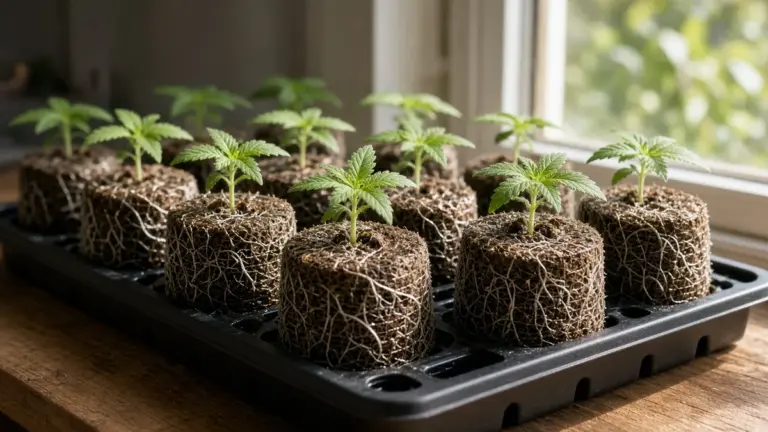
White Truffle is a phenotype, not a seed line. Pop Gorilla Butter seeds and you’re hunting through GG4 x Peanut Butter Breath expressions hoping to find something resembling the Parliament cut — most seedlings won’t have the black foliage, the truffle-butter nose, or the specific resin profile that made the name. The famous plant exists as a cutting, passed hand to hand, and a clone is the way to grow the actual cut rather than a lottery ticket. To look for White Truffle clones, visit the I Want Clones shop.
You also skip the practical costs of seed starts: no males to cull, no pheno variance across your room, and a known flowering clock — every plant finishing dark and heavy on the same day. For a strain you’re likely growing for bag appeal or hash, that consistency is the difference between a product line and a mixed bag.
Who Is White Truffle For?
Intermediate growers, bag-appeal chasers, and hash makers above all. If you can manage a trellis and hold late-flower humidity down, you can harvest striking flower. Hash and rosin producers should put it on the list — GG4 and Breath genetics both have washing reputations. It fits the rare and exotic clones category, and the high-THC clones category too.
It’s a poor match for first-time growers who aren’t ready for structural support and humidity control, and for anyone who needs maximum grams per square foot. For other hybrids, see the hybrid clones category.
Harvesting, Drying, and Curing
Take it down at week 8–9 when trichomes run mostly cloudy with scattered amber. The color deepens right through the final week, so if the environment is holding, patience is rewarded — the last ten days are when the near-black finish fully develops along with peak frost.
Dry it slow: 60°F, 58–60% RH, 12–14 days hanging whole. The savory terps are the whole story with this strain, and they’re exactly the kind of profile a rushed dry destroys first — a fast-dried White Truffle smells like generic earth instead of truffle butter. Cure at 58–62% in glass or CVault-style containers, burping daily for two weeks, and give it a full month before judging it. The umami depth develops noticeably in the cure, and a well-finished jar of near-black, frost-coated White Truffle is impressive flower. For a deeper walkthrough, see our full drying and curing guide.
FAQ
Does White Truffle actually turn black?
Very dark purple to near-black is common and authentic to the cut, especially on foliage and calyxes — but it’s temperature-dependent. Night temps in the low 60s Fahrenheit during late flower trigger the deepest expression. Grown warm around the clock, it stays much greener.
Is White Truffle good for rosin?
Yes. Both parents — GG4 and Peanut Butter Breath — have reputations as strong washers, and the savory terps carry into rosin.
How smelly is White Truffle during the grow?
Pungent and savory rather than sweet — garlic-butter funk that gets loud by week six and doesn’t quiet down. Filter accordingly if discretion matters; a carbon filter sized to your room is not optional indoors.
Is White Truffle an indica or a hybrid?
An indica-leaning hybrid, roughly 60/40.