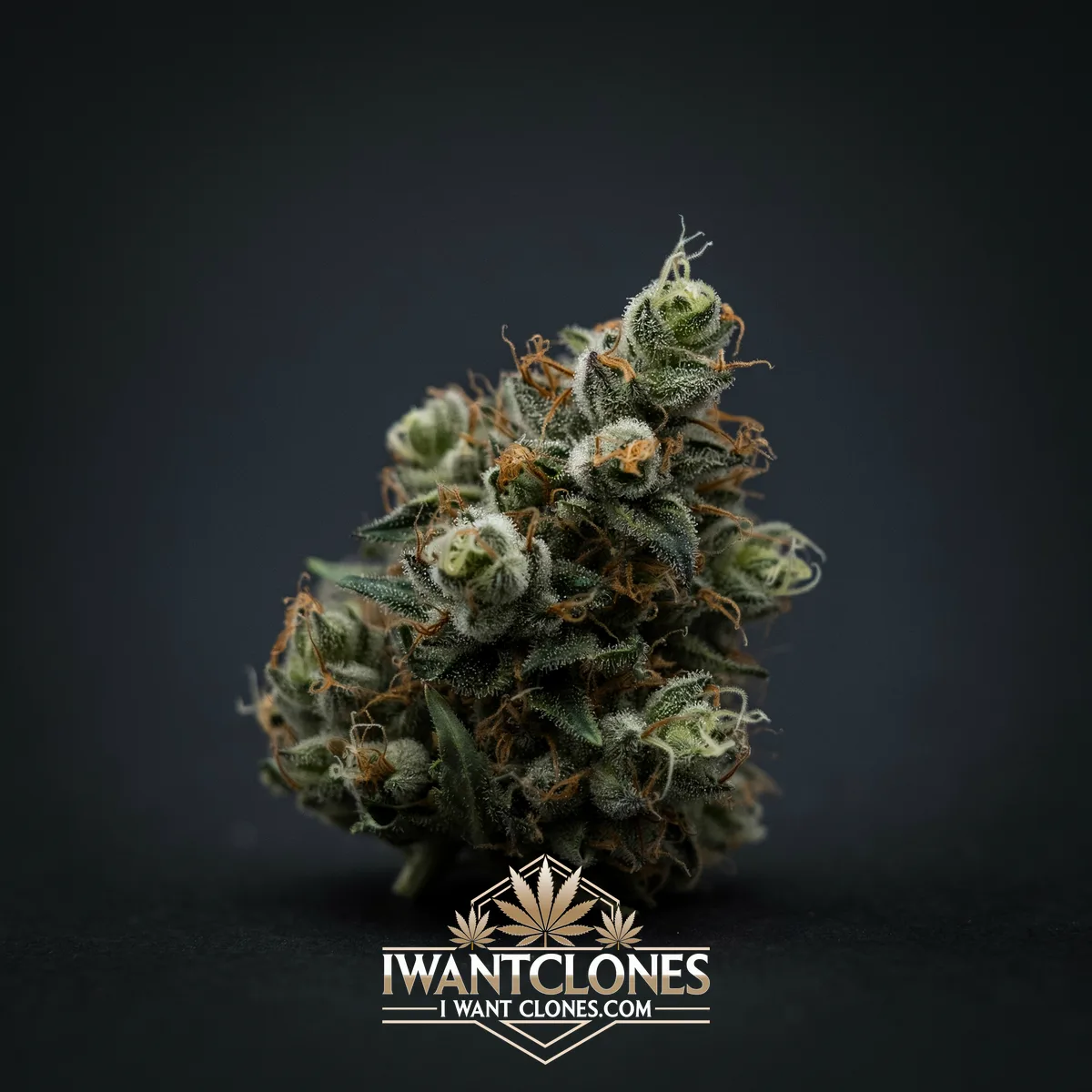
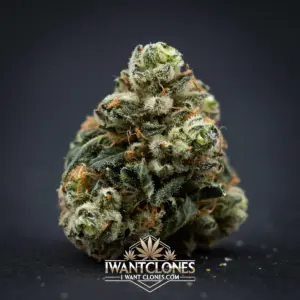
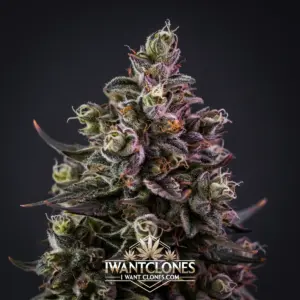
The gorilla glue strain—officially known today as Original Glue or GG#4—is one of the heaviest-yielding, highest-THC cultivars ever released to the public. It averages 25% to 32% THC, produces a couch-lock body stone that users report lasts for hours, and grows explosive, resin-caked colas indoors with yields reaching 500 to 600g/m² under a ScrOG. At IWantClones.com, we carry a verified cut of this legendary strain so you skip the phenotype lottery and start with proven genetics from day one.
- GG#4 is a cross of Chem’s Sister, Sour Dubb, and Chocolate Diesel—bred accidentally by Joesy Whales of GG Strains.
- Due to a trademark dispute with the original Gorilla Glue adhesive company, the strain was officially renamed Original Glue and GG4.
- THC typically tests between 25% to 32%, averaging around 28%—one of the highest-THC photoperiod strains available as a clone.
- Flowering time is 8 to 9 weeks (56 to 63 days); indoor yields hit 500 to 600g/m² with proper ScrOG training.
- Dense buds make humidity control critical—keep RH under 45% during weeks 6 to 9 of flower to prevent bud rot.
- A verified gorilla glue clone eliminates phenotype variation; seeds can produce plants that miss the signature “glue pheno” entirely.
GG#4 Origins: The Accident That Changed Cannabis
Few strains have an origin story as chaotic—or as consequential—as GG#4. Joesy Whales, a breeder operating under the GG Strains banner, was working with a Chem’s Sister clone when it accidentally crossed with a Sour Dubb male that had hermaphrodited. Those seeds were nearly thrown away. One of his collaborators, Lone Watty, talked him into popping them anyway. What germinated became the foundation for the most resin-coated strain most growers had ever seen.
The final expression—a three-way combination of Chem’s Sister × Sour Dubb × Chocolate Diesel—was stabilized through multiple rounds of selection. The “glue” in the name comes from the literal experience of trimming it: scissors get coated in so much sticky resin they become unusable within minutes. Trimming GG4 without freeze-drying your scissors first is a rite of passage for anyone who grows it. You can read more about the strain’s documented lineage at Leafly’s GG4 strain page.
The breeding team—Joesy Whales, Lone Watty, and Mardogg—distributed cuts through the underground market before GG4 took home multiple awards at the 2014 Cannabis Cup, including Best Hybrid at both the Los Angeles and Michigan events. That kind of competition dominance put the strain on growers’ radar worldwide practically overnight.
The Trademark Dispute: Why It’s Now Called “Original Glue” or “GG4”
In 2017, the Gorilla Glue Company—the Ohio-based manufacturer of the adhesive product—filed a lawsuit against GG Strains for trademark infringement. The cannabis breeders ultimately settled out of court and agreed to stop using the “Gorilla Glue” name commercially for their cannabis products.
As a result, the strain’s official commercial name became Original Glue, and the numbered phenotypes shifted to designations like GG#4, GG#1, and GG#12. Most cultivators, dispensaries, and seed banks still refer to it colloquially as Gorilla Glue or gorilla glue #4, which is why you’ll see both names in circulation. When you see “Original Glue,” “GG4,” or “gorilla glue strain” used interchangeably, they all point to the same legendary cultivar—assuming the phenotype is right.
This naming history matters practically because it affects what you search for when buying seeds or clones. At IWantClones.com, we list it clearly so there’s no confusion about what cut you’re getting.
Gorilla Glue Strain Genetics and Terpene Profile
The three-parent lineage of GG#4 stacks some of the most influential genetics in modern cannabis. Chem’s Sister brings that sharp, fuel-forward chemical character. Sour Dubb layers in sour citrus and complexity. Chocolate Diesel adds the deep, earthy, mocha undertone that rounds the whole thing out.
The result is a terpene profile dominated by myrcene, caryophyllene, and limonene, in roughly that order. Myrcene drives the heavy sedative body effect users associate with “couch-lock.” Caryophyllene contributes a spicy, peppery bite and has been studied for its potential interaction with the endocannabinoid system. Limonene lifts the initial cerebral hit and keeps the opening minutes of the experience from feeling like a sledgehammer.
On the nose: earthy pine upfront, followed by a sour diesel wave, a faint chocolate sweetness on the exhale, and an almost chemical fuel note that serious Chem family fans will immediately recognize. The smoke is thick and expansive—not always the best choice for first-time users or low-tolerance sessions.
Effects: What To Expect from GG#4
GG#4 hits fast and hits hard. Users report an initial cerebral rush—euphoric, sometimes mildly energetic—that peaks within the first 15 to 20 minutes. That uplift doesn’t last. Within 30 to 45 minutes, the heavy indica body stone from the myrcene-dominant profile takes over and most users find themselves rooted to wherever they’re sitting. This is not a functional daytime strain for most people.
The high is long-lasting relative to most cultivars. Users report sessions of 2 to 3 hours even with moderate consumption, which makes GG4 a favorite for evening use or weekend sessions when there’s no schedule to keep. It’s commonly chosen by people who deal with restlessness, tension, and difficulty winding down at night—though we’re not making any medical claims here. These are user reports, not treatment recommendations.
At 25% to 32% THC, GG4 is not a strain you casually pass to someone who doesn’t know their tolerance. Respect the potency, start slow, and don’t be surprised if a single well-cured bowl is more than enough.
Gorilla Glue Strain Specs: At-a-Glance Table
| Characteristic | GG#4 (Original Glue) | GG#12 |
|---|---|---|
| Genetics | Chem’s Sister × Sour Dubb × Chocolate Diesel | GG Strains selection from same base lineage |
| Type | Hybrid (indica-dominant) | Hybrid (indica-dominant) |
| THC Range | 25% to 32% | 22% to 28% |
| Flowering Time | 8 to 9 weeks (56 to 63 days) | 8 to 9 weeks |
| Indoor Yield | 500 to 600 g/m² (ScrOG) | 450 to 550 g/m² |
| Plant Height | Medium-tall (90 to 140 cm indoors) | Medium (80 to 120 cm indoors) |
| Dominant Terpenes | Myrcene, Caryophyllene, Limonene | Myrcene, Caryophyllene, Pinene |
| Grow Difficulty | Moderate | Moderate |
| Best Training | ScrOG, topping at node 4 to 5 | ScrOG, LST |
| Resin Production | Extreme | Very High |
| Available at IWantClones | Via GG#12 cut | Yes—GG#12 clones |
We currently carry the Gorilla Glue #12 clones—a close relative from the same GG Strains lineage. The #12 cut shares the same resinous character and heavy-hitting effect profile, with a slightly more manageable structure indoors. If you’ve been hunting for a verified GG family clone, this is the cut we stand behind.
Growing the Gorilla Glue Strain from Clone: Full Walkthrough
Starting with a gorilla glue clone instead of seeds is one of the smartest decisions you can make with this cultivar. GG#4 seed grows are notoriously variable phenotypically—some plants express the classic “glue pheno” with monster resin output and explosive yield, others land somewhere far less impressive. A verified clone cuts that gamble completely. You know exactly what you’re getting before the first root even touches soil.
If you’re newer to working with rooted cuttings, review our guide on cannabis clone growth stages before you get started. Getting the transition from clone to veg right sets the tempo for everything that follows.
Vegetative Stage: Building the Frame
GG4 is a medium-to-tall grower with strong lateral branching. During veg it can look somewhat gangly—internodal spacing is moderate, and the plant reaches out wide before it stacks tight. Don’t mistake that lankiness for weakness; it’s just how the structure develops before flower puts weight on every node.
Run 18/6 light schedule during veg. Give the clone 2 to 4 weeks of vegetative growth depending on your canopy goals. For ScrOG grows (strongly recommended—more on that below), 3 to 4 weeks of veg with early topping gives you enough branch count to fill the net efficiently.
Top at node 4 or 5. This is the single most impactful training move you’ll make with GG4. Topping redirects apical dominance into two main colas and accelerates lateral branching. Do it early—around day 18 to 21 from rooted clone—and the plant will reward you with a symmetrical, wide canopy that fills a ScrOG net fast.
Keep veg temperatures at 72 to 80°F (22 to 27°C) with RH at 50% to 70%. GG4 is not particularly finicky during veg and tolerates minor pH swings better than some high-THC cultivars, but that forgiveness disappears in flower. Build good habits during veg so you’re not chasing problems later.
ScrOG Training: Managing the Stretch and Maximizing Yield
GG#4 is one of those strains that asks for a ScrOG. The lateral branching structure is practically engineered for it. Set your screen 30 to 45 cm above the canopy and start weaving branches through as they hit the net during late veg. Fill 70% to 80% of the net before flipping to 12/12.
Expect a stretch of 50% to 100% during the first two to three weeks of flower. A plant that’s 50 cm tall at flip may finish at 90 to 130 cm. Account for that distance between your canopy and your lights. If you’re running HPS, you want at least 45 cm of clearance at flip. LED growers have more flexibility but GG4 still likes intensity—don’t back off too far.
After flipping, continue tucking new growth under the net for the first 10 to 14 days. Once the stretch plateaus and buds start stacking, leave the canopy alone. Aggressive defoliation during stretch can work well—remove any large fan leaves blocking bud sites beneath the screen—but keep it measured. GG4 doesn’t need to be stripped; it needs light penetration.
Flowering Stage: Weeks 1 to 9
The gorilla glue strain is a 8- to 9-week flowering photoperiod plant. Here’s a breakdown of what to expect week by week:
- Weeks 1 to 2: Stretch and pre-flower. White pistils appear. Focus on tucking and net management. Begin transitioning to bloom nutrients.
- Weeks 3 to 4: Early bud formation. Calyxes stack quickly. Resin glands become visible with the naked eye earlier than most strains. Increase phosphorus.
- Weeks 5 to 6: Mid-flower bulk-up. This is when GG4 earns its reputation. Buds thicken dramatically. Trichome coverage becomes obvious and sticky. Maximize P/K feeds. Start watching humidity closely.
- Weeks 7 to 8: Final swell and resin maturation. The chemical-fuel scent intensifies. Trichomes shift from clear to cloudy. Pistils begin to redden and recede.
- Week 9 (days 56 to 63): Harvest window. Most growers target 60% to 70% amber trichomes for the heavy body effect GG4 is known for. Harvest at mostly cloudy for a more cerebral finish.
Knowing exactly when to pull is one of the most consequential harvest decisions you’ll make. Read our full guide on harvest timing to dial in your trichome assessment and avoid pulling too early or too late.
Feeding GG#4: Heavy Feeder Protocol
GG4 is a heavy feeder, especially during the mid-to-late flower push. Underfeed it and you’ll see the yields drop noticeably. Overfeed during early veg and you’ll burn tips before the plant can express its potential. The key is reading the plant and ramping up gradually.
Vegetative Feeding
Start conservatively. Newly rooted gorilla glue clones are sensitive to nitrogen overload—look for any tip burn as a signal to dial back. A balanced veg nutrient (something like 3-1-2 N-P-K ratio) at 50% to 75% of the manufacturer’s recommended dose is a safe starting point. Ramp to full dose once the plant is actively pushing new growth, typically by week 2 of veg.
Transition and Early Flower (Weeks 1 to 3)
Flip your nutrient ratio toward a bloom formula. Begin reducing nitrogen and introducing a phosphorus-forward bloom base. GG4 doesn’t need a heavy nitrogen load heading into flower—too much N late in transition slows the bud onset and can make the canopy stretch further than you want.
Mid-Flower Feeding (Weeks 4 to 7)
This is where GG4 shows you what it can do—and demands the nutrients to match. Add a high-phosphorus/potassium bloom booster on top of your base. Products in the 0-50-30 or similar P/K-boosted range work well during weeks 5 to 7 when the buds are swelling fastest. EC in coco or hydro can run 2.2 to 2.6 during this phase. Soil growers can use top-dress amendments like bat guano or kelp meal to support the demand without risking salt buildup.
Late Flower and Flush (Weeks 7 to 9)
Begin tapering nutrients around day 50 to 52. Run a reduced-strength feed—or plain water if your medium retains enough residual—for the final 7 to 10 days. GG4 doesn’t require a prolonged flush the way some salt-heavy nutrient programs demand, but you want the plant burning through stored nutrients cleanly to maximize terpene expression. A properly flushed and well-dried GG4 has a noticeably smoother smoke than one pulled with nitrogen still locked in the tissues.
Humidity, Airflow, and Bud Rot Prevention
This is the section that separates GG4 grows that end in triumph from ones that end in heartbreak. The same trait that makes this strain so visually spectacular—dense, tightly-packed, resin-coated colas—is also what makes it vulnerable to Botrytis cinerea (gray mold/bud rot).
The rule is simple: keep relative humidity under 45% during weeks 6 to 9 of flower. Many experienced GG4 growers push even lower—40% to 42% RH—during the final two weeks when buds are at maximum density. At these humidity levels the risk of internal mold developing inside colas drops dramatically.
Airflow matters just as much as humidity numbers. Oscillating fans directed at—not into—the canopy create the leaf movement that prevents moisture from sitting on bud surfaces. Make sure every cola has some airflow reaching it. Plants trained flat through a ScrOG have excellent canopy penetration, which is another reason the training method and the strain are such a natural pairing.
If your grow space runs humid, invest in a quality dehumidifier before you flip to flower. Chasing humidity with a small unit in a large tent during mid-flower is a losing battle. Size the dehumidifier to your tent, not your budget.
Why a Verified Clone Beats Seeds Every Time for GG4
This strain’s reputation was built on specific phenotypes. The GG4 cut that won the Cannabis Cup in 2014, the cuts that circulated through West Coast dispensaries in 2015 and 2016—those are specific expressions of the genetics. When you grow from seed, you’re rolling dice. Even from a reputable breeder working with GG genetics, the seed population will produce a range of phenotypes. Some will be exceptional. Others won’t express the resin production, terpene profile, or yield that made GG4 famous.
A verified gorilla glue clone is the genetic equivalent of buying the known quantity. You’re not selecting from a population—you’re growing the plant that already expressed all the characteristics you want. That’s a significant advantage, especially if you’re growing for consistent production in a commercial or semi-commercial setup.
Good clone strain selection is about more than just picking a famous name. It’s about sourcing from a provider who has done the pheno-hunting work and is selling you the actual cut worth growing. At IWantClones.com, that’s our standard.
If you’re interested in exploring other high-THC cannabis strains alongside GG4, we maintain an updated list of available cuts across a range of genetics and effect profiles.
GG#4 vs. GG#12: Which Cut Should You Grow?
Both the #4 and #12 cuts come from the GG Strains breeding program and share the same foundational Chem’s Sister × Sour Dubb × Chocolate Diesel lineage. The differences are phenotypic—the result of selection pressure applied to different individuals from that same breeding pool.
GG#4 is the benchmark. It has the most documented grow history, the widest body of grower feedback, and the specific terpene expression most associated with the “classic” gorilla glue strain experience. It runs a little taller and can be slightly more aggressive in its stretch during flower.
GG#12 is the cut we carry at IWantClones.com. It sits in a slightly more manageable height range indoors—useful in tents with lower ceilings—and carries the same heavy resin output and Chem-family terpene character. THC typically tests in the 22% to 28% range, still firmly in elite territory. Users who’ve grown both often say GG#12 is more consistent run-to-run in indoor environments, which matters when you’re dialing in a production room.
If you’re ready to put a verified GG cut in your garden, our Gorilla Glue #12 clones are available now.
Quick-Reference Grow Tips for Gorilla Glue Strain
- Top at node 4 to 5 in early veg to build lateral branching before ScrOG training.
- Fill 70% to 80% of the ScrOG net before flipping to 12/12—GG4 will fill the rest during stretch.
- Budget for a 50% to 100% height increase during the first three weeks of flower.
- Run RH below 45% from week 6 of flower onward; below 42% during weeks 8 to 9.
- Add a P/K bloom booster during weeks 5 to 7 when the buds are swelling hardest.
- Don’t pull early. GG4 finishes between day 56 to 63. Chopping at day 50 leaves significant yield and terpene development on the table.
- Freeze your scissors before trimming. Seriously. The resin will glue them shut within minutes at room temperature.
Frequently Asked Questions
Is gorilla glue strain hard to grow?
GG4 rates as moderate difficulty—not ideal for first-time growers, but very approachable for anyone who’s completed a successful grow and wants to level up. It’s forgiving about minor feeding and pH variation during veg, but requires strict humidity management in late flower to prevent bud rot in those dense, resin-heavy colas.
How much does GG4 yield indoors?
With proper ScrOG training and a strong feeding program, indoor growers report 500 to 600g/m² from GG#4. That’s among the highest yields available from any photoperiod strain in this THC range. Yields drop if you skip training, underfeed during mid-flower, or harvest early—all three matter significantly with this cultivar.
What does gorilla glue strain taste like?
The flavor profile opens with earthy pine and a sharp diesel note, followed by a sour citrus mid-palate from the Sour Dubb lineage. On the exhale, there’s a subtle chocolate and mocha undertone from the Chocolate Diesel parent. The overall impression is complex, fuel-forward, and distinctly Chem family—recognizable to anyone who’s grown or smoked Chemdog-lineage strains.
Why do people grow GG4 from clone instead of seed?
GG#4 seed populations are phenotypically variable—plants from the same pack can range from outstanding to mediocre. The specific “glue pheno” that made this strain famous is a particular expression of the genetics, not a guarantee from any seed batch. A verified clone gives you that exact expression without a selection run. It also saves 4 to 6 weeks of veg time compared to seedlings.
What’s the difference between Original Glue, GG4, and Gorilla Glue?
They all refer to the same strain. Gorilla Glue was the original colloquial name. After a trademark lawsuit from the Gorilla Glue adhesive company in 2017, breeders GG Strains were required to rename the cannabis commercially. The official names became Original Glue and GG#4—but most of the industry still uses “Gorilla Glue” informally.
When should I harvest GG4 for maximum potency?
For GG4’s signature heavy body effect, target 60% to 70% amber trichomes alongside cloudy/milky ones, typically at day 58 to 63. If you prefer a more cerebral, less sedative experience, harvest when trichomes are mostly cloudy with minimal amber — closer to day 56. Always use a jeweler’s loupe or digital microscope to assess properly rather than relying on pistil color alone.