
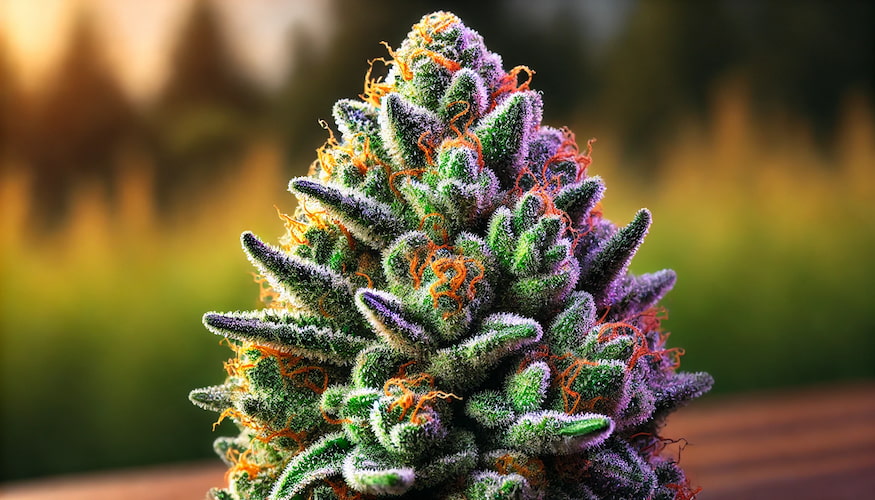
Best Cannabis Clones for Small Spaces & Micro Grows

Best clones for beginners

The best cannabis clones for small spaces are short, bushy, indica-leaning cultivars with a predictable, manageable stretch (typically 1.5–2x their vegetative height during flower), fast finishing times of 8–9 weeks or less, and structure that responds well to low-stress training. Clones have a decisive advantage over seeds in a micro grow: you know exactly what you are getting — the size, structure, vigor, and genetics are proven before you ever plant them.

At IWantClones.com, we source verified clones from licensed California nurseries and ship them overnight across the US. We work directly with growers who run compact setups every day. This guide covers what to look for in a small-space strain, which cuts from our catalog fit best, and how to train and manage your space for maximum yield per square foot.

Key Takeaways

  • Indica-dominant clones stretch 1.5–2x their veg height — sativas and sativa-heavy hybrids can stretch 3–4x, quickly outgrowing a small tent.
  • A 2×2 tent (4 sq ft) realistically fits 1–4 plants depending on container size and training method; a SOG setup with small pots can fit up to 9.
  • Target strains with an 8–9 week flower time in a compact setup — faster cycles mean more harvests per year in limited space.
  • LST (low-stress training) and SOG are the most effective methods for small tents — they maximize canopy coverage without adding vertical height.
  • Clones skip the 2–3 week seedling phase, giving a head start and allowing more harvests per year compared to seed grows in the same space.
  • Container size directly controls plant size — a 1-gallon pot keeps a clone compact; a 5-gallon pot allows significantly more root mass and canopy growth.

What Makes a Cannabis Clone Good for Small Spaces?

Not every cannabis cultivar works in a small tent. The difference between a strain that fills your 2×4 perfectly and one that presses against the ceiling by week 3 of flower comes down to a handful of measurable traits. Here is what to evaluate before you buy.

Growth Structure and Internodal Spacing

Indica-dominant strains generally produce shorter, denser plants with tighter internodal spacing (the distance between each node, or branch point, along the main stem). Tight internodal spacing is a visual indicator of compact structure — it means more bud sites packed into less vertical space. When you look at a cannabis clone from a reputable source, you can already see this trait in the cutting.

Sativa-dominant strains, by contrast, have wider internodal spacing, stretch aggressively during the first 2–4 weeks of flower, and often reach 4–6 feet or more at full size. That is a great trait for a warehouse grow. It is a disaster in a 5-foot-tall tent.

Stretch Ratio

Stretch ratio refers to how much a plant increases in height from the moment you flip to 12/12 photoperiod until it stops vertical growth (usually around week 3–4 of flower). Indica-dominant cultivars typically stretch 1.5–2x their veg height. A plant vegged to 12 inches should finish at 18–24 inches in flower — manageable in almost any tent.

Sativa-dominant plants can stretch 3–4x their veg height. A plant vegged to 12 inches could end up 36–48 inches tall. That is difficult to manage in a standard 5-foot or 6-foot tent with a light, ducting, and a carbon filter already taking up 8–12 inches of headroom.

Flowering Time

Fast-finishing strains (8–9 weeks or under) are ideal for small-space growers for two reasons. First, faster cycles mean more harvests per year. A 9-week strain fits approximately 5 complete cycles per year in a perpetual harvest setup. A 12-week strain fits about 4. In a dedicated micro grow, that extra cycle per year is a meaningful difference in total annual yield.

Second, shorter flowering times mean less time managing a plant that is trying to get bigger than your space allows.

Training Compatibility

Compact cultivars respond well to training — LST (low-stress training), topping, and SOG (Sea of Green) all work best with shorter, bushier genetics. Some tall, leggy sativa cultivars resist topping aggressively and spring back toward vertical growth even after repeated training. Indica-leaning strains accept training more gracefully and fill a horizontal canopy more predictably.

Small Space Strain Trait Comparison Table

Trait Best for Small Spaces Avoid in Small Spaces
Dominant genetics Indica-dominant or balanced hybrid Sativa-dominant (Haze, Sour Diesel landrace types)
Stretch ratio 1.5–2x veg height 3–4x or more
Internodal spacing Tight (less than 2 inches between nodes) Wide (3+ inches between nodes)
Flower time 8–9 weeks or under 10–14 weeks (most pure sativas)
Plant structure Short, bushy, multiple lateral branches Tall, single-dominant-cola, Christmas tree structure
Training response Takes LST and topping well, fills canopy evenly Resists training, springs back to vertical growth
Aroma intensity Manageable (important in small, enclosed spaces) Extremely pungent without proportional yield benefit
Yield per plant Dense, compact buds with high bud-to-leaf ratio Airy buds requiring large footprint for good yield

Top Picks from Our Catalog: Best Cannabis Clones for Small Spaces

We have hand-selected the following cuts based on their real-world performance in tight grow environments. All are available as rooted clones shipped overnight.

Dosi Punch — Compact Powerhouse for Micro Grows

Dosi Punch is a cross of Do-Si-Dos (OG Kush Breath × Face Off OG) and Purple Punch (Larry OG × Granddaddy Purple). Both parents are quintessential short, bushy, indica-dominant cultivars known for extremely tight internodal spacing and a reliable 8–9 week flower time. The result is a plant that rarely exceeds 3 feet even with aggressive feeding and good lighting.

Structure-wise, Dosi Punch throws wide, dense lateral branches even without topping — making it an excellent candidate for SOG in a 2×2 or LST in a 2×4. The buds are dense, heavily coated in trichomes, and carry a dessert-forward terpene profile (sweet, earthy, grape). Expect 18–22% THC on well-grown cuts. This is one of our top recommendations for any grower with a 5-foot or shorter tent height.

Grab a Dosi Punch clone from IWantClones.com and see why this cut is consistently one of our most popular for compact setups.

Mendo Breath — Dense, Short, Extremely Easy to Manage

Mendo Breath (OG Kush Breath × Mendo Montage) is one of the most structurally forgiving cultivars we carry for beginners in small spaces. It has naturally short, compact structure with wide-set lateral branches and extremely dense, chunky buds that pack into a small footprint. Flower time is a reliable 8 weeks from flip.

The stretch on Mendo Breath is minimal — typically 1.5–1.7x the veg height. A plant vegged to 14 inches will finish at around 21–24 inches in flower, making it ideal for tents with only 4–5 feet of usable height. Terpene profile leans toward caramel, vanilla, and earthy OG funk. THC typically runs 19–23%.

Mendo Breath also performs exceptionally in SOG setups — its natural structure fills a tight canopy quickly without requiring aggressive training. Add a Mendo Breath clone to your next order for a reliable compact producer.

GMO Cookies — Short and Extremely Dense in the Right Hands

GMO Cookies (Garlic Cookies × Girl Scout Cookies, sometimes listed as a phenotype of Chemdog × GSC) runs on the shorter, squatter side of the spectrum when managed correctly. Left to grow freely it can get large, but with topping applied early in veg and LST to spread the canopy, GMO stays compact and becomes an absolute production machine in a 4×4 tent, or even a 2×4 with 2–4 plants.

The unique terpene profile — diesel, garlic, coffee — is polarizing but enormously popular with concentrate producers and connoisseur growers. THC levels regularly hit 25–30% on well-grown cuts. Flower time runs 9–10 weeks from flip. GMO is best for growers who are comfortable with topping and have at least one successful grow under their belt. Visit our GMO Cookies clone page for availability and current stock.

Training Methods for Small Spaces

Genetics alone do not determine whether you succeed in a micro grow. Training technique plays an equally important role. Here are the two most effective methods for compact spaces.

SOG (Sea of Green) for Maximum Small-Tent Efficiency

SOG — Sea of Green — is the go-to method for micro grows because it maximizes yield per square foot by running many small plants instead of a few large ones. In a SOG setup, clones are flipped to 12/12 very early (often right after rooting), grown with little to no veg time, and packed closely together so their canopies merge into a single continuous flowering layer.

The advantages for small-space growers are significant. First, plants stay small — typically 12–24 inches at harvest. Second, flower time starts sooner, meaning faster overall cycle times. Third, if one plant has a problem, you lose only a small percentage of your total yield rather than the majority of it.

SOG works best with clones (not seeds) because all plants are genetically identical, so canopy height is uniform and predictable. Check our full breakdown in the ScrOG vs SOG guide to determine which method fits your specific setup and goals.

For SOG in a 2×2 tent: use 1-gallon containers, flip at 6–8 inches, and run 4–9 plants per square foot. For a 4×4 tent: use 1–2 gallon containers and run 16–25 plants. Indica-dominant cuts like Dosi Punch and Mendo Breath are purpose-built for this approach.

LST (Low-Stress Training) for Single-Plant Micro Grows

LST — low-stress training — involves gently bending and tying branches outward and downward during vegetative growth to force horizontal expansion rather than vertical height. As branches are bent to a more horizontal angle, the plant redirects growth hormones (auxins) to lateral branch development, producing a flat, wide canopy with multiple bud sites at roughly the same height.

The practical benefit: a single plant trained with LST in a 2×2 tent can fill the entire 4 square feet of canopy evenly, with all bud sites at optimal light distance — with no increase in total plant height. LST costs nothing and requires only soft plant ties or gardening wire.

Combined with an early topping (removing the main growing tip once the plant has 4–6 nodes), LST creates a naturally flat, multi-top canopy that is ideal for a single plant in a small tent. For step-by-step instructions, see our topping and LST guide for cannabis clones.

Setting Up Your Small-Space Grow Tent

Before you pick your strains, make sure your grow environment is set up correctly. A common mistake in micro grows is overfitting the space — running a light that is too large, too many plants, or pots that are too big for the footprint.

Recommended Tent Sizes and Their Limits

Tent Size Max Plants (SOG) Max Plants (LST/Topping) Recommended Pot Size Light Wattage (LED)
2×2 (4 sq ft) 4–9 1–2 0.5–1 gal (SOG), 2–3 gal (LST) 100–200W
2×4 (8 sq ft) 8–18 2–4 1 gal (SOG), 3 gal (LST) 200–300W
3×3 (9 sq ft) 9–16 2–4 1 gal (SOG), 3–5 gal (LST) 250–350W
4×4 (16 sq ft) 16–25 4–6 1 gal (SOG), 5 gal (LST/ScrOG) 400–600W

Container Size and Plant Size

Container size is one of the most underappreciated levers in a micro grow. Root volume directly drives canopy volume — a cannabis plant in a 1-gallon pot will stay significantly smaller than the same genetics in a 5-gallon pot. In a micro grow, that is a feature, not a bug.

For SOG setups, use 0.5–1 gallon containers to keep plants small and push them quickly to flower. For a single-plant LST or ScrOG setup in a 4×4, a 5-gallon fabric pot gives enough root room to support a full, trained canopy without plants becoming too large to manage. Our complete guide to up-potting cannabis clones covers pot sizing strategy in detail.

Grow Tent Setup Fundamentals

A small tent needs efficient airflow more urgently than a large room because heat and humidity build up faster in an enclosed small space. You need at minimum: one inline fan exhausting through a carbon filter, one passive or active intake for fresh air, and one small oscillating fan for canopy airflow. For complete setup advice, see our grow tent setup guide for cannabis clones.

Feeding and Watering in a Micro Grow

Small containers dry out faster than large ones — sometimes within 24 hours in peak flower. This means more frequent watering, and it also means a smaller buffer for nutrient errors. In a 1-gallon pot, one feeding at 20% above target EC can cause immediate nutrient burn. In a 5-gallon pot, that same error has more room to dilute.

The practical advice: start feeding at the low end of the manufacturer’s recommended range and increase only when plants show they can handle more (dark green color, strong growth, no tip burn). Monitor runoff EC/ppm to avoid salt buildup in small containers. Flush with plain pH-adjusted water every 2–3 weeks in small pots to prevent accumulation. For a complete clone-specific feeding schedule, see our cannabis clone feeding guide.

Managing Odor in Small-Space Grows

Odor management is a practical concern for anyone growing cannabis in a residential setting. Small tents are not exempt — a single Mendo Breath or GMO plant in week 6 of flower will fill a room with a detectable aroma. A properly sized carbon filter rated for your CFM (cubic feet per minute) of exhaust is the minimum standard.

Look for a carbon filter rated 20–30% above your tent’s volume in CFM to account for filter aging and restriction. Replace the carbon every 12–18 months or when breakthrough odor is detected. Sealed tents with proper negative pressure (tent walls slightly sucked inward) are far more effective than tents with gaps or light leaks.

Why Clones Beat Seeds for Micro Grows

For a micro grow specifically, clones offer several advantages over seeds that matter disproportionately in a small space.

Uniformity: In a SOG with seeds, you inevitably get variation in height, structure, and stretch — creating canopy management problems. With clones, all plants are genetically identical. The canopy stays even.

No males: A male plant in a small SOG setup can pollinate every female in the tent before you identify and remove it. Clones are taken from female mother plants and remain female. No surprises.

Skip the seedling phase: A rooted clone is 2–3 weeks ahead of a germinated seed in terms of development. In a micro grow where you might be running 5–6 cycles per year, that time saving is significant.

Known genetics: When you order a clone of Dosi Punch or Mendo Breath from us, you know the stretch, the finish time, the expected yield range, and the terpene profile. With seeds — even feminized ones — you are working with genetic variation across the population.

Browse our full selection of compact, indica-leaning cultivars at IWantClones.com/shop. Every clone ships overnight with our 3-day guarantee. For help choosing the right strains for your specific setup, visit our clone strain selection guide.

Legal Note

Home cannabis cultivation laws vary by state and municipality. Many US states permit adults to grow a limited number of plants for personal use; others restrict or prohibit home cultivation entirely. Always verify your current state and local laws before starting a grow. See our state laws on cannabis clones page for a current overview. Laws change — what applied last year may be different today.

Training Techniques That Maximize a Small Tent

Choosing the right genetics is half the equation. The other half is applying training methods that force compact, efficient canopy coverage instead of wasteful vertical growth. In a 2×2 or 2×4 tent especially, the difference between a trained plant and an untrained one can mean double the yield from the same square footage. Here are the techniques that matter most in tight spaces.

LST (Low-Stress Training): The Foundation

LST is the first tool every small-space grower should master, and it’s as low-tech as it gets. You gently bend the main stem and branches outward and downward during vegetative growth, securing them in position with soft plant ties, twist ties, or garden wire looped through holes in the container rim. As branches are pulled away from vertical, the plant’s auxin distribution (growth hormones concentrated at the top of each stem) redistributes to lateral growth, producing a wider, flatter canopy with multiple bud sites at roughly the same height.

In a 2×2 tent, a single plant trained with LST from week 2 of veg can fill the entire 4 square feet of canopy. Every bud site sits at near-equal distance from the light, maximizing photosynthetic efficiency across the whole plant. Total plant height remains far below what an untrained plant would reach, because you’ve redirected that upward energy outward. LST is non-destructive — there’s no cutting, no recovery time, and the technique can begin as soon as the plant is large enough to bend without snapping (typically when the stem reaches pencil thickness or thicker).

Combine LST with a single topping at nodes 4–6 to eliminate the single dominant apical cola and replace it with 2 co-dominant main branches that you then LST outward from each other. This produces a flat, V-shaped or fan-shaped canopy that fills a small tent efficiently from a single plant.

SOG (Sea of Green): Maximum Cycles Per Year

SOG is the method of choice when you want to maximize annual yield from a small tent by running many short cycles rather than fewer large ones. In a SOG, clones are flipped to 12/12 very early — sometimes right after rooting — with little to no vegetative time. Multiple small plants (in 0.5–1 gallon containers in a 2×2, or 1-gallon containers in a 2×4) are packed close together so their canopies merge into a continuous flowering layer.

The result: plants stay 12–24 inches at harvest, cycle times are short (add only 1–2 weeks of minimal veg to your 8–9 week flower time), and total annual yield is higher than a single large plant per cycle even though individual plant yield is lower. Clones are the only practical way to run SOG because all plants must be genetically identical for uniform canopy height — seeds introduce variation that creates uneven canopy management headaches. In a 2×4 (8 sq ft), run 8–16 plants in 1-gallon pots and expect 1–2 oz per plant at harvest, totaling 8–32 oz across 5+ complete cycles per year.

Topping for Multi-Cola Canopies

Topping — removing the apical growing tip to force the plant to develop two dominant colas instead of one — is the simplest structural intervention for small-tent grows. Done once at node 4 or 5, it halves the dominant vertical growth and doubles your primary colas. Done twice (a second topping 10–14 days after the first), you get 4 primary colas. Combined with LST to spread those 4 colas outward, you create a flat 4-point canopy that’s ideal for solo plants in 2×2 to 3×3 tents.

Allow 5–7 days of recovery after each topping before resuming LST training. Indica-dominant strains like Dosi Punch and Mendo Breath recover quickly from topping and fill in their secondary branching rapidly, making them particularly good candidates for multi-top training in small tents.

Defoliation: Airflow and Light in Dense Canopies

In a small, enclosed tent with multiple plants or a heavily trained single plant, airflow and light penetration through the canopy are perennial challenges. Strategic defoliation — removing large fan leaves that shade lower bud sites and restrict airflow — is the targeted solution. Done at the flip to 12/12 and again around day 21 of flower, it opens the canopy for both light and air without stressing the plant as aggressively as a heavy defoliation would.

In a small tent specifically, defoliation also serves a humidity management function. Dense canopies trap moisture and create microclimates with elevated RH right at the bud sites — exactly where you don’t want it in late flower. Removing fan leaves that trap moisture is a direct mold-prevention step, not just a yield optimization. Remove only leaves that are clearly blocking two or more bud sites; leave exposed fan leaves that are contributing to photosynthesis.

Frequently Asked Questions

What is the best cannabis clone strain for a 2×2 tent?

Indica-dominant cultivars with tight internodal spacing and a 1.5–2x stretch ratio work best in a 2×2 tent. Dosi Punch and Mendo Breath are two of our top picks — both stay compact under 3 feet with standard veg times, finish in 8–9 weeks, and respond well to SOG or LST training in a small footprint.

How many cannabis clones can I fit in a 2×2 grow tent?

In a SOG setup with 0.5–1 gallon containers, you can fit 4–9 plants in a 2×2 tent (4 square feet). For a single LST-trained plant, 1–2 plants in 2–3 gallon pots fills the canopy without overcrowding. Overcrowding increases humidity and airflow problems — fewer, well-trained plants often outperform a cramped SOG in small tents.

Is SOG or LST better for small grow spaces?

Both work well but for different goals. SOG (Sea of Green) with many small plants maximizes the number of harvests per year and is ideal for growers who want perpetual production. LST with fewer, well-trained plants is simpler to manage, requires less frequent transplanting, and is better for beginners. Check the ScrOG vs SOG guide for a full comparison.

How do I keep cannabis plants small in a tent?

Use small containers (1–2 gallon pots), keep vegetative time short (1–3 weeks after rooting for SOG), apply LST early to train horizontal rather than vertical growth, and choose compact indica-dominant genetics. Topping once at 4–6 nodes also prevents the plant from developing a single dominant tall cola.

Do indica clones stay shorter than sativa clones?

Yes — indica-dominant cultivars typically stretch 1.5–2x their veg height during flower, while sativa-dominant cultivars commonly stretch 3–4x or more. In a small tent with 5–6 feet of usable height, the difference between a 2x and a 4x stretch ratio is the difference between a manageable plant and one pressing against your light.

How long does it take cannabis clones to be ready for harvest in a small space?

With a short veg period (2–3 weeks from rooting) and an 8–9 week flower time, a complete cycle from clone delivery to harvest typically runs 10–12 weeks. Faster strains with a 7–8 week flower time can compress this to 9–11 weeks. Using clones instead of seeds saves 2–3 weeks compared to starting from seed, allowing an additional harvest cycle per year.

Share

Comments are closed.

Also recommended

Best Cannabis Clones for Small Spaces & Micro Grows

July 16, 2026
Best clones for beginners

The best cannabis clones for small spaces are short, bushy, indica-leaning cultivars with a predictable, manageable stretch (typically 1.5–2x their vegetative height during flower), fast finishing times of 8–9 weeks or less, and structure that responds well to low-stress training. Clones have a decisive advantage over seeds in a micro grow: you know exactly what you are getting — the size, structure, vigor, and genetics are proven before you ever plant them.

At IWantClones.com, we source verified clones from licensed California nurseries and ship them overnight across the US. We work directly with growers who run compact setups every day. This guide covers what to look for in a small-space strain, which cuts from our catalog fit best, and how to train and manage your space for maximum yield per square foot.

Key Takeaways

  • Indica-dominant clones stretch 1.5–2x their veg height — sativas and sativa-heavy hybrids can stretch 3–4x, quickly outgrowing a small tent.
  • A 2×2 tent (4 sq ft) realistically fits 1–4 plants depending on container size and training method; a SOG setup with small pots can fit up to 9.
  • Target strains with an 8–9 week flower time in a compact setup — faster cycles mean more harvests per year in limited space.
  • LST (low-stress training) and SOG are the most effective methods for small tents — they maximize canopy coverage without adding vertical height.
  • Clones skip the 2–3 week seedling phase, giving a head start and allowing more harvests per year compared to seed grows in the same space.
  • Container size directly controls plant size — a 1-gallon pot keeps a clone compact; a 5-gallon pot allows significantly more root mass and canopy growth.

What Makes a Cannabis Clone Good for Small Spaces?

Not every cannabis cultivar works in a small tent. The difference between a strain that fills your 2×4 perfectly and one that presses against the ceiling by week 3 of flower comes down to a handful of measurable traits. Here is what to evaluate before you buy.

Growth Structure and Internodal Spacing

Indica-dominant strains generally produce shorter, denser plants with tighter internodal spacing (the distance between each node, or branch point, along the main stem). Tight internodal spacing is a visual indicator of compact structure — it means more bud sites packed into less vertical space. When you look at a cannabis clone from a reputable source, you can already see this trait in the cutting.

Sativa-dominant strains, by contrast, have wider internodal spacing, stretch aggressively during the first 2–4 weeks of flower, and often reach 4–6 feet or more at full size. That is a great trait for a warehouse grow. It is a disaster in a 5-foot-tall tent.

Stretch Ratio

Stretch ratio refers to how much a plant increases in height from the moment you flip to 12/12 photoperiod until it stops vertical growth (usually around week 3–4 of flower). Indica-dominant cultivars typically stretch 1.5–2x their veg height. A plant vegged to 12 inches should finish at 18–24 inches in flower — manageable in almost any tent.

Sativa-dominant plants can stretch 3–4x their veg height. A plant vegged to 12 inches could end up 36–48 inches tall. That is difficult to manage in a standard 5-foot or 6-foot tent with a light, ducting, and a carbon filter already taking up 8–12 inches of headroom.

Flowering Time

Fast-finishing strains (8–9 weeks or under) are ideal for small-space growers for two reasons. First, faster cycles mean more harvests per year. A 9-week strain fits approximately 5 complete cycles per year in a perpetual harvest setup. A 12-week strain fits about 4. In a dedicated micro grow, that extra cycle per year is a meaningful difference in total annual yield.

Second, shorter flowering times mean less time managing a plant that is trying to get bigger than your space allows.

Training Compatibility

Compact cultivars respond well to training — LST (low-stress training), topping, and SOG (Sea of Green) all work best with shorter, bushier genetics. Some tall, leggy sativa cultivars resist topping aggressively and spring back toward vertical growth even after repeated training. Indica-leaning strains accept training more gracefully and fill a horizontal canopy more predictably.

Small Space Strain Trait Comparison Table

Trait Best for Small Spaces Avoid in Small Spaces
Dominant genetics Indica-dominant or balanced hybrid Sativa-dominant (Haze, Sour Diesel landrace types)
Stretch ratio 1.5–2x veg height 3–4x or more
Internodal spacing Tight (less than 2 inches between nodes) Wide (3+ inches between nodes)
Flower time 8–9 weeks or under 10–14 weeks (most pure sativas)
Plant structure Short, bushy, multiple lateral branches Tall, single-dominant-cola, Christmas tree structure
Training response Takes LST and topping well, fills canopy evenly Resists training, springs back to vertical growth
Aroma intensity Manageable (important in small, enclosed spaces) Extremely pungent without proportional yield benefit
Yield per plant Dense, compact buds with high bud-to-leaf ratio Airy buds requiring large footprint for good yield

Top Picks from Our Catalog: Best Cannabis Clones for Small Spaces

We have hand-selected the following cuts based on their real-world performance in tight grow environments. All are available as rooted clones shipped overnight.

Dosi Punch — Compact Powerhouse for Micro Grows

Dosi Punch is a cross of Do-Si-Dos (OG Kush Breath × Face Off OG) and Purple Punch (Larry OG × Granddaddy Purple). Both parents are quintessential short, bushy, indica-dominant cultivars known for extremely tight internodal spacing and a reliable 8–9 week flower time. The result is a plant that rarely exceeds 3 feet even with aggressive feeding and good lighting.

Structure-wise, Dosi Punch throws wide, dense lateral branches even without topping — making it an excellent candidate for SOG in a 2×2 or LST in a 2×4. The buds are dense, heavily coated in trichomes, and carry a dessert-forward terpene profile (sweet, earthy, grape). Expect 18–22% THC on well-grown cuts. This is one of our top recommendations for any grower with a 5-foot or shorter tent height.

Grab a Dosi Punch clone from IWantClones.com and see why this cut is consistently one of our most popular for compact setups.

Mendo Breath — Dense, Short, Extremely Easy to Manage

Mendo Breath (OG Kush Breath × Mendo Montage) is one of the most structurally forgiving cultivars we carry for beginners in small spaces. It has naturally short, compact structure with wide-set lateral branches and extremely dense, chunky buds that pack into a small footprint. Flower time is a reliable 8 weeks from flip.

The stretch on Mendo Breath is minimal — typically 1.5–1.7x the veg height. A plant vegged to 14 inches will finish at around 21–24 inches in flower, making it ideal for tents with only 4–5 feet of usable height. Terpene profile leans toward caramel, vanilla, and earthy OG funk. THC typically runs 19–23%.

Mendo Breath also performs exceptionally in SOG setups — its natural structure fills a tight canopy quickly without requiring aggressive training. Add a Mendo Breath clone to your next order for a reliable compact producer.

GMO Cookies — Short and Extremely Dense in the Right Hands

GMO Cookies (Garlic Cookies × Girl Scout Cookies, sometimes listed as a phenotype of Chemdog × GSC) runs on the shorter, squatter side of the spectrum when managed correctly. Left to grow freely it can get large, but with topping applied early in veg and LST to spread the canopy, GMO stays compact and becomes an absolute production machine in a 4×4 tent, or even a 2×4 with 2–4 plants.

The unique terpene profile — diesel, garlic, coffee — is polarizing but enormously popular with concentrate producers and connoisseur growers. THC levels regularly hit 25–30% on well-grown cuts. Flower time runs 9–10 weeks from flip. GMO is best for growers who are comfortable with topping and have at least one successful grow under their belt. Visit our GMO Cookies clone page for availability and current stock.

Training Methods for Small Spaces

Genetics alone do not determine whether you succeed in a micro grow. Training technique plays an equally important role. Here are the two most effective methods for compact spaces.

SOG (Sea of Green) for Maximum Small-Tent Efficiency

SOG — Sea of Green — is the go-to method for micro grows because it maximizes yield per square foot by running many small plants instead of a few large ones. In a SOG setup, clones are flipped to 12/12 very early (often right after rooting), grown with little to no veg time, and packed closely together so their canopies merge into a single continuous flowering layer.

The advantages for small-space growers are significant. First, plants stay small — typically 12–24 inches at harvest. Second, flower time starts sooner, meaning faster overall cycle times. Third, if one plant has a problem, you lose only a small percentage of your total yield rather than the majority of it.

SOG works best with clones (not seeds) because all plants are genetically identical, so canopy height is uniform and predictable. Check our full breakdown in the ScrOG vs SOG guide to determine which method fits your specific setup and goals.

For SOG in a 2×2 tent: use 1-gallon containers, flip at 6–8 inches, and run 4–9 plants per square foot. For a 4×4 tent: use 1–2 gallon containers and run 16–25 plants. Indica-dominant cuts like Dosi Punch and Mendo Breath are purpose-built for this approach.

LST (Low-Stress Training) for Single-Plant Micro Grows

LST — low-stress training — involves gently bending and tying branches outward and downward during vegetative growth to force horizontal expansion rather than vertical height. As branches are bent to a more horizontal angle, the plant redirects growth hormones (auxins) to lateral branch development, producing a flat, wide canopy with multiple bud sites at roughly the same height.

The practical benefit: a single plant trained with LST in a 2×2 tent can fill the entire 4 square feet of canopy evenly, with all bud sites at optimal light distance — with no increase in total plant height. LST costs nothing and requires only soft plant ties or gardening wire.

Combined with an early topping (removing the main growing tip once the plant has 4–6 nodes), LST creates a naturally flat, multi-top canopy that is ideal for a single plant in a small tent. For step-by-step instructions, see our topping and LST guide for cannabis clones.

Setting Up Your Small-Space Grow Tent

Before you pick your strains, make sure your grow environment is set up correctly. A common mistake in micro grows is overfitting the space — running a light that is too large, too many plants, or pots that are too big for the footprint.

Recommended Tent Sizes and Their Limits

Tent Size Max Plants (SOG) Max Plants (LST/Topping) Recommended Pot Size Light Wattage (LED)
2×2 (4 sq ft) 4–9 1–2 0.5–1 gal (SOG), 2–3 gal (LST) 100–200W
2×4 (8 sq ft) 8–18 2–4 1 gal (SOG), 3 gal (LST) 200–300W
3×3 (9 sq ft) 9–16 2–4 1 gal (SOG), 3–5 gal (LST) 250–350W
4×4 (16 sq ft) 16–25 4–6 1 gal (SOG), 5 gal (LST/ScrOG) 400–600W

Container Size and Plant Size

Container size is one of the most underappreciated levers in a micro grow. Root volume directly drives canopy volume — a cannabis plant in a 1-gallon pot will stay significantly smaller than the same genetics in a 5-gallon pot. In a micro grow, that is a feature, not a bug.

For SOG setups, use 0.5–1 gallon containers to keep plants small and push them quickly to flower. For a single-plant LST or ScrOG setup in a 4×4, a 5-gallon fabric pot gives enough root room to support a full, trained canopy without plants becoming too large to manage. Our complete guide to up-potting cannabis clones covers pot sizing strategy in detail.

Grow Tent Setup Fundamentals

A small tent needs efficient airflow more urgently than a large room because heat and humidity build up faster in an enclosed small space. You need at minimum: one inline fan exhausting through a carbon filter, one passive or active intake for fresh air, and one small oscillating fan for canopy airflow. For complete setup advice, see our grow tent setup guide for cannabis clones.

Feeding and Watering in a Micro Grow

Small containers dry out faster than large ones — sometimes within 24 hours in peak flower. This means more frequent watering, and it also means a smaller buffer for nutrient errors. In a 1-gallon pot, one feeding at 20% above target EC can cause immediate nutrient burn. In a 5-gallon pot, that same error has more room to dilute.

The practical advice: start feeding at the low end of the manufacturer’s recommended range and increase only when plants show they can handle more (dark green color, strong growth, no tip burn). Monitor runoff EC/ppm to avoid salt buildup in small containers. Flush with plain pH-adjusted water every 2–3 weeks in small pots to prevent accumulation. For a complete clone-specific feeding schedule, see our cannabis clone feeding guide.

Managing Odor in Small-Space Grows

Odor management is a practical concern for anyone growing cannabis in a residential setting. Small tents are not exempt — a single Mendo Breath or GMO plant in week 6 of flower will fill a room with a detectable aroma. A properly sized carbon filter rated for your CFM (cubic feet per minute) of exhaust is the minimum standard.

Look for a carbon filter rated 20–30% above your tent’s volume in CFM to account for filter aging and restriction. Replace the carbon every 12–18 months or when breakthrough odor is detected. Sealed tents with proper negative pressure (tent walls slightly sucked inward) are far more effective than tents with gaps or light leaks.

Why Clones Beat Seeds for Micro Grows

For a micro grow specifically, clones offer several advantages over seeds that matter disproportionately in a small space.

Uniformity: In a SOG with seeds, you inevitably get variation in height, structure, and stretch — creating canopy management problems. With clones, all plants are genetically identical. The canopy stays even.

No males: A male plant in a small SOG setup can pollinate every female in the tent before you identify and remove it. Clones are taken from female mother plants and remain female. No surprises.

Skip the seedling phase: A rooted clone is 2–3 weeks ahead of a germinated seed in terms of development. In a micro grow where you might be running 5–6 cycles per year, that time saving is significant.

Known genetics: When you order a clone of Dosi Punch or Mendo Breath from us, you know the stretch, the finish time, the expected yield range, and the terpene profile. With seeds — even feminized ones — you are working with genetic variation across the population.

Browse our full selection of compact, indica-leaning cultivars at IWantClones.com/shop. Every clone ships overnight with our 3-day guarantee. For help choosing the right strains for your specific setup, visit our clone strain selection guide.

Legal Note

Home cannabis cultivation laws vary by state and municipality. Many US states permit adults to grow a limited number of plants for personal use; others restrict or prohibit home cultivation entirely. Always verify your current state and local laws before starting a grow. See our state laws on cannabis clones page for a current overview. Laws change — what applied last year may be different today.

Training Techniques That Maximize a Small Tent

Choosing the right genetics is half the equation. The other half is applying training methods that force compact, efficient canopy coverage instead of wasteful vertical growth. In a 2×2 or 2×4 tent especially, the difference between a trained plant and an untrained one can mean double the yield from the same square footage. Here are the techniques that matter most in tight spaces.

LST (Low-Stress Training): The Foundation

LST is the first tool every small-space grower should master, and it’s as low-tech as it gets. You gently bend the main stem and branches outward and downward during vegetative growth, securing them in position with soft plant ties, twist ties, or garden wire looped through holes in the container rim. As branches are pulled away from vertical, the plant’s auxin distribution (growth hormones concentrated at the top of each stem) redistributes to lateral growth, producing a wider, flatter canopy with multiple bud sites at roughly the same height.

In a 2×2 tent, a single plant trained with LST from week 2 of veg can fill the entire 4 square feet of canopy. Every bud site sits at near-equal distance from the light, maximizing photosynthetic efficiency across the whole plant. Total plant height remains far below what an untrained plant would reach, because you’ve redirected that upward energy outward. LST is non-destructive — there’s no cutting, no recovery time, and the technique can begin as soon as the plant is large enough to bend without snapping (typically when the stem reaches pencil thickness or thicker).

Combine LST with a single topping at nodes 4–6 to eliminate the single dominant apical cola and replace it with 2 co-dominant main branches that you then LST outward from each other. This produces a flat, V-shaped or fan-shaped canopy that fills a small tent efficiently from a single plant.

SOG (Sea of Green): Maximum Cycles Per Year

SOG is the method of choice when you want to maximize annual yield from a small tent by running many short cycles rather than fewer large ones. In a SOG, clones are flipped to 12/12 very early — sometimes right after rooting — with little to no vegetative time. Multiple small plants (in 0.5–1 gallon containers in a 2×2, or 1-gallon containers in a 2×4) are packed close together so their canopies merge into a continuous flowering layer.

The result: plants stay 12–24 inches at harvest, cycle times are short (add only 1–2 weeks of minimal veg to your 8–9 week flower time), and total annual yield is higher than a single large plant per cycle even though individual plant yield is lower. Clones are the only practical way to run SOG because all plants must be genetically identical for uniform canopy height — seeds introduce variation that creates uneven canopy management headaches. In a 2×4 (8 sq ft), run 8–16 plants in 1-gallon pots and expect 1–2 oz per plant at harvest, totaling 8–32 oz across 5+ complete cycles per year.

Topping for Multi-Cola Canopies

Topping — removing the apical growing tip to force the plant to develop two dominant colas instead of one — is the simplest structural intervention for small-tent grows. Done once at node 4 or 5, it halves the dominant vertical growth and doubles your primary colas. Done twice (a second topping 10–14 days after the first), you get 4 primary colas. Combined with LST to spread those 4 colas outward, you create a flat 4-point canopy that’s ideal for solo plants in 2×2 to 3×3 tents.

Allow 5–7 days of recovery after each topping before resuming LST training. Indica-dominant strains like Dosi Punch and Mendo Breath recover quickly from topping and fill in their secondary branching rapidly, making them particularly good candidates for multi-top training in small tents.

Defoliation: Airflow and Light in Dense Canopies

In a small, enclosed tent with multiple plants or a heavily trained single plant, airflow and light penetration through the canopy are perennial challenges. Strategic defoliation — removing large fan leaves that shade lower bud sites and restrict airflow — is the targeted solution. Done at the flip to 12/12 and again around day 21 of flower, it opens the canopy for both light and air without stressing the plant as aggressively as a heavy defoliation would.

In a small tent specifically, defoliation also serves a humidity management function. Dense canopies trap moisture and create microclimates with elevated RH right at the bud sites — exactly where you don’t want it in late flower. Removing fan leaves that trap moisture is a direct mold-prevention step, not just a yield optimization. Remove only leaves that are clearly blocking two or more bud sites; leave exposed fan leaves that are contributing to photosynthesis.

Frequently Asked Questions

What is the best cannabis clone strain for a 2×2 tent?

Indica-dominant cultivars with tight internodal spacing and a 1.5–2x stretch ratio work best in a 2×2 tent. Dosi Punch and Mendo Breath are two of our top picks — both stay compact under 3 feet with standard veg times, finish in 8–9 weeks, and respond well to SOG or LST training in a small footprint.

How many cannabis clones can I fit in a 2×2 grow tent?

In a SOG setup with 0.5–1 gallon containers, you can fit 4–9 plants in a 2×2 tent (4 square feet). For a single LST-trained plant, 1–2 plants in 2–3 gallon pots fills the canopy without overcrowding. Overcrowding increases humidity and airflow problems — fewer, well-trained plants often outperform a cramped SOG in small tents.

Is SOG or LST better for small grow spaces?

Both work well but for different goals. SOG (Sea of Green) with many small plants maximizes the number of harvests per year and is ideal for growers who want perpetual production. LST with fewer, well-trained plants is simpler to manage, requires less frequent transplanting, and is better for beginners. Check the ScrOG vs SOG guide for a full comparison.

How do I keep cannabis plants small in a tent?

Use small containers (1–2 gallon pots), keep vegetative time short (1–3 weeks after rooting for SOG), apply LST early to train horizontal rather than vertical growth, and choose compact indica-dominant genetics. Topping once at 4–6 nodes also prevents the plant from developing a single dominant tall cola.

Do indica clones stay shorter than sativa clones?

Yes — indica-dominant cultivars typically stretch 1.5–2x their veg height during flower, while sativa-dominant cultivars commonly stretch 3–4x or more. In a small tent with 5–6 feet of usable height, the difference between a 2x and a 4x stretch ratio is the difference between a manageable plant and one pressing against your light.

How long does it take cannabis clones to be ready for harvest in a small space?

With a short veg period (2–3 weeks from rooting) and an 8–9 week flower time, a complete cycle from clone delivery to harvest typically runs 10–12 weeks. Faster strains with a 7–8 week flower time can compress this to 9–11 weeks. Using clones instead of seeds saves 2–3 weeks compared to starting from seed, allowing an additional harvest cycle per year.

Written by James Bean

Recent Posts

Light Burn & Heat Stress in Cannabis: Diagnosis & Fixes

Learn how to identify cannabis light burn vs heat stress vs nutrient burn, fix each fast, and prevent damage with PPFD tables and expert grow tips.

Read More
How to Buy Cannabis Clones With Crypto (BTC, LTC, BCH, DOGE)

Yes — IWantClones.com accepts Bitcoin, Litecoin, Bitcoin Cash & Dogecoin. Learn how to pay with crypto for cannabis clones, step-by-step checkout guide included.

Read More
EC, PPM & Run-Off: How to Read Your Cannabis Feed Like a Pro

Learn how cannabis EC PPM and runoff testing work together to prevent overfeeding, salt buildup, and lockout. Your complete guide with target charts. Start growing smarter.

Read More

Subscribe Today!

Get 10% off when you sign up for our weekly updates!

About Us

At IWantClones.com, we are dedicated to providing top-quality cannabis clones to growers of all levels.

Subscribe Today!

Subscribe our newsletter to get our latest update & news
We currently accept credit/debit card payments, cash, check, money order, bitcoin (BTC), litecoin (LTE), bitcoin cash (BCH), and dogecoin (DOGE).
© 2026 seedsherenow.com All Rights Reserved
magnifiercross linkedin facebook pinterest youtube rss twitter instagram facebook-blank rss-blank linkedin-blank pinterest youtube twitter instagram