
Clone vs Seedling vs Teen: What Size Cannabis Plant Should You Buy?

Up-potting cannabis clones

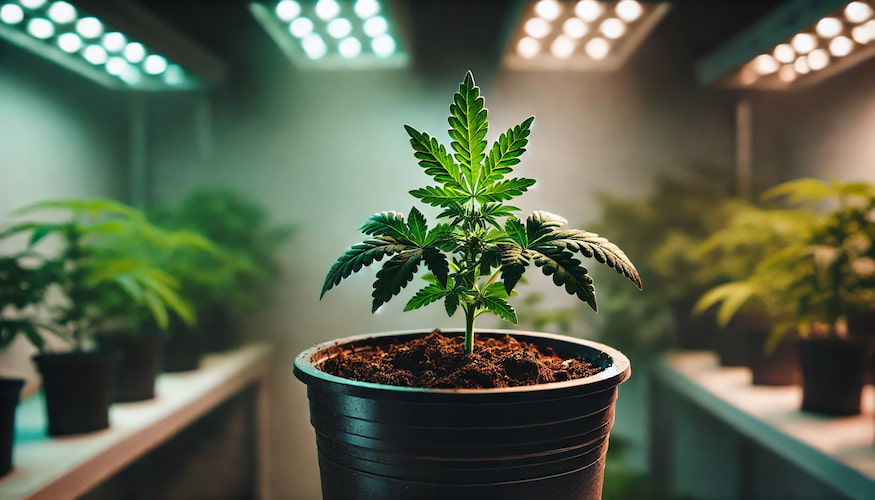
If you’re buying cannabis plants instead of starting from seed, you’ll run into three terms fast: clone, seedling, and teen. A rooted clone is a genetically identical cutting that’s already put out roots and is ready to grow the moment it hits your soil. A seedling is a baby plant still working through its first two weeks of life. A teen is a larger, more developed vegetative plant — usually 12 to 24 inches tall — that’s been growing for four to eight weeks. Each stage has real tradeoffs, and knowing the difference is what separates a confident purchase from a guesswork gamble.

Key Takeaways

  • A rooted clone is a cutting taken from a mother plant that has already developed its own root system — it carries the exact genetics of the mother, with zero genetic variation.
  • A seedling is a plant grown from seed, typically 1–2 weeks old and under 3 inches tall, with its first true leaves just emerging.
  • A teen plant is a seedling or rooted clone that has been grown on for 4–8 weeks into the vegetative stage, usually standing 12–24 inches tall.
  • Rooted clones skip the germination and seedling phase entirely, saving growers 2–4 weeks compared to starting from seed.
  • Teens cost significantly more than clones because a nursery has invested weeks of labor, light, water, and nutrients into growing them out.
  • IWantClones.com ships established rooted clones — not seedlings, not teens — because that’s the format that travels best and gives you the most value per dollar.

What Is a Cannabis Clone, Exactly?

A clone is a cutting taken from a living cannabis plant — called the mother plant — that has been rooted so it can grow independently. The cutting is snipped, dipped in rooting hormone or gel, placed in a rooting medium (rockwool, rapid rooter, coco perlite), and kept in a humid environment until roots push out. That process takes 7–14 days under ideal conditions.

Once roots appear, the cutting is considered a rooted clone. At that point, it’s a self-sustaining plant. It has its own root system, it can take up water and nutrients, and it’s ready to be transplanted into your growing medium of choice.

The single biggest advantage of a clone over any other plant format is genetic certainty. Because the clone is literally a piece of the mother, it carries identical DNA. If the mother produces 28% THC and dense, terp-heavy flowers in 63 days, her clones will do the same — assuming you give them comparable conditions. There’s no phenotype lottery. What you see in the mother is what you get in every cut.

At IWantClones.com, our clones come from verified mother plants held by experienced cultivators across the country. These aren’t mystery cuts. Each one is grown from a known, stable mother with a documented growth profile. We also offer a 3-day no-bullshit guarantee — if the plant isn’t healthy when it arrives, we make it right.

What Is a Cannabis Seedling?

A seedling is the earliest stage of a plant grown from seed. After a cannabis seed germinates — usually within 24–72 hours in a warm, moist environment — a taproot emerges, the seed shell cracks, and the first two embryonic leaves (called cotyledons) push toward the light. That’s a seedling.

The seedling stage lasts roughly 1–3 weeks, depending on genetics and conditions. During this phase, the plant is establishing its initial root system and growing its first true fan leaves. Seedlings are delicate. They’re sensitive to overwatering, low humidity, and any environmental stress. Most growers keep seedlings under 18–24 hours of light at relatively low intensity — around 200–400 PPFD — because too much light too early can stunt them.

By the end of the seedling stage, a healthy plant will have 3–4 sets of true fan leaves and a root system starting to fill out its initial container. From there, it enters the vegetative stage.

One important note: seedlings grown from regular or feminized seeds are not clones. They carry genetic material from two parent plants, which means every plant in a batch can express slightly different traits — different structure, different yield, different potency, and in the case of regular seeds, potentially male plants. If you’re buying seedlings, ask exactly what you’re getting and whether the seeds were feminized.

What Is a Cannabis Teen Plant?

A teen plant — sometimes called a “starter” or “transfer” in different markets — is simply a cannabis plant that has been grown past the seedling stage and into early-to-mid vegetative growth. There’s no universal definition, but in practice, teen plants are typically 4–8 weeks old and 12–24 inches tall. They have a well-developed root system, multiple nodes, and often some early branch structure.

Teens can come from either seeds or clones. A clone that’s been grown on for four weeks under veg lighting until it’s 12–15 inches tall would be considered a teen. A feminized seedling grown under the same conditions for six weeks might also be sold as a teen.

The appeal of a teen is obvious: you’re buying time. You skip germination, you skip the fragile seedling stage, and you start veg with a plant that already has momentum. A healthy teen can hit the flowering stage in as little as 1–2 additional weeks of veg (depending on your desired final size), compared to 4–6 weeks from a fresh rooted clone.

But teens come with a real tradeoff: price and shipping difficulty. Because nurseries have invested weeks of resources into growing a teen out, the price is substantially higher than a fresh rooted clone. Teens are also harder to ship. Larger plants stress more in transit — stems bend, leaves bruise, and root systems are harder to keep stable in a shipping container. Shipping a 20-inch plant overnight is a fundamentally different (and riskier) operation than shipping a 4-inch rooted clone.

Clone vs Teen vs Seedling: Side-by-Side Comparison

Here’s how these three plant formats stack up across the factors that matter most to growers:

Factor Rooted Clone Seedling Teen Plant
Typical Age 2–4 weeks (from cut date) 1–3 weeks (from germination) 4–8 weeks (from cut or germ)
Typical Size 3–6 inches 1–4 inches 12–24 inches
Root Status Established, visible roots Early taproot, fragile Well-developed, filling container
Genetic Certainty 100% — exact copy of mother Variable — depends on seed type Depends on origin (clone or seed)
Sex Certainty 100% female (from female mother) Only if feminized seed Depends on origin
Time to Flower-Ready 3–5 weeks of veg 5–8 weeks of veg 0–2 weeks additional veg
Shipping Viability Excellent — compact, resilient Poor — extremely fragile Challenging — size creates risk
Relative Cost $ — most affordable $ — low, but variable $$–$$$ — reflects weeks of grow time
Transplant Shock Risk Low-moderate High — roots very delicate Low — established system
Best For Most growers — best value, proven genetics Budget growers comfortable with seedling care Growers who want to minimize veg time

Why We Ship Rooted Clones (Not Teens, Not Seedlings)

At IWantClones.com, we’ve thought hard about what format to ship, and rooted clones win on every practical metric.

Seedlings don’t ship well. A 2-week-old seedling with a fragile taproot and barely-formed leaves is not built for 24–48 hours in a dark box. The stress alone can set a seedling back a week or more — and that’s if everything goes right. We’re not interested in sending you a plant that needs an intensive care unit when it arrives.

Teens are expensive to produce and risky to ship. Growing a plant to teen size requires 4–8 weeks of labor, light, nutrients, and space. That cost gets passed on to you. On top of that, shipping a 15-inch plant overnight is genuinely harder than shipping a 4-inch rooted clone. More can go wrong, and the plant is harder to pack securely. We’d rather send you a rooted clone that arrives healthy and builds its teen frame in your hands.

Rooted clones hit the sweet spot. They’re compact, resilient, and already past the hardest part of early plant life. A healthy rooted clone with a developed root system can take the stress of overnight shipping, bounce back quickly in a new environment, and be in full veg growth within days of arrival. That’s what we send, and it’s why our plants arrive ready to grow.

For more on how our approach compares to buying seeds, check out our breakdown of clones vs seeds — it covers the full cost and time analysis.

What “Established Rooted Clone” Actually Means

Not all rooted clones are equal. A clone that’s been in a rooting medium for five days with a few small root tips barely poking out is technically “rooted” — but it’s not the same animal as a clone that’s been in its container for two to three weeks with a robust, white root mass.

When we say established rooted clone, we mean a plant that has:

  • A dense, well-developed root system — not just a few root tips
  • Active vegetative growth, with new leaves pushing out
  • At least 2–4 nodes of healthy growth above the original cut point
  • Demonstrated the ability to take up water and nutrients independently

This is what makes our $98.88 clones worth it. You’re not paying for a fragile cutting that just sprouted roots — you’re paying for a proven plant that’s already cleared the highest-risk phase of early development. From the moment it arrives, it’s ready to grow.

How to Transition Each Plant Type Into Veg

The transition to vegetative growth looks different depending on what you’re starting with. Here’s what each format needs.

Transitioning a Fresh Rooted Clone

Your rooted clone has been growing under controlled conditions — specific humidity, temperature, and light levels. When it arrives at your door, the first 48–72 hours are a hardening-off period. Don’t rush it.

Keep your rooted clone under high humidity (65–75% RH) for the first few days. Avoid placing it directly under intense light — start at 200–300 PPFD and work up over a week. Water lightly around the root zone rather than soaking it; the roots are still developing their full capacity. Once you see new growth pushing actively — usually within 5–7 days of arrival — the plant has settled and you can start treating it like a veg plant.

Transplanting too early is the most common mistake. Give the clone a few days to orient itself before moving it into a larger container. When you’re ready, our guide on transplanting cannabis clones covers the process step by step.

And if you’ve never received cannabis clones by mail before, read our guide on what to do when clones arrive before your order ships. It’ll tell you exactly what to do the moment the box hits your door.

Transitioning a Seedling

Seedlings need a gentle environment. Keep them under 18 hours of light at low-to-moderate intensity. Humidity should stay between 65–70% RH during the seedling stage. The biggest killer of seedlings is overwatering — the root system is tiny and oxygen-deprived roots die fast. Water only when the top inch of medium is dry, and use small amounts.

Once the plant has developed 3–4 sets of true fan leaves and the roots are starting to circle the bottom of the container, you can transplant up to a larger pot and begin treating it as a veg plant. At that point, you’re roughly where a rooted clone would have been on day one of arrival — except you’ve spent 2–3 weeks getting there.

Transitioning a Teen Plant

Teens are the easiest to transition because they’ve already done it. A healthy teen arriving from a reputable nursery should acclimate within 24–48 hours. Give it a day or two of slightly lower light than you’d normally run in veg, and make sure the medium isn’t bone dry or waterlogged from shipping. Check the roots if possible — if they’re tight and white, you’re in good shape. Brown or mushy roots are a red flag.

Teens can typically go into their final container or a near-final container right away, depending on root mass. If the plant is already 18–20 inches tall, you may only need 1–2 additional weeks of veg before flipping to 12/12. That’s the payoff for the higher price — compressed time to harvest.

Which Format Is Right for Your Situation?

There’s no universally correct answer, but there are clear patterns based on grower situation.

Buy a Rooted Clone If:

  • You want guaranteed female plants with known genetics
  • You’re comfortable with a standard 4–6 week veg period
  • You’re buying multiple plants and want uniformity
  • You want the best value per dollar spent on genetics
  • You’re ordering online and need a format that ships reliably

Buy a Teen Plant If:

  • You have a compressed timeline and need to hit flower ASAP
  • You have access to a reliable local nursery with good genetics
  • Budget is less of a concern than time-to-harvest
  • You’re buying locally (so shipping risk is eliminated)

Start From Seedling/Seed If:

  • You’re growing a strain only available in seed form
  • You want to run your own phenotype hunt
  • You have extra time and enjoy the full grow-from-scratch experience
  • You’re on an extremely tight budget and willing to trade time for cost savings

For most growers buying plants online, the rooted clone is the obvious choice. It ships safely, it arrives with proven genetics, and it gives you a clear, predictable veg-to-flower timeline. If you want to understand how that timeline plays out week by week, our cannabis clone timeline week by week breaks down exactly what to expect from arrival through harvest.

A Note on Genetics and Naming

One thing that trips up new buyers: the same strain name can mean very different things depending on whether you’re buying a clone or a seedling. When you buy a clone of “Wedding Cake” from a reputable source, you’re getting a cutting from a specific plant that someone has grown, tested, and selected. The genetics are locked.

When you buy a “Wedding Cake” seedling or seed from a less reputable source, you might be getting a plant bred from parents called Wedding Cake — but the individual plant could express anywhere on a wide spectrum of that strain’s possible phenotypes. It might be excellent. It might be mediocre. You won’t know until it finishes.

This is one of the core arguments for buying rooted clones from established sources. The phenotype selection work has already been done. The mother plant has been grown out, evaluated, and chosen for its characteristics. You’re buying the result of someone else’s phenotype hunt — which is worth a lot, especially if you’re running a limited number of plants.

University extension research on vegetative propagation supports this: clonal propagation preserves the genetic and phenotypic characteristics of the selected parent plant, making it the standard method for commercial horticulture when trait consistency is required. UC Cooperative Extension covers these principles in detail for specialty crops, and the science applies directly to cannabis cultivation.

For additional context on propagation best practices across horticultural crops, the USDA National Agricultural Library’s propagation resources are a solid reference point.

The Cost Question: Is a $98.88 Clone Worth It vs a Cheaper Teen or Seedling?

Let’s be direct about the math.

A rooted clone from IWantClones.com is $98.88. That price includes overnight shipping — which is not cheap — and the cost of maintaining verified mother plants and a professional cloning operation. You’re also covered by our 3-day guarantee, so if something goes wrong in transit, you’re protected.

A teen plant from a local dispensary or nursery might run $25–$60 for a 4-inch starter or $80–$150+ for a full 18-inch plant. The lower end of that range might sound like a deal — but consider what you’re actually getting. Is the genetics verified? Is the mother plant documented? Is there a guarantee? Are they feminized cuttings from female mothers, or seedlings with uncertain sex expression?

A cannabis plant that produces a disappointing harvest — or worse, turns male and pollinates your whole garden — costs you far more than the price difference between a $40 teen and a $98.88 guaranteed female clone. The value of what IWantClones.com delivers is in the certainty, the genetics pedigree, and the support structure behind every plant.

If you’re ready to see what’s available, you can browse our current clone selection and check out on SeedsHereNow.com. We accept BTC, LTC, BCH, and DOGE in addition to standard payment methods.

Frequently Asked Questions

What is the difference between a clone and a teen cannabis plant?

A rooted clone is a fresh cutting with an established root system, typically 3–6 inches tall and 2–4 weeks old from the cut date. A teen is a more developed vegetative plant, usually 12–24 inches tall and 4–8 weeks old. Teens have been grown further along, which reduces the remaining veg time but increases cost and shipping difficulty compared to a rooted clone.

Are cannabis clones better than seedlings for beginner growers?

For most beginners, yes. Rooted clones skip the finicky germination and seedling phases entirely, arriving as already-viable plants with a known genetic profile. Seedlings require more careful early care — precise humidity, gentle watering, and lower light intensity. Clones from a reputable source also guarantee female plants, which seedlings from non-feminized seeds cannot.

How long does a rooted clone take to reach the flowering stage?

After arrival, most rooted clones need 3–5 weeks of vegetative growth before they’re ready to flip to 12/12 for flowering — though this depends on how large you want the plant before flipping. A clone kept in veg for 4 weeks will typically reach 12–18 inches before flower is initiated. Our cannabis clone timeline week by week shows this in detail.

Why doesn’t IWantClones.com ship teen plants?

Shipping a 15–20 inch plant overnight is genuinely risky. Larger plants experience more transit stress — stems bend, leaves bruise, and root systems are harder to stabilize in a box. Rooted clones ship compactly, arrive in better condition, and still give you the verified genetics you’re paying for. You build the teen frame yourself, in your own environment, under ideal conditions.

What should I do the day my clones arrive from IWantClones.com?

Open the box promptly, check each plant for damage, and give them a gentle introduction to your grow environment rather than blasting them with intense light right away. Keep humidity elevated around 70% RH for the first 48 hours, water lightly, and let them acclimate before transplanting. Our full guide on what to do when clones arrive walks through every step.

Share

Comments are closed.

Also recommended

Clone vs Seedling vs Teen: What Size Cannabis Plant Should You Buy?

August 1, 2026
Up-potting cannabis clones

If you’re buying cannabis plants instead of starting from seed, you’ll run into three terms fast: clone, seedling, and teen. A rooted clone is a genetically identical cutting that’s already put out roots and is ready to grow the moment it hits your soil. A seedling is a baby plant still working through its first two weeks of life. A teen is a larger, more developed vegetative plant — usually 12 to 24 inches tall — that’s been growing for four to eight weeks. Each stage has real tradeoffs, and knowing the difference is what separates a confident purchase from a guesswork gamble.

Key Takeaways

  • A rooted clone is a cutting taken from a mother plant that has already developed its own root system — it carries the exact genetics of the mother, with zero genetic variation.
  • A seedling is a plant grown from seed, typically 1–2 weeks old and under 3 inches tall, with its first true leaves just emerging.
  • A teen plant is a seedling or rooted clone that has been grown on for 4–8 weeks into the vegetative stage, usually standing 12–24 inches tall.
  • Rooted clones skip the germination and seedling phase entirely, saving growers 2–4 weeks compared to starting from seed.
  • Teens cost significantly more than clones because a nursery has invested weeks of labor, light, water, and nutrients into growing them out.
  • IWantClones.com ships established rooted clones — not seedlings, not teens — because that’s the format that travels best and gives you the most value per dollar.

What Is a Cannabis Clone, Exactly?

A clone is a cutting taken from a living cannabis plant — called the mother plant — that has been rooted so it can grow independently. The cutting is snipped, dipped in rooting hormone or gel, placed in a rooting medium (rockwool, rapid rooter, coco perlite), and kept in a humid environment until roots push out. That process takes 7–14 days under ideal conditions.

Once roots appear, the cutting is considered a rooted clone. At that point, it’s a self-sustaining plant. It has its own root system, it can take up water and nutrients, and it’s ready to be transplanted into your growing medium of choice.

The single biggest advantage of a clone over any other plant format is genetic certainty. Because the clone is literally a piece of the mother, it carries identical DNA. If the mother produces 28% THC and dense, terp-heavy flowers in 63 days, her clones will do the same — assuming you give them comparable conditions. There’s no phenotype lottery. What you see in the mother is what you get in every cut.

At IWantClones.com, our clones come from verified mother plants held by experienced cultivators across the country. These aren’t mystery cuts. Each one is grown from a known, stable mother with a documented growth profile. We also offer a 3-day no-bullshit guarantee — if the plant isn’t healthy when it arrives, we make it right.

What Is a Cannabis Seedling?

A seedling is the earliest stage of a plant grown from seed. After a cannabis seed germinates — usually within 24–72 hours in a warm, moist environment — a taproot emerges, the seed shell cracks, and the first two embryonic leaves (called cotyledons) push toward the light. That’s a seedling.

The seedling stage lasts roughly 1–3 weeks, depending on genetics and conditions. During this phase, the plant is establishing its initial root system and growing its first true fan leaves. Seedlings are delicate. They’re sensitive to overwatering, low humidity, and any environmental stress. Most growers keep seedlings under 18–24 hours of light at relatively low intensity — around 200–400 PPFD — because too much light too early can stunt them.

By the end of the seedling stage, a healthy plant will have 3–4 sets of true fan leaves and a root system starting to fill out its initial container. From there, it enters the vegetative stage.

One important note: seedlings grown from regular or feminized seeds are not clones. They carry genetic material from two parent plants, which means every plant in a batch can express slightly different traits — different structure, different yield, different potency, and in the case of regular seeds, potentially male plants. If you’re buying seedlings, ask exactly what you’re getting and whether the seeds were feminized.

What Is a Cannabis Teen Plant?

A teen plant — sometimes called a “starter” or “transfer” in different markets — is simply a cannabis plant that has been grown past the seedling stage and into early-to-mid vegetative growth. There’s no universal definition, but in practice, teen plants are typically 4–8 weeks old and 12–24 inches tall. They have a well-developed root system, multiple nodes, and often some early branch structure.

Teens can come from either seeds or clones. A clone that’s been grown on for four weeks under veg lighting until it’s 12–15 inches tall would be considered a teen. A feminized seedling grown under the same conditions for six weeks might also be sold as a teen.

The appeal of a teen is obvious: you’re buying time. You skip germination, you skip the fragile seedling stage, and you start veg with a plant that already has momentum. A healthy teen can hit the flowering stage in as little as 1–2 additional weeks of veg (depending on your desired final size), compared to 4–6 weeks from a fresh rooted clone.

But teens come with a real tradeoff: price and shipping difficulty. Because nurseries have invested weeks of resources into growing a teen out, the price is substantially higher than a fresh rooted clone. Teens are also harder to ship. Larger plants stress more in transit — stems bend, leaves bruise, and root systems are harder to keep stable in a shipping container. Shipping a 20-inch plant overnight is a fundamentally different (and riskier) operation than shipping a 4-inch rooted clone.

Clone vs Teen vs Seedling: Side-by-Side Comparison

Here’s how these three plant formats stack up across the factors that matter most to growers:

Factor Rooted Clone Seedling Teen Plant
Typical Age 2–4 weeks (from cut date) 1–3 weeks (from germination) 4–8 weeks (from cut or germ)
Typical Size 3–6 inches 1–4 inches 12–24 inches
Root Status Established, visible roots Early taproot, fragile Well-developed, filling container
Genetic Certainty 100% — exact copy of mother Variable — depends on seed type Depends on origin (clone or seed)
Sex Certainty 100% female (from female mother) Only if feminized seed Depends on origin
Time to Flower-Ready 3–5 weeks of veg 5–8 weeks of veg 0–2 weeks additional veg
Shipping Viability Excellent — compact, resilient Poor — extremely fragile Challenging — size creates risk
Relative Cost $ — most affordable $ — low, but variable $$–$$$ — reflects weeks of grow time
Transplant Shock Risk Low-moderate High — roots very delicate Low — established system
Best For Most growers — best value, proven genetics Budget growers comfortable with seedling care Growers who want to minimize veg time

Why We Ship Rooted Clones (Not Teens, Not Seedlings)

At IWantClones.com, we’ve thought hard about what format to ship, and rooted clones win on every practical metric.

Seedlings don’t ship well. A 2-week-old seedling with a fragile taproot and barely-formed leaves is not built for 24–48 hours in a dark box. The stress alone can set a seedling back a week or more — and that’s if everything goes right. We’re not interested in sending you a plant that needs an intensive care unit when it arrives.

Teens are expensive to produce and risky to ship. Growing a plant to teen size requires 4–8 weeks of labor, light, nutrients, and space. That cost gets passed on to you. On top of that, shipping a 15-inch plant overnight is genuinely harder than shipping a 4-inch rooted clone. More can go wrong, and the plant is harder to pack securely. We’d rather send you a rooted clone that arrives healthy and builds its teen frame in your hands.

Rooted clones hit the sweet spot. They’re compact, resilient, and already past the hardest part of early plant life. A healthy rooted clone with a developed root system can take the stress of overnight shipping, bounce back quickly in a new environment, and be in full veg growth within days of arrival. That’s what we send, and it’s why our plants arrive ready to grow.

For more on how our approach compares to buying seeds, check out our breakdown of clones vs seeds — it covers the full cost and time analysis.

What “Established Rooted Clone” Actually Means

Not all rooted clones are equal. A clone that’s been in a rooting medium for five days with a few small root tips barely poking out is technically “rooted” — but it’s not the same animal as a clone that’s been in its container for two to three weeks with a robust, white root mass.

When we say established rooted clone, we mean a plant that has:

  • A dense, well-developed root system — not just a few root tips
  • Active vegetative growth, with new leaves pushing out
  • At least 2–4 nodes of healthy growth above the original cut point
  • Demonstrated the ability to take up water and nutrients independently

This is what makes our $98.88 clones worth it. You’re not paying for a fragile cutting that just sprouted roots — you’re paying for a proven plant that’s already cleared the highest-risk phase of early development. From the moment it arrives, it’s ready to grow.

How to Transition Each Plant Type Into Veg

The transition to vegetative growth looks different depending on what you’re starting with. Here’s what each format needs.

Transitioning a Fresh Rooted Clone

Your rooted clone has been growing under controlled conditions — specific humidity, temperature, and light levels. When it arrives at your door, the first 48–72 hours are a hardening-off period. Don’t rush it.

Keep your rooted clone under high humidity (65–75% RH) for the first few days. Avoid placing it directly under intense light — start at 200–300 PPFD and work up over a week. Water lightly around the root zone rather than soaking it; the roots are still developing their full capacity. Once you see new growth pushing actively — usually within 5–7 days of arrival — the plant has settled and you can start treating it like a veg plant.

Transplanting too early is the most common mistake. Give the clone a few days to orient itself before moving it into a larger container. When you’re ready, our guide on transplanting cannabis clones covers the process step by step.

And if you’ve never received cannabis clones by mail before, read our guide on what to do when clones arrive before your order ships. It’ll tell you exactly what to do the moment the box hits your door.

Transitioning a Seedling

Seedlings need a gentle environment. Keep them under 18 hours of light at low-to-moderate intensity. Humidity should stay between 65–70% RH during the seedling stage. The biggest killer of seedlings is overwatering — the root system is tiny and oxygen-deprived roots die fast. Water only when the top inch of medium is dry, and use small amounts.

Once the plant has developed 3–4 sets of true fan leaves and the roots are starting to circle the bottom of the container, you can transplant up to a larger pot and begin treating it as a veg plant. At that point, you’re roughly where a rooted clone would have been on day one of arrival — except you’ve spent 2–3 weeks getting there.

Transitioning a Teen Plant

Teens are the easiest to transition because they’ve already done it. A healthy teen arriving from a reputable nursery should acclimate within 24–48 hours. Give it a day or two of slightly lower light than you’d normally run in veg, and make sure the medium isn’t bone dry or waterlogged from shipping. Check the roots if possible — if they’re tight and white, you’re in good shape. Brown or mushy roots are a red flag.

Teens can typically go into their final container or a near-final container right away, depending on root mass. If the plant is already 18–20 inches tall, you may only need 1–2 additional weeks of veg before flipping to 12/12. That’s the payoff for the higher price — compressed time to harvest.

Which Format Is Right for Your Situation?

There’s no universally correct answer, but there are clear patterns based on grower situation.

Buy a Rooted Clone If:

  • You want guaranteed female plants with known genetics
  • You’re comfortable with a standard 4–6 week veg period
  • You’re buying multiple plants and want uniformity
  • You want the best value per dollar spent on genetics
  • You’re ordering online and need a format that ships reliably

Buy a Teen Plant If:

  • You have a compressed timeline and need to hit flower ASAP
  • You have access to a reliable local nursery with good genetics
  • Budget is less of a concern than time-to-harvest
  • You’re buying locally (so shipping risk is eliminated)

Start From Seedling/Seed If:

  • You’re growing a strain only available in seed form
  • You want to run your own phenotype hunt
  • You have extra time and enjoy the full grow-from-scratch experience
  • You’re on an extremely tight budget and willing to trade time for cost savings

For most growers buying plants online, the rooted clone is the obvious choice. It ships safely, it arrives with proven genetics, and it gives you a clear, predictable veg-to-flower timeline. If you want to understand how that timeline plays out week by week, our cannabis clone timeline week by week breaks down exactly what to expect from arrival through harvest.

A Note on Genetics and Naming

One thing that trips up new buyers: the same strain name can mean very different things depending on whether you’re buying a clone or a seedling. When you buy a clone of “Wedding Cake” from a reputable source, you’re getting a cutting from a specific plant that someone has grown, tested, and selected. The genetics are locked.

When you buy a “Wedding Cake” seedling or seed from a less reputable source, you might be getting a plant bred from parents called Wedding Cake — but the individual plant could express anywhere on a wide spectrum of that strain’s possible phenotypes. It might be excellent. It might be mediocre. You won’t know until it finishes.

This is one of the core arguments for buying rooted clones from established sources. The phenotype selection work has already been done. The mother plant has been grown out, evaluated, and chosen for its characteristics. You’re buying the result of someone else’s phenotype hunt — which is worth a lot, especially if you’re running a limited number of plants.

University extension research on vegetative propagation supports this: clonal propagation preserves the genetic and phenotypic characteristics of the selected parent plant, making it the standard method for commercial horticulture when trait consistency is required. UC Cooperative Extension covers these principles in detail for specialty crops, and the science applies directly to cannabis cultivation.

For additional context on propagation best practices across horticultural crops, the USDA National Agricultural Library’s propagation resources are a solid reference point.

The Cost Question: Is a $98.88 Clone Worth It vs a Cheaper Teen or Seedling?

Let’s be direct about the math.

A rooted clone from IWantClones.com is $98.88. That price includes overnight shipping — which is not cheap — and the cost of maintaining verified mother plants and a professional cloning operation. You’re also covered by our 3-day guarantee, so if something goes wrong in transit, you’re protected.

A teen plant from a local dispensary or nursery might run $25–$60 for a 4-inch starter or $80–$150+ for a full 18-inch plant. The lower end of that range might sound like a deal — but consider what you’re actually getting. Is the genetics verified? Is the mother plant documented? Is there a guarantee? Are they feminized cuttings from female mothers, or seedlings with uncertain sex expression?

A cannabis plant that produces a disappointing harvest — or worse, turns male and pollinates your whole garden — costs you far more than the price difference between a $40 teen and a $98.88 guaranteed female clone. The value of what IWantClones.com delivers is in the certainty, the genetics pedigree, and the support structure behind every plant.

If you’re ready to see what’s available, you can browse our current clone selection and check out on SeedsHereNow.com. We accept BTC, LTC, BCH, and DOGE in addition to standard payment methods.

Frequently Asked Questions

What is the difference between a clone and a teen cannabis plant?

A rooted clone is a fresh cutting with an established root system, typically 3–6 inches tall and 2–4 weeks old from the cut date. A teen is a more developed vegetative plant, usually 12–24 inches tall and 4–8 weeks old. Teens have been grown further along, which reduces the remaining veg time but increases cost and shipping difficulty compared to a rooted clone.

Are cannabis clones better than seedlings for beginner growers?

For most beginners, yes. Rooted clones skip the finicky germination and seedling phases entirely, arriving as already-viable plants with a known genetic profile. Seedlings require more careful early care — precise humidity, gentle watering, and lower light intensity. Clones from a reputable source also guarantee female plants, which seedlings from non-feminized seeds cannot.

How long does a rooted clone take to reach the flowering stage?

After arrival, most rooted clones need 3–5 weeks of vegetative growth before they’re ready to flip to 12/12 for flowering — though this depends on how large you want the plant before flipping. A clone kept in veg for 4 weeks will typically reach 12–18 inches before flower is initiated. Our cannabis clone timeline week by week shows this in detail.

Why doesn’t IWantClones.com ship teen plants?

Shipping a 15–20 inch plant overnight is genuinely risky. Larger plants experience more transit stress — stems bend, leaves bruise, and root systems are harder to stabilize in a box. Rooted clones ship compactly, arrive in better condition, and still give you the verified genetics you’re paying for. You build the teen frame yourself, in your own environment, under ideal conditions.

What should I do the day my clones arrive from IWantClones.com?

Open the box promptly, check each plant for damage, and give them a gentle introduction to your grow environment rather than blasting them with intense light right away. Keep humidity elevated around 70% RH for the first 48 hours, water lightly, and let them acclimate before transplanting. Our full guide on what to do when clones arrive walks through every step.

Written by James Bean

Recent Posts

Clone vs Seedling vs Teen: What Size Cannabis Plant Should You Buy?

Clone vs teen vs seedling — which cannabis plant size is right for you? Learn the real differences and why rooted clones win. Shop IWantClones.com.

Read More
Living Soil & No-Till Cannabis Growing: A Beginner’s Guide

Learn how living soil and no-till cannabis growing work, how to build your first mix, and why this method produces some of the best-tasting flower around.

Read More
What Is a Clone-Only Strain? (And Why Cuts Matter)

A clone-only strain exists only as a cutting — never released as stable seed. Learn what makes cuts irreplaceable, famous examples, and how to get the real thing.

Read More

Subscribe Today!

Get 10% off when you sign up for our weekly updates!

About Us

At IWantClones.com, we are dedicated to providing top-quality cannabis clones to growers of all levels.

Subscribe Today!

Subscribe our newsletter to get our latest update & news
We currently accept credit/debit card payments, cash, check, money order, bitcoin (BTC), litecoin (LTE), bitcoin cash (BCH), and dogecoin (DOGE).
© 2026 seedsherenow.com All Rights Reserved
magnifiercross linkedin facebook pinterest youtube rss twitter instagram facebook-blank rss-blank linkedin-blank pinterest youtube twitter instagram