

Knowing when to transplant clones comes down to the roots, not the calendar. The first move out of the plug or cube makes sense once roots are showing at the plug’s edges, new growth is steady, and the plant can handle life outside the dome. Age gives you a rough window. Hemp extension guidance notes that most cuttings can be planted within two to three weeks of being taken, but the signs below tell you more than a date does. This I Want Clones (IWC) guide explains how age fits in, the signs to look for, how a mailed clone differs from one you rooted, and what happens if you move a clone too early or too late. It stops at the first transplant.
How Old Should a Clone Be Before Transplanting?
There’s no single right age. University of Georgia Extension’s hemp guide reports that cuttings commonly send out new roots in under 10 days and that most can be planted within two to three weeks of being taken. That’s a commonly cited range for planning, but it isn’t a rule.
Several things push a clone earlier or later in that window:
- The rooting medium. Rockwool, coco, and soil-based plugs root and dry out differently. A Cornell hemp trial found that coco plugs dried out faster than potting soil, which made the timing of the move more important.
- The environment. Warmth, humidity, and light all change how fast roots form.
- The cut itself. Cuttings from vigorous mother plants that aren’t flowering root more readily.
Treat age as the point where you start checking, then let the plant’s signs decide. For how the first weeks fit into the full grow, see the week-by-week clone timeline.
Readiness Signs To Look For
Look for these together. One sign on its own can mislead you, but two or three at once are a much better cue.
Roots Showing at the Edges or Bottom of the Plug
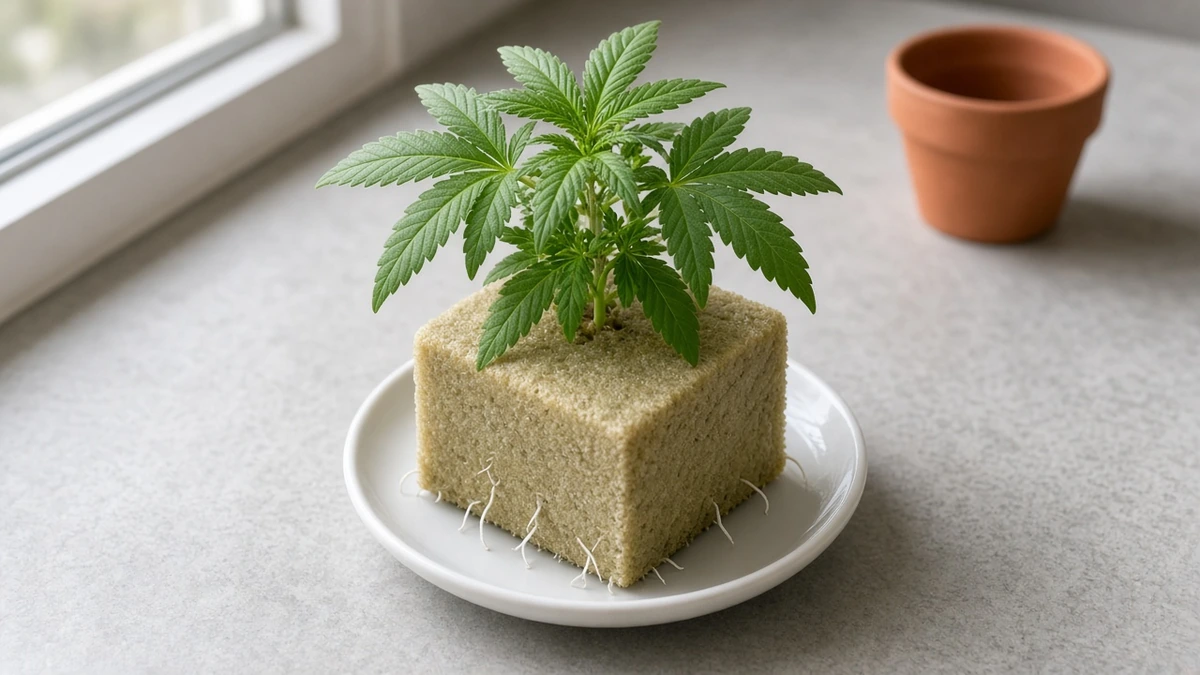
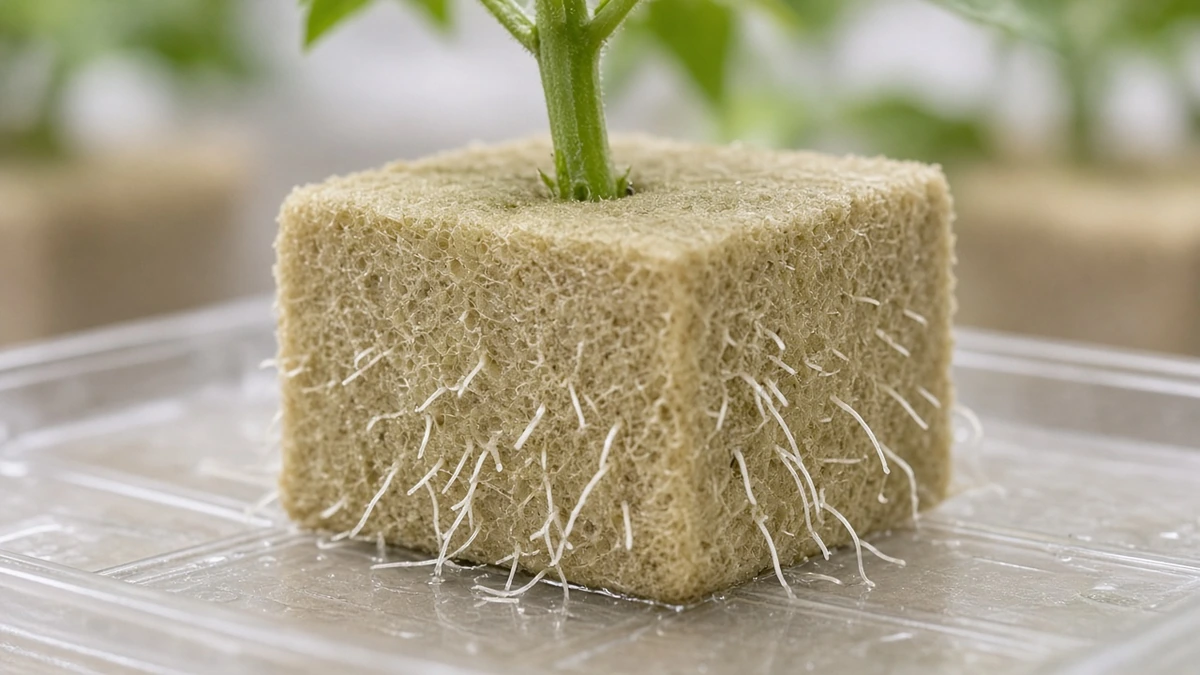
This is the clearest sign. White root tips poking out of a plug’s sides or base mean the root system has filled its space and is ready for more room. General propagation guidance, such as Iowa State University Extension’s, commonly recommends waiting until roots are at least 1 inch long before potting up rooted cuttings. You don’t need to measure. Visible, healthy roots along the plug’s edges are the practical version of that cue. For help telling whether a clone has rooted at all, see the troubleshooting guide for clones that won’t root.
Steady New Top Growth
Fresh leaves appearing at the growing tip show that the roots are supplying water and the plant has moved past survival mode. A clone that’s still sitting still at the top usually needs more time.
It Holds Up With the Dome Off
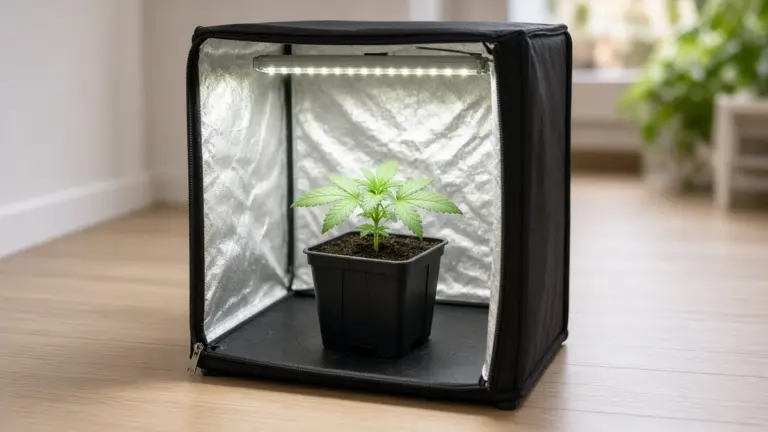
A clone that’s ready to move can stay firm with the dome off or vented instead of wilting as soon as humidity drops. Gradual acclimation, changing one condition at a time, helps get it there. The guide to hardening off cannabis clones covers that step.
Clones You Rooted vs. Rooted Clones That Arrived by Mail
Where the clone came from changes your starting point.
A clone you rooted at home is judged entirely by the signs above. You’ve watched it since the cut, so you know its age and how it has handled the dome coming off.
A mailed clone starts differently. Ready-to-Ship clones on I Want Clones are already cut and rooted, so the rooting stage is done before you order. Even so, a freshly shipped clone needs time to settle before you move it again. Moving it right away stacks the stress of a transplant on top of the stress of the trip. Two steps come first:
- Arrival care. Follow the arrival steps for new clones, and see the rooted clones guide for checking roots when a clone arrives.
- Quarantine. For quarantine, IWC’s recommendation is two to four weeks, kept apart from your other plants. The guide on how to quarantine clones has the details.
Once a mailed clone has settled and shows the same readiness signs, the timing decision is the same as for any other clone. The I Want Clones marketplace is made up of trusted, approved vendors. To look for clones, visit the I Want Clones shop.
The Risks of Moving Too Early or Too Late
Timing matters in both directions.
Too Early
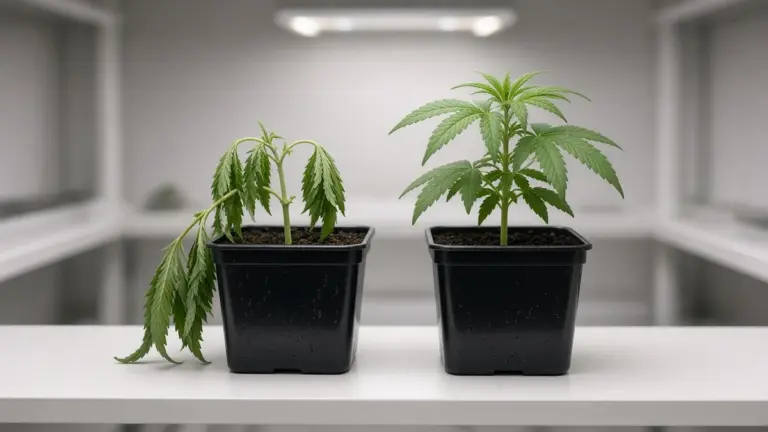
A clone moved before its roots are established has very little holding its plug together. Roots tear easily, and a plant with damaged roots can’t take up enough water. Purdue Extension notes that lost roots lead to transplant stress, with wilting and yellowing leaves. A young root system sitting in a large volume of wet mix is also at risk, because soggy medium cuts off the air roots need. If a clone sags after an early move, see the guide to drooping clones.
Too Late
Waiting too long causes its own problems. Roots that run out of room start circling the plug or growing out of the bottom, and the plant can stall. University of Georgia’s hemp guide warns that cuttings left in trays for several extra weeks may become stunted, and the Cornell trial noted that cuttings in potting soil tended to become root-bound before they could be transplanted. If roots are already wrapping the outside of the plug, move the clone soon. For later moves into bigger containers, see the guide to up-potting clones.
Where Clones Go After the First Transplant
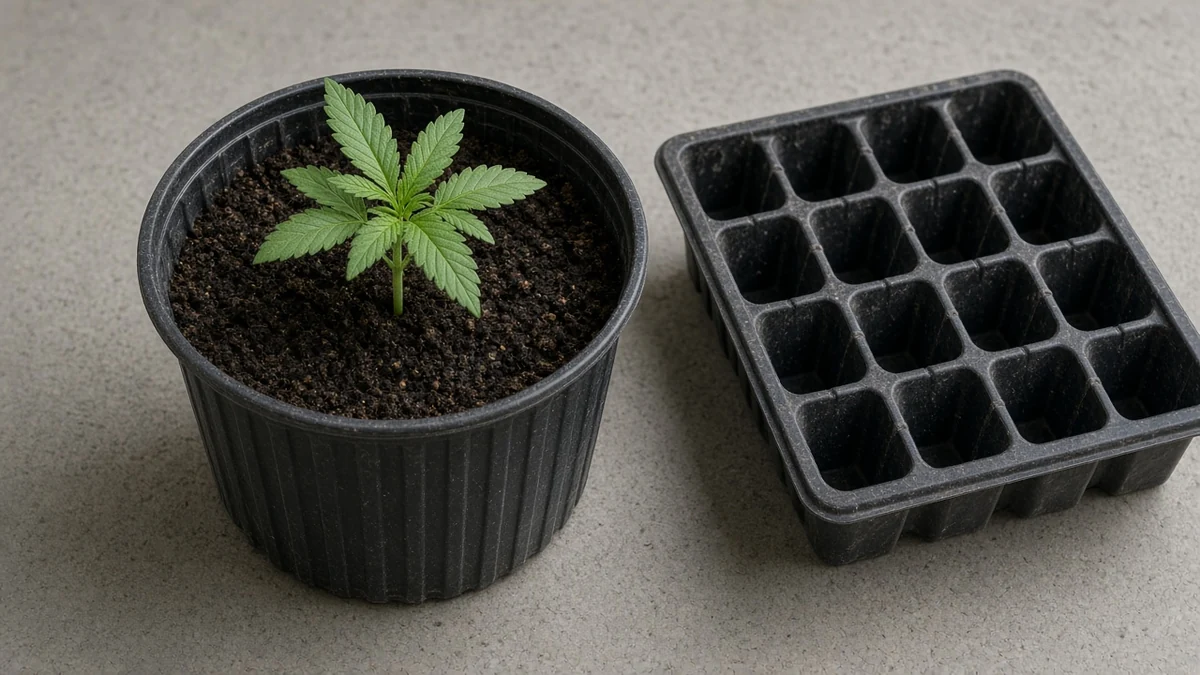
The first transplant moves a clone out of its plug or cube into its first real container. A pot only modestly larger than the root ball keeps a small root system from sitting in a lot of wet mix. The steps for soil, coco, and hydro are in the guide to transplanting cannabis clones, and container sizes for each stage are in the up-potting guide linked above.
Frequently Asked Questions
How Long Until a Clone Roots in Soil?
Rooting time varies with the medium, the environment, and the cutting. University of Georgia’s hemp guidance reports new roots often appearing in under 10 days, and the Cornell trial found that soil-based plugs grew heavy roots but could become root-bound if left too long. Watch the plug’s edges for roots rather than counting days.
How Often Should You Water a Clone Before and After Transplanting?
Water by feel and weight, not by the clock. Before the move, keep the plug moist but not soggy. After the move, let the new mix dry back between waterings so the roots get air. The guide on how to water cannabis clones covers the details.
What Helps a Cutting Root Sooner?
Healthy cutting material, steady warmth and humidity, and a clean, well-drained medium all help. Avoid a waterlogged plug, which starves new roots of air. The rooting troubleshooting guide lists the usual reasons cuttings stall.
Can You Transplant a Clone Too Early?
Yes. A clone moved before its roots hold the plug together can lose roots in the move and wilt from transplant stress. Wait until roots show along the plug’s edges and new growth is steady.
Let the Roots Set the Schedule
Age gives you a starting point, and hemp extension guidance puts most cuttings at two to three weeks from cut to planting. The roots make the final call. Move a clone when white roots show along the plug’s sides, new growth is steady, and it holds up with the dome off. If it arrived by mail, let it settle and finish quarantine first. Moving too early risks torn roots and wilting, and waiting too long risks circling roots and stalled growth. After the first transplant, the transplanting and up-potting guides take it from there.