

The Honey Banana strain delivers exactly what its name suggests: a sweet, ripe banana aroma layered with honey and a soft tropical fruit undertone. Bred by Elemental Seeds from Honey Boo Boo and Strawberry Banana, and sold on many menus as Honey Bananas, this hybrid appeals to people who prefer a dessert-style profile to the sharp, fuel-heavy cultivars that fill so many shelves. Its effects follow a similarly gentle arc, opening with a happy, uplifting mood before settling into a relaxed body feel.
That combination makes Honey Banana an appealing choice for home growers, but the name can cause confusion. Strawberry Banana is a well-known cultivar in its own right, and at least one unrelated cross circulates under the Honey Banana label. Knowing which plant you have, how it differs from its better-known parent, and what it needs once it arrives as a rooted clone makes a real difference in the final harvest. Rooted cuts on I Want Clones (IWC) come from trusted vendors listed in the catalog. To look for clones, visit the I Want Clones shop.
Honey Banana Genetics and Lineage
The Honey Banana strain is a cross of Honey Boo Boo and Strawberry Banana, and those two parent names, rather than the spelling on a menu, are the most reliable way to identify it. Whether a label lists Honey Boo Boo first or second makes no difference, since the plant is the same either way.
Strawberry Banana, also sold as Strawnana, is the more familiar of the two parents. It is generally described as a cross of Crockett’s Banana Kush and a strawberry-leaning selection of Bubble Gum, and it is closely associated with Crockett Family Farms and DNA Genetics. Because Strawberry Banana is known for its vivid banana-and-berry profile, it’s easy to assume Honey Banana is simply a renamed version of it. It isn’t. Honey Banana is a newer cross that keeps the banana character but trades much of the strawberry for the honeyed sweetness of Honey Boo Boo, which gives the finished flower a noticeably different flavor.
Honey Boo Boo, a DNA Genetics cultivar, is usually listed as a cross of Bubba Kush and Captain Krypt OG. That Kush and OG background likely accounts for the sticky, resinous side of Honey Banana’s profile. Grandparents can help explain where a flavor came from, but they are not a reliable guide to how a particular cut will grow, so stretch and structure are best judged from the plant itself.
A separate cross of Banana OG and Honey Boo Boo is sometimes sold under the same name. It is a different plant, and its aroma and growth habits shouldn’t be assumed to apply to the Honey Boo Boo and Strawberry Banana cut. Sources also disagree on whether Honey Banana has an indica or sativa lean, so it is most accurately described simply as a hybrid.
Aroma, Flavor, and Terpenes
Honey Banana’s flavor unfolds in a clear sequence. Ripe banana arrives first on the inhale, honey fills out the middle, and a soft tree-fruit or tropical sweetness lingers on the finish. Some batches also show a light vanilla note, though banana and honey remain at the center of the profile. That honey finish is what most clearly separates Honey Banana from Strawberry Banana, where strawberry and berry share the spotlight with banana.
A consistent, lab-backed terpene breakdown for this cut has not been established, so the aroma and flavor are a more dependable guide than any terpene list printed on a label. For growers, the more practical point is that the sweet banana-and-honey scent becomes noticeable once buds begin to form. A carbon filter and a well-sealed exhaust path are worth having in place before the switch to flower, especially in a small or shared space.
Honey Banana sits comfortably alongside other dessert cannabis strains, although its banana-and-honey character sets it apart from the many Gelato-family cultivars in that category.
Honey Banana Strain Effects
Most people describe the Honey Banana strain as happy, giggly, and uplifting, followed by a relaxing body effect that usually arrives without bringing the session to a halt. It tends to appeal to people who want a bright, sociable mood and a gentle physical unwind rather than a racy, intense high. As with any cultivar, individual experiences vary, and nothing here should be taken as medical advice.
Published THC figures for Honey Banana don’t agree on a single number, which makes any one percentage a poor predictor of how it will feel. Dose, tolerance, and the way the flower was grown, dried, and cured all shape the experience, so people trying it for the first time usually start with a modest amount and adjust from there.
Appearance and Growth
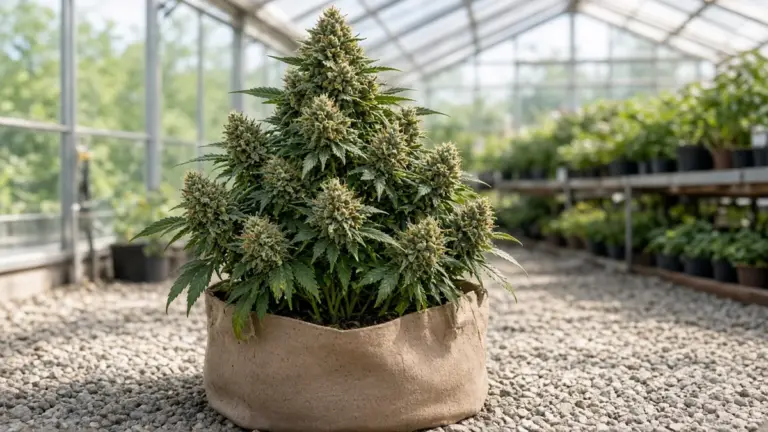
Finished Honey Banana flower is usually described as dense and heavily resinous, but beyond that, details about the plant’s height, stretch, and leaf color are inconsistent. Some descriptions call it tall and vigorous, while others describe a medium or compact plant. Rather than planning around a number from a catalog, growers will get better results by watching how the clone develops during vegetative growth.
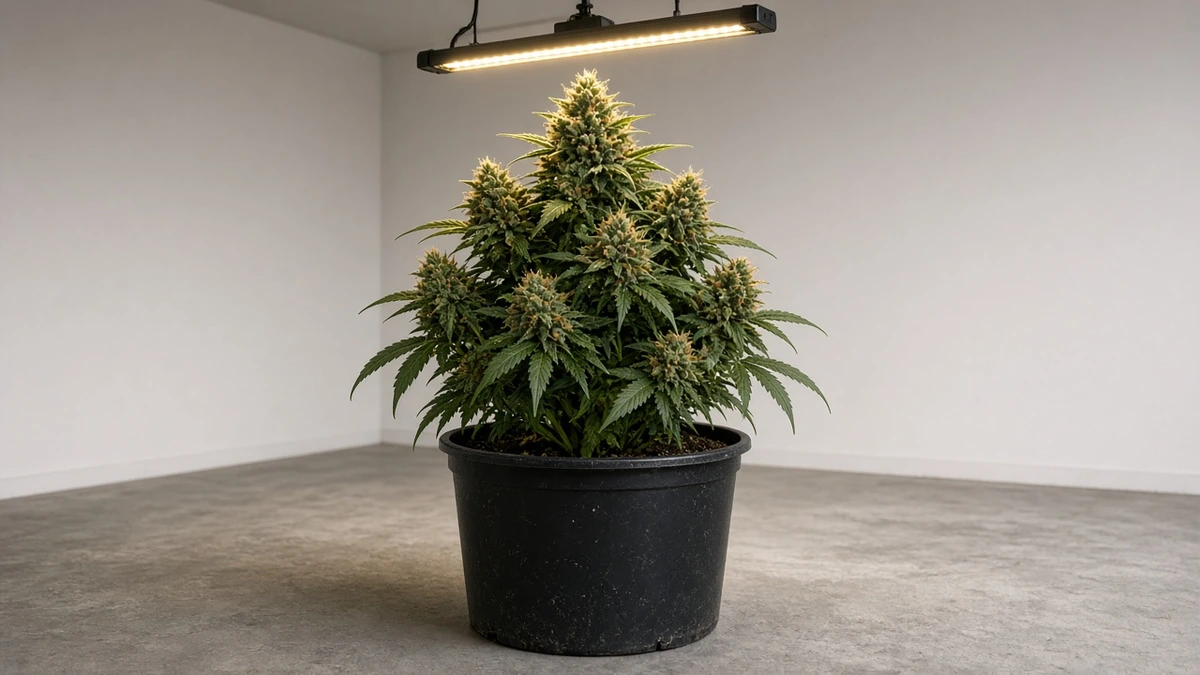
The most useful signals appear early: the spacing between nodes, how quickly side branches develop, and whether one main top begins to outpace the rest. Those traits show whether the plant will need a trellis, more horizontal space, or more training. Because the buds tend to finish dense, an even canopy with room between the tops usually produces cleaner results than a single dominant cola that shades the lower plant, and steady airflow beneath the canopy becomes increasingly important as the flowers fill in.
Growing Honey Banana From a Clone
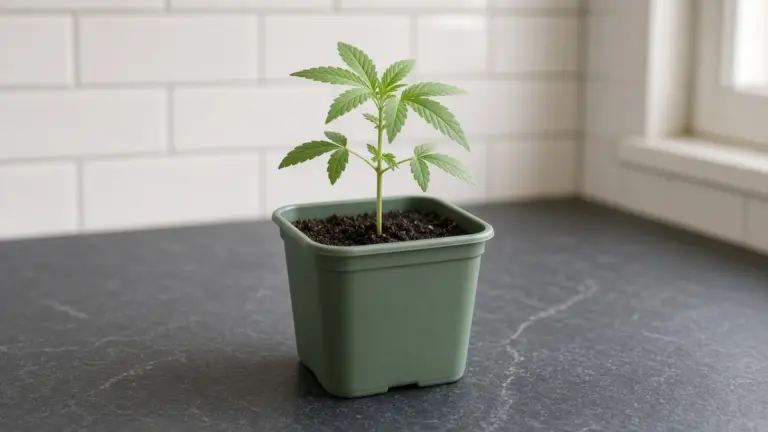
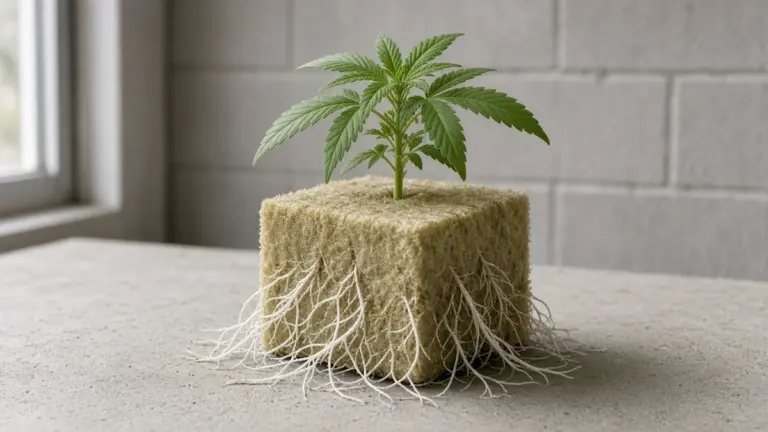
Honey Banana clones typically arrive as small rooted plants in a cube or plug. The first few weeks should focus on recovery, followed by close observation as the plant begins to reveal its structure.
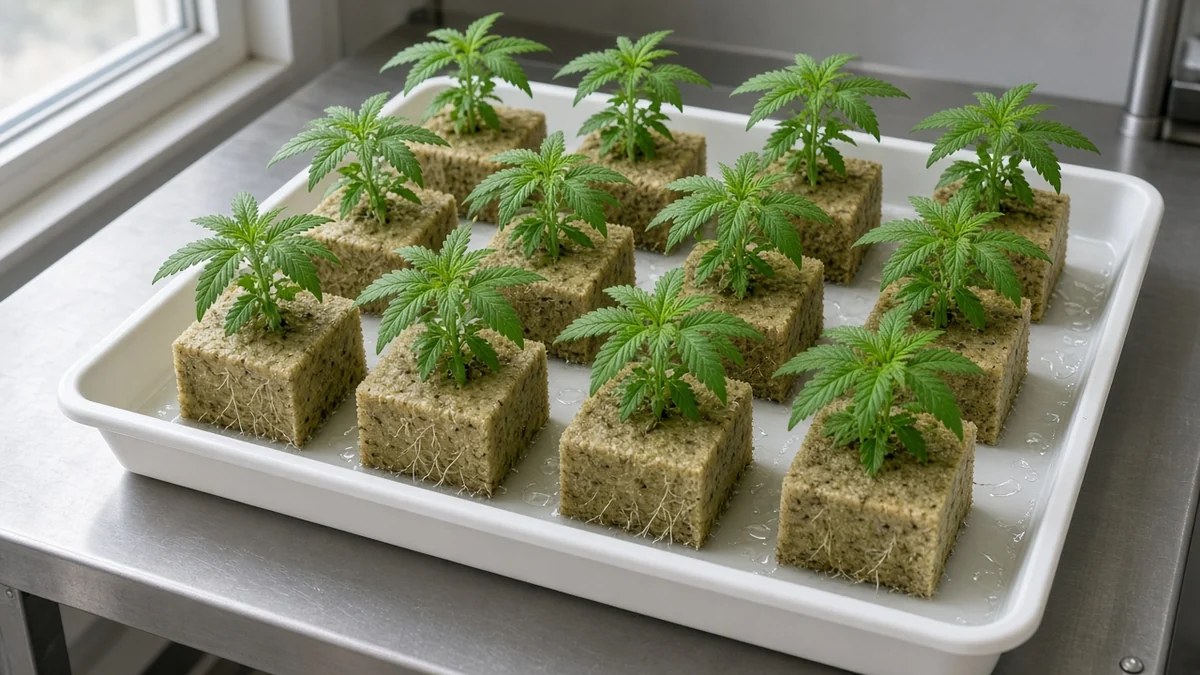
Shipping, a new room, and different lighting already add up to a lot of change for a young plant, so it’s best to avoid pruning it or moving it into a much larger container right away. Keep the new clone separate from established plants for two to four weeks, the standard intake window described in our quarantine guide. That period is about isolation and observation rather than speed, and it gives you time to spot pests or other problems before they can reach the rest of the garden. If a clone arrives damaged, dead, or clearly unhealthy, contact IWC within three days of delivery and include clear photos of the plants and the packaging (claims policy).
Once white roots are visible around the plug and the top growth has clearly recovered, the clone is ready for its first transplant. Choose a container only slightly larger than the root mass, set the cube level with the surface of the fresh mix, and water just enough to connect the plug to the surrounding medium. Overwatering is one of the most common reasons a transplant stalls, so the pot shouldn’t stay saturated through the first week. Slightly gentler light for the first few days and a steady vegetative schedule will carry the plant through until a new set of leaves has formed.
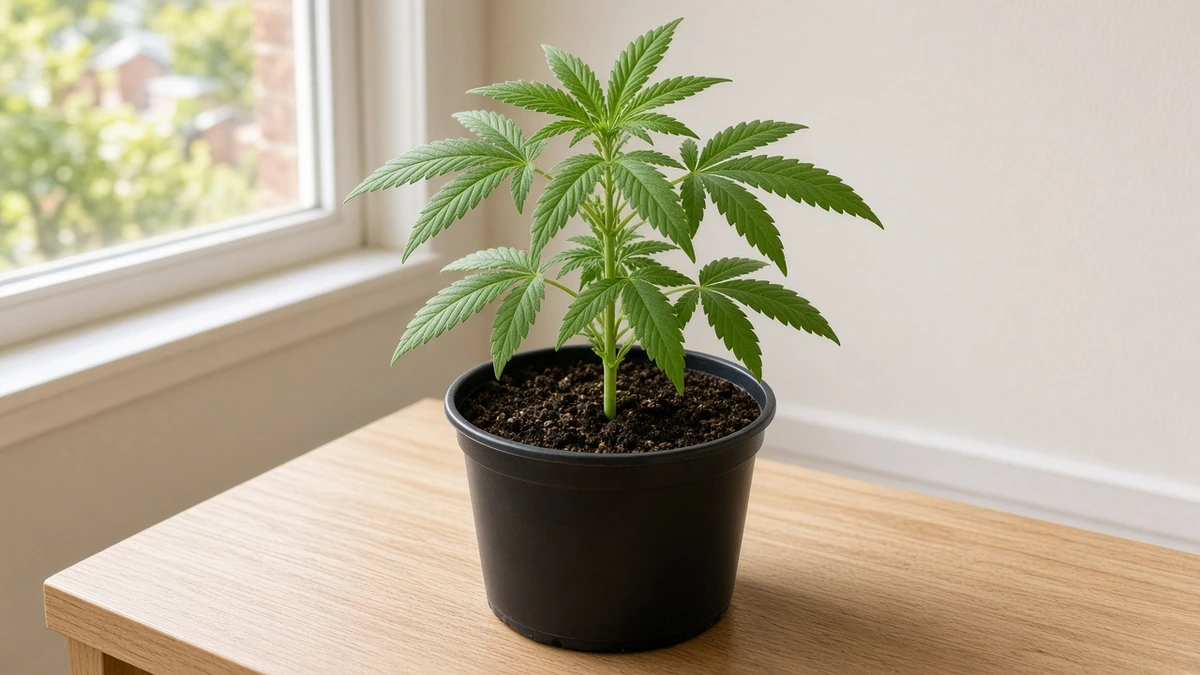
As new growth takes off, the plant’s natural habits become easier to read, and that is when training starts to make sense. Topping a clone while it is still in its original plug tends to slow it down, so it’s better to wait until after the first transplant, once vigorous new growth is clearly under way. At that point, one or two well-placed toppings followed by a few low-stress tie-downs are often enough to spread the plant into a wide, even canopy, and a screen can go in at the same stage if your space is set up for one. Since the buds tend to finish dense, leave enough room between containers for air to move freely beneath the canopy during flower.
Flowering Time and Yields
Honey Banana usually finishes in eight to nine weeks of flower. That range is useful for planning, but the trichomes, not the calendar, should determine when to harvest. How fully the colas have filled out and how strongly the banana-and-honey aroma has developed are also good indicators of maturity.
Published yield and height figures vary too much to be useful for planning a grow. A more practical approach is to have support ready in case the resin-heavy colas begin to lean, and to base the harvest on the plant’s maturity rather than on a promised yield.
Drying and curing play a large role in preserving Honey Banana’s signature flavor. A rushed dry can flatten the fruit and dull the honey, while sealing the jars too soon can mute the banana and leave a harsher finish. A slow dry and a patient cure give that flavor its best chance to come through.
Is Honey Banana Worth Growing?
Honey Banana is a strong choice for growers who want dessert-style flower built around banana and honey, along with a hybrid effect that feels bright without becoming racy. It is a less obvious fit for anyone looking for a fuel-forward profile or for a cultivar with well-documented stretch and yield, since neither has been reliably established for this cut. In practice, the quality of the finished flower comes down to fundamentals: careful handling after arrival, an even canopy, good airflow as the buds fill in, and a cure patient enough to protect the flavor.
Clone to Home offers this Honey Boo Boo and Strawberry Banana cut on I Want Clones as part of the Clone to Home collection, and current availability is shown on the Honey Banana product listing. Growers who prefer a gassier hybrid can compare it with the cultivar in our Grape Gas strain guide.
Frequently Asked Questions
Is Honey Banana a sativa strain?
Honey Banana is best described as a hybrid. Sources disagree on whether it leans indica or sativa, and its effects combine an uplifting mood with a relaxing body feel. Our guide to indica, sativa, and hybrid labels explains what those categories can and can’t tell you.
What are the Honey Banana strain’s effects?
Honey Banana tends to feel happy, giggly, and uplifting, followed by a relaxing body effect. Individual experiences vary, and this information is not medical advice.
What is Honey Banana’s lineage?
Elemental Seeds bred Honey Banana from Honey Boo Boo and Strawberry Banana. A different cross of Banana OG and Honey Boo Boo is sometimes sold under the same name, but it is a separate plant.
Is Honey Banana the same as Honey Bananas?
Yes. Honey Banana and Honey Bananas are two names for the same Honey Boo Boo and Strawberry Banana cultivar, and I Want Clones lists it under the singular name.
What does the Honey Banana strain taste like?
Expect sweet banana and honey up front, with a soft tree-fruit or tropical sweetness underneath. Some batches also show a light vanilla note.
Where can I buy a Honey Banana clone?
You can find Honey Banana clones on the Honey Banana product listing at I Want Clones, which shows current availability. Every cut in the catalog comes from trusted vendors, and the site sells clones rather than seeds.