


The indica vs sativa model tells you that indica strains produce relaxing, body-focused effects while sativa strains produce energizing, head-focused effects — and that hybrids fall somewhere in between. That story is simple, memorable, and widely repeated. It is also, according to modern cannabis research, largely a myth when it comes to predicting how a strain will make you feel. What actually determines your experience is the specific combination of cannabinoids and terpenes in that plant — a profile scientists call a chemovar. Indica and sativa labels, however, remain genuinely useful to growers for predicting plant structure, height, and flowering time.
This article covers both halves of that story: why the popular model breaks down for consumers, and exactly what indica/sativa morphology still tells you in the grow room.
- Key Takeaways
- Modern cannabis research shows that “indica” and “sativa” labels do not reliably predict the psychoactive effect of a strain — terpene and cannabinoid profiles (chemovars) are the real drivers.
- A 2018 study in PLOS ONE found little genetic separation between plants sold as indica vs sativa, meaning the labels describe marketing categories more than biological ones.
- Indica-type plants are generally shorter, denser, and flower faster (7–9 weeks); sativa-type plants are taller, more open-structured, and flower longer (10–16 weeks) — these differences are real and matter to growers.
- Terpenes like myrcene, linalool, and caryophyllene correlate with sedative effects; limonene, pinene, and terpinolene correlate with alertness — regardless of whether a strain is labeled indica or sativa.
- THC percentage alone is a poor predictor of potency or effect type; the full cannabinoid-terpene entourage is what matters.
- When choosing a strain to grow, focus on flowering time, yield potential, structure, and terpene profile rather than the indica/sativa label.
A Brief History of Indica vs Sativa
The terms Cannabis sativa and Cannabis indica were coined by European botanists in the 18th century. Carl Linnaeus described Cannabis sativa in 1753, referring to tall, narrow-leafed hemp plants from Europe. Jean-Baptiste Lamarck described Cannabis indica in 1785 for shorter, darker, broad-leafed plants from India that showed more pronounced psychoactive properties.
Those were morphological descriptions by 18th-century botanists, not a consumer experience classification. The current model — indica equals couch-lock body stone, sativa equals cerebral energy — developed in the North American black market of the 1970s and 1980s as growers began importing genetics from different global regions. It is a cultural construct, not a scientific one.
A third category, Cannabis ruderalis, refers to low-THC auto-flowering plants from Central Asia and Russia. This is the genetic source of autoflowering cannabis varieties, which are covered separately in our autoflowering clones guide.
What the Science Actually Says
Multiple independent studies have challenged the predictive value of indica/sativa labels. A landmark 2018 study published in PLOS ONE by Sawler et al. analyzed the genetic profiles of 81 cannabis strains sold as either indica or sativa. The researchers found that the genetic clustering did not align well with how strains were labeled. Many plants sold as sativa were genetically more similar to plants sold as indica than to other sativas.
A 2022 study from the University of Colorado (published in Scientific Reports) went further, analyzing thousands of commercially available cannabis products. It found that products labeled indica and sativa showed nearly identical terpene and cannabinoid profiles on average, with enormous within-category variation. The researchers concluded that the label was not a reliable guide to chemical content.
More importantly for consumers, the research on cannabis pharmacology points clearly at terpenes as major modulators of the cannabis experience. Myrcene — the most common terpene in cannabis — has sedative properties in animal models and likely contributes to the heavy, couch-lock feeling associated with “indica” strains. Limonene produces anxiolytic and mood-elevating effects. Pinene counteracts short-term memory impairment from THC. These terpene effects cut across indica/sativa categories entirely.
The concept of the entourage effect, proposed by researchers Raphael Mechoulam and Shimon Ben-Shabat, describes how cannabinoids and terpenes work synergistically — meaning a 20% THC strain with high myrcene and linalool may produce a very different experience than a 20% THC strain with high limonene and terpinolene, even if both are labeled “indica” by the dispensary.
For a deeper look at how terpenes shape the cannabis experience, see our cannabis terpenes explained guide. For cannabinoids beyond THC, our cannabinoids explained article covers CBD, CBG, CBN, and more.
The Myth vs. The Reality: A Direct Comparison
| Popular Claim | Myth or Fact? | What the Evidence Shows |
|---|---|---|
| “Indicas make you sleepy, sativas make you alert” | Myth (as a universal rule) | Terpene profiles — particularly myrcene vs. limonene/terpinolene — are far better predictors of sedative vs. energizing effects than the indica/sativa label |
| “Sativas are better for creativity and focus” | Mostly myth | Strains high in pinene and limonene (regardless of label) are more likely to support alertness and memory; many “indicas” have these terpenes |
| “Higher THC = stronger effects” | Myth | THC percentage correlates weakly with subjective potency; terpene synergy (entourage effect) matters more than raw THC% |
| “Indicas are shorter and flower faster” | Fact | Indica-dominant morphotypes are reliably shorter (2–4 ft indoor), bushier, and flower in 7–9 weeks — useful predictions for growers |
| “Sativas take longer to flower” | Fact | Sativa-dominant plants consistently flower in 10–16 weeks and can stretch 2–3x their vegetative height — critical to manage in indoor grows |
| “Hybrids are 50/50 balanced” | Myth | “Hybrid” describes any cross between distinct gene pools; effect and morphology depend entirely on parentage and the specific phenotype |
| “Indica/sativa labels are genetically distinct” | Myth | Genetic studies (Sawler et al. 2018, others) show significant genetic overlap between plants sold under these labels |
| “Indicas are good for pain, sativas for mood” | Myth | Neither claim is supported by controlled clinical evidence; we do not make medical claims, but the effect categories do not track reliably with indica/sativa labels |
What Indica vs. Sativa DOES Tell Growers
Here is where the model redeems itself. Even if indica/sativa labels fail to predict the consumer experience, they correlate meaningfully with morphological traits that matter enormously in the grow room. These differences are real, consistent, and useful:
Plant Height and Stretch
Indica-dominant plants typically stay compact — 2–4 feet tall indoors at harvest, with a stretch factor of 1.25–1.5x during the first 2 weeks of flower. A sativa-dominant plant can stretch 2–3x its vegetative height during flower, potentially hitting 6–8 feet indoors if not managed. This difference is critical for growers working in limited vertical space. Knowing that a strain is sativa-dominant tells you to veg it shorter, flip it sooner, and possibly install a trellis early.
Flowering Time
Indica-dominant strains generally finish in 7–9 weeks from flip to harvest. Sativa-dominant strains routinely run 10–14 weeks, with some pure landrace sativas taking 16 weeks or longer. This directly affects your production cycle, scheduling, and electricity costs. A grower running back-to-back cycles will produce significantly more harvests per year with indica-dominant strains than sativa-dominant ones.
Bud Structure and Density
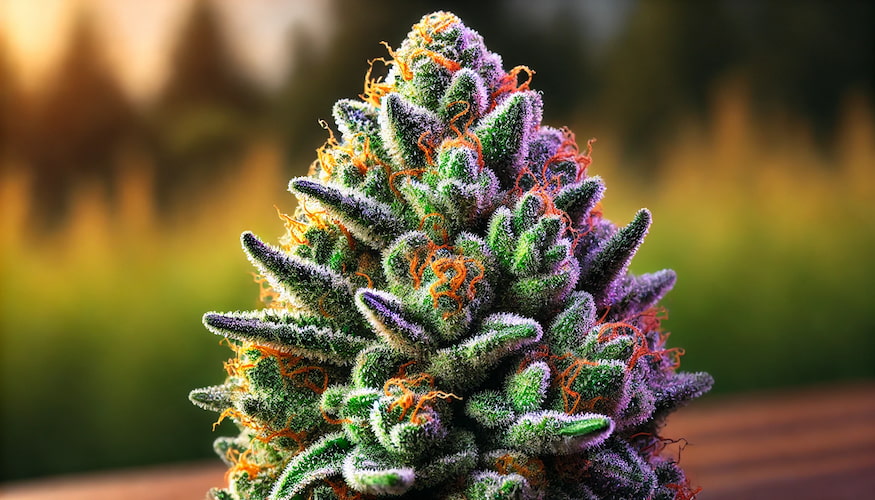
Indica-dominant flowers are typically dense, chunky, and tightly packed — the “golf ball” or “fist” buds most home growers picture. Sativa-dominant flowers are usually airier, more elongated, and less compact. Airy bud structure is not inferior, but it does affect trimming time, cure time, and susceptibility to botrytis (bud rot) in high-humidity environments. Dense indica buds are more vulnerable to interior rot if airflow is poor; sativa buds are more forgiving in humid conditions. Our humid climate growing guide covers strain selection for wet environments.
Leaf Shape and Canopy Management
Indica-dominant plants have wide, dark-green “finger” leaves that overlap and shade lower growth — more aggressive defoliation is often needed to maintain airflow and light penetration in the canopy. Sativa-dominant plants have narrow, elongated leaves that naturally allow more light to pass through. This affects your training approach: indica plants respond well to LST and SCROG; sativa plants often do better with SOG or a taller single-cola approach.
Chemovars: The Better Framework
A chemovar (chemical variety) classifies cannabis by its actual chemical profile — which cannabinoids and terpenes it contains and in what proportions — rather than by its morphological category. This is the framework increasingly used in cannabis research and by sophisticated dispensaries.
Most classification systems break cannabis into three chemovar types:
- Type I: High THC, low CBD (most cultivated cannabis)
- Type II: Mixed THC and CBD (roughly equal or varying ratios)
- Type III: High CBD, low THC (hemp and CBD-dominant varieties)
Within Type I (most of what home growers cultivate), the meaningful distinctions are in the terpene profile. A Type I strain dominated by myrcene and caryophyllene will produce a different experience than a Type I strain dominated by limonene, terpinolene, and ocimene — regardless of whether either is marketed as indica or sativa.
When you see a Certificate of Analysis (COA) from a licensed producer that lists terpene percentages alongside cannabinoid content, that is chemovar-level information. It tells you far more about what you are growing (and what the finished flower will do) than any indica/sativa label. Our how to read a cannabis COA article explains exactly how to interpret those lab results.
How to Actually Choose a Strain
Given everything above, here is a practical framework for selecting a strain that fits your goals — as a grower and as a consumer:
For Growers: Focus on These Four Factors
- Flowering time: How many weeks from flip to harvest? Does it fit your schedule?
- Finished height: How tall will it get in your space? Account for stretch.
- Yield potential: Is it a heavy yielder or a quality-over-quantity strain? Both are legitimate depending on your goals.
- Structure and density: Is the bud structure appropriate for your climate and cure setup?
For Consumers: Focus on These Factors
- Dominant terpenes: Look for strains with published terpene profiles. Myrcene-heavy = likely sedating. Limonene/pinene-heavy = likely uplifting.
- THC:CBD ratio: More CBD generally produces a more balanced, less anxious experience alongside THC.
- Personal response: Cannabis affects individuals differently based on genetics, tolerance, endocannabinoid system variation, and context. Terpene profiles are a better guide than labels, but personal experience with a specific strain is the best guide of all.
- Specific phenotype: Two plants from the same seed pack can express very differently. This is why verified clones — cuts of a specific, known phenotype — offer something seeds cannot: you know exactly what you are getting.
Our clone strain selection guide walks through how to match a strain to your grow setup, your target terpene profile, and your yield goals. Browse our full catalog at IWantClones.com/shop/ — each listing includes lineage and key traits so you can choose based on real information rather than marketing labels.
The Hybrid Question
Almost every cultivated cannabis strain today is technically a hybrid. Decades of intentional crossbreeding means that “pure” landrace sativas or indicas are extremely rare outside of specialty breeders working with original regional genetics. When a strain is marketed as “70% indica / 30% sativa” or “sativa-dominant hybrid,” those percentages are typically estimates based on lineage and observed morphology, not genetic sequencing.
What hybrid labels can tell you is the rough phenotypic expectation: a “sativa-dominant hybrid” will probably stretch more, flower longer, and produce airier buds than an “indica-dominant hybrid.” Those morphological tendencies are worth knowing. What those labels cannot tell you is whether the finished flower will be energizing or sedating, because that depends on the terpene expression of the specific phenotype — something that can vary considerably even between plants from the same cross.
Genetics, Breeding, and Why Lineage Matters
Understanding where a strain comes from is more useful than its indica/sativa label. A strain like Gary Payton (Y Life × Snowman) combines two distinct genetic lineages with known terpene tendencies — that information tells you more about what to expect than “hybrid” ever will. A strain like Sour Diesel, with its lineage tracing back to Chemdawg and Massachusetts Super Skunk, carries specific terpene markers (high caryophyllene, myrcene, and terpinolene) that have remained relatively consistent across decades of cultivation.
For growers interested in the deeper science of how cannabis genetics get passed from parent to offspring, our cannabis genetics and breeding 101 guide covers dominant and recessive traits, F1/F2 generations, and why pheno-hunting matters.
Legal Note
Cannabis cultivation and possession laws vary by state and municipality. Always verify your local regulations before growing. As of June 2026, a limited federal rescheduling (Schedule III) applies only to FDA-approved and state-licensed medical marijuana products; recreational/adult-use cannabis and most home grows remain under Schedule I federal law. A broader rescheduling hearing is scheduled for June 29–July 15, 2026. See our cannabis rescheduling explainer for current details.
Indica vs. Sativa: What the Labels Mean for Your Grow Space
Even though indica and sativa labels are unreliable predictors of effect, the words still carry useful information for growers because they correlate loosely with plant structure and flowering behavior. A strain marketed as “indica” is more likely to grow short, bushy, and compact with broad leaves, finish flowering in roughly 8 to 9 weeks, and stay manageable in a small tent. A strain marketed as “sativa” tends to stretch tall, branch loosely with narrow leaves, and flower longer—often 10 to 12 weeks or more—which demands more vertical room and aggressive training. Hybrids, which is what almost every modern clone actually is, fall somewhere in between depending on which parent dominates.
For a home grower choosing a clone, these structural tendencies matter more than the indica/sativa label’s promise about how the finished flower will feel. If you have a 2×2 or 2×4 tent, an indica-leaning, fast-finishing cut is far easier to keep under the light than a stretchy sativa that can triple in height after the flip. If you have head room and patience, a sativa-leaning plant can reward you with bigger yields per plant. Always read a strain’s flowering time and stretch profile—the practical numbers—rather than trusting the label alone. Our clone strain selection guide and each strain’s grow page list these specifics.
Common Indica and Sativa Myths, Debunked
The biggest myth is that indica always means couch-lock and sativa always means a racy, energetic high. In reality, the same strain can feel different depending on dose, your individual chemistry, harvest timing, and especially its terpene profile. A high-myrcene, late-harvested “sativa” can be just as sedating as any indica. A second myth is that leaf shape predicts effect—broad versus narrow leaflets reflect growth habit and heritage, not how the cannabinoids and terpenes will act. A third myth is that sativas are automatically higher in THC; potency depends on the specific cultivar and how it was grown, not its broad category. Finally, many people assume “hybrid” means a perfectly balanced middle ground, when in practice a hybrid simply reflects mixed ancestry and can lean strongly in either direction. The takeaway for both growers and consumers is the same: judge a strain by its tested cannabinoid and terpene data and its documented grow traits, not by a two-word label. That is exactly why we document lineage and traits for every cut we carry.
Where Indica, Sativa, and Hybrid Labels Still Help Shoppers
None of this means the indica, sativa, and hybrid labels are useless—they are just shorthand, not science. For a beginner standing in front of a menu or browsing clones online, the labels offer a rough starting point: indica-leaning options skew toward relaxing, body-forward experiences, sativa-leaning options skew toward heady and uplifting, and hybrids blend the two. The mistake is treating that shorthand as a guarantee. The smarter move is to use the label to narrow your options and then verify with real data—the strain’s dominant terpenes, its cannabinoid percentages from a certificate of analysis, and its documented lineage.
For example, if you want something calming for the evening, do not just grab anything tagged “indica.” Look for a cut rich in myrcene and linalool with a moderate-to-high THC level, like many of the dessert and gas cultivars in our catalog. If you want something bright and social, look for limonene, terpinolene, and pinene rather than simply trusting the word “sativa.” Pairing the familiar label with terpene and cannabinoid data gives you the best of both worlds: an easy starting filter and an accurate prediction. As cannabis testing becomes standard, expect retailers and breeders to lean more on chemovar data and terpene charts—but the indica/sativa/hybrid vocabulary will likely stick around as a convenient, if imperfect, common language for years to come.
Frequently Asked Questions
Is the indica vs sativa distinction completely meaningless?
Not completely. For growers, indica and sativa morphotypes reliably predict height, flowering time, bud structure, and canopy behavior — genuinely useful information. For predicting how a strain will make you feel, the labels are a poor guide. Terpene and cannabinoid profiles (chemovars) are far more predictive of effects than the indica/sativa category.
What terpenes should I look for in an energizing strain?
Look for strains with prominent limonene, terpinolene, and alpha-pinene in their terpene profiles. These terpenes are associated with uplifting, alert, and focused experiences in reported use. Strains high in these — regardless of indica/sativa label — are more likely to produce that effect profile. Our terpenes guide covers each major terpene in detail.
What terpenes are associated with relaxing or sedating effects?
Myrcene is the most commonly cited sedative terpene in cannabis — it is the most abundant terpene in most cannabis varieties and shows sedative properties in animal models. Linalool (also found in lavender) and beta-caryophyllene (also in black pepper and cloves) are also associated with relaxation and stress relief in reported consumer experiences.
Are pure landrace sativas and indicas still available?
Relatively few. Decades of hybridization have blended most commercial genetics significantly. Some breeders maintain original landrace genetics from regions like Afghanistan (Afghani), Thailand (Thai), and Colombia (Colombian Gold), but these are typically found in specialty seed banks and breeding projects, not in clone form at most retailers. Our rare cannabis clone strains page lists the more unusual genetics we carry.
Why does the same strain affect me differently than my friends?
Individual variation in the endocannabinoid system — the network of receptors, enzymes, and endogenous cannabinoids that THC and CBD interact with — means cannabis effects are genuinely person-specific. Genetic variations in CB1 and CB2 receptor density and binding affinity, liver enzyme metabolism rates (CYP2C9 and CYP3A4), prior use tolerance, body weight, and even mindset and environment all influence the experience. This is why personal experimentation with specific chemovars matters more than any general category guidance.
How do I choose between indica-dominant and sativa-dominant clones for my grow space?
Measure your vertical clearance first. If you have less than 6 feet of vertical grow space, indica-dominant strains that stay under 4 feet are much easier to manage. If you have 7–8 feet or more and want longer, heavier colas, a sativa-dominant variety is viable. Consider flowering time in your planning — every additional week of flower time is additional electricity cost. See our clone strain selection guide for a full framework.