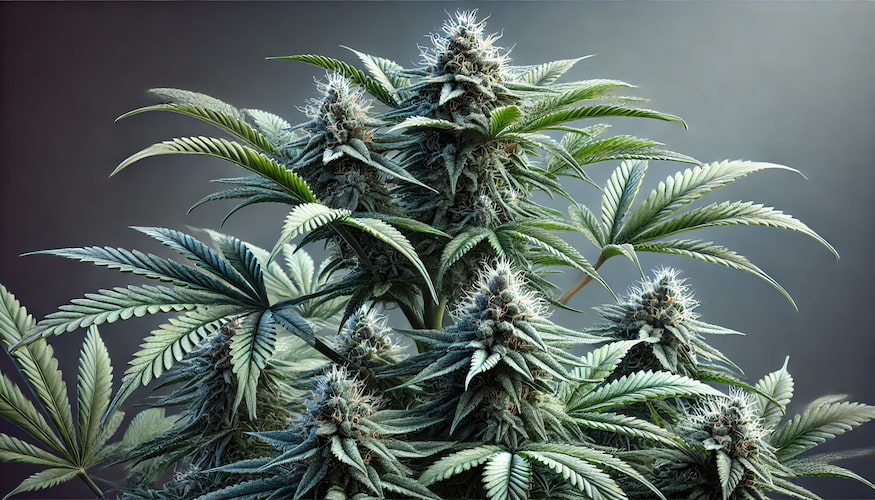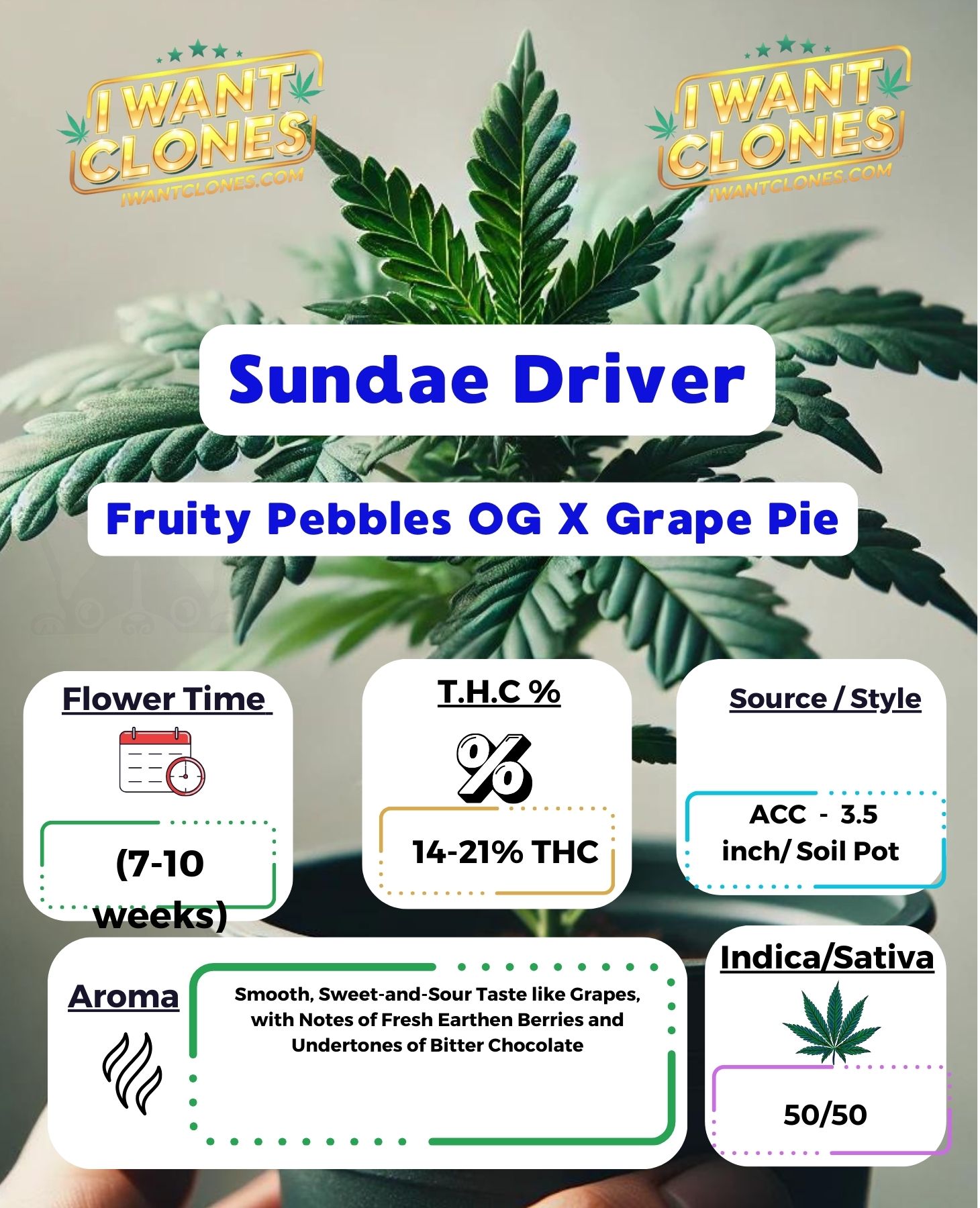
Sundae Driver is a balanced hybrid cannabis strain created by Cannarado Genetics, bred by crossing Fruity Pebbles OG (FPOG) and Grape Pie. It produces creamy, sweet, gassy terpenes with a smooth smoke and delivers calming yet functional effects in the 16% to 24% THC range. Most phenotypes flower in 8 to 9 weeks and display striking purple coloring under cooler temperatures.
If you want to skip the seed lottery and grow a verified expression of Sundae Driver, starting from a Sundae Driver clone is the fastest way to get true-to-type results from day one.
Key Takeaways
- Sundae Driver was created by Cannarado Genetics using a Fruity Pebbles OG x Grape Pie cross.
- THC content typically ranges from 16% to 24%, making it approachable for most consumers.
- Flavor profile is creamy, sweet, and slightly gassy—often described as dessert-like with a smooth finish.
- Effects are balanced hybrid: relaxing and mood-lifting without heavy sedation, suitable for daytime or evening use.
- Flowering time is approximately 8 to 9 weeks indoors; most phenotypes show purple and lavender hues late in flower.
- Moderate grow difficulty—rewarding for intermediate growers who can manage humidity and canopy training.
Sundae Driver Strain Overview: What Makes It Special
Sundae Driver sits comfortably in the upper tier of dessert-flavored strains. What separates it from the crowded “sweet strain” category is the complexity in the smoke. You get the sugary cereal notes from the FPOG parent, layered over the dark grape and berry richness of Grape Pie—and underneath it all there’s a light fuel undertone that keeps it from tasting cloying.
Cannarado Genetics—the Colorado-based breeding operation run by Exotic Joe—built a reputation on producing complex, richly flavored hybrids. Sundae Driver became one of their most recognized releases because it reliably expresses those traits across different growing conditions. The genetics are stable enough that commercial cultivators adopted it, which is why you’ll see Sundae Driver on dispensary menus across multiple legal states.
When you grow from a Sundae Driver clone from IWantClones.com, you’re getting a verified cutting from a known phenotype—not a seed pack where half the plants end up expressing the parent genetics differently. That consistency matters when you’re planning a harvest around a specific terpene profile.
Sundae Driver Genetics: FPOG x Grape Pie Explained
Fruity Pebbles OG (FPOG)
Fruity Pebbles OG is itself a complex hybrid—typically traced to a Granddaddy Purple x Green Ribbon x Tahoe Alien lineage. It gained fame for its intensely sweet, fruit-forward terpenes and colorful bud structure. FPOG contributes the sugary, cereal-like nose to Sundae Driver along with some of the indica-leaning body relaxation in the effects profile.
Grape Pie
Grape Pie comes from a Grape Stomper x Cherry Pie cross. It brings dense bud structure, deep purple potential, and the distinctly grape-forward flavor that defines the backend of Sundae Driver’s taste. Grape Pie is also responsible for much of Sundae Driver’s ability to purple up dramatically when temps drop in the final two weeks of flower.
What the Cross Produces
The FPOG x Grape Pie combination gives Sundae Driver a terpene stack dominated by myrcene, caryophyllene, and limonene. Myrcene delivers the earthy, musky base and contributes to the relaxing effects. Caryophyllene adds the subtle spicy and fuel notes. Limonene brightens the whole profile with citrus and keeps the mood-lift in the experience. This is why Sundae Driver sits in that sweet spot between a functional afternoon smoke and a genuine relaxation tool—it’s not a one-note strain.
Sundae Driver Effects: What To Expect
At its core, Sundae Driver delivers a balanced hybrid experience. The onset is typically felt first as a cerebral mood lift—a gentle pressure behind the eyes and a smoothing of anxious thoughts. Within 15 to 20 minutes the physical relaxation sets in across the shoulders and chest. Most users report staying functional: you can hold a conversation, watch a movie, or do light creative work without feeling glued to the couch.
At higher doses or in potent phenotypes (more than 22% THC), Sundae Driver can lean more sedative. This is the strain’s FPOG influence—if you push the dose, expect the body component to become more prominent. For most home consumers, the moderate dosing range keeps it squarely in “balanced hybrid” territory.
Common effects reported by Sundae Driver consumers:
- Euphoria and mood uplift within the first 10 to 15 minutes
- Physical relaxation without full sedation at moderate doses
- Stress and anxiety reduction
- Mild appetite stimulation (“the munchies”)
- Creative or reflective headspace at lower doses
Note: Cannabis affects individuals differently. These are commonly reported user experiences, not medical claims. Always verify your state and local laws before purchasing or consuming cannabis products.
Sundae Driver Terpene and Flavor Profile
The flavor is where Sundae Driver really earns its name. The smoke is genuinely creamy and smooth—most consumers describe the inhale as sweet and dessert-like with grape and berry notes, and the exhale delivers a lightly gassy, fuel-tinged finish that keeps it interesting. It doesn’t taste like candy; it tastes like a very well-crafted hybrid with depth.
Dominant terpenes:
- Myrcene—earthy, musky base; contributes to the relaxing body effects
- Caryophyllene—spicy, peppery, fuel-like undertone; the “gassy” element in the exhale
- Limonene—citrus brightness; elevates mood and adds freshness to the sweet profile
Properly cured Sundae Driver buds smell unmistakably sweet and slightly gassy from the jar—not like artificial grape candy, but like actual fermented dark fruit with a gas edge. If you’re growing it, this terpene expression is heavily influenced by your cure. A minimum 4-week cure in glass jars with regular burping will develop the full creamy complexity.
Sundae Driver Strain Stats at a Glance
| Attribute | Detail |
|---|---|
| Breeder | Cannarado Genetics |
| Lineage | Fruity Pebbles OG (FPOG) x Grape Pie |
| Classification | Balanced hybrid (50/50 indica/sativa) |
| THC Range | 16% to 24% |
| CBD | Typically <1% |
| Primary Terpenes | Myrcene, Caryophyllene, Limonene |
| Flowering Time (Indoor) | 8 to 9 weeks |
| Yield (Indoor) | 1.2 to 1.8 oz/ft² with proper training |
| Plant Height (Indoor) | Medium—3 to 4.5 ft |
| Grow Difficulty | Moderate |
| Best For | Indoor, greenhouse; manageable outdoor in warm, dry climates |
| Purple Expression | Yes—strong in most phenotypes under cool late-flower temps |
How To Grow Sundae Driver from Clone
Sundae Driver is a moderate-difficulty grow—it’s not the most forgiving beginner strain, but it’s not a nightmare either. The main things to nail are humidity control in mid-to-late flower, canopy management because it can stretch 40% to 60% during the first two weeks of flip, and temperature drops in the final 10 to 14 days if you want to trigger that iconic purple expression.
Before we get into specifics, starting with a healthy clone is the single most impactful decision you’ll make. Browse our clone strain selection guide to understand what to look for in a quality cutting—root development, node spacing, and leaf health are the three things you’re evaluating at arrival.
Cloning and Rooting Stage
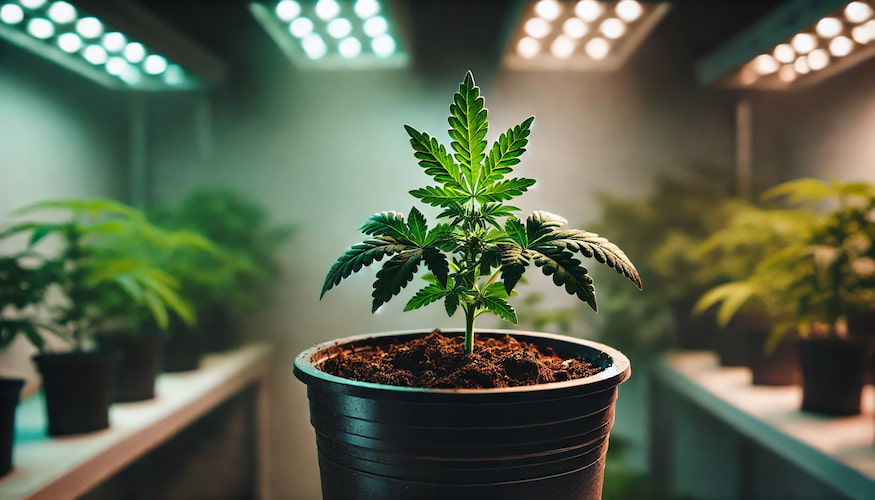
If you’re receiving a Sundae Driver clone from us, the hard part (rooting) is already done. Clones arrive with established roots, ready to transition into a vegetative environment. The most common mistake at this stage is overwatering—root systems are still adjusting and they don’t need the same water volume as a mature plant in a large container.
Keep humidity at 65% to 70% RH and temps between 72 to 78°F during the first week as the clone settles in. Light intensity should be moderate—around 300 to 400 PPFD. You’re not trying to push growth; you’re letting the plant acclimate.
Vegetative Stage
Sundae Driver benefits from a solid 4- to 6-week vegetative period when starting from clone. Under 18/6 lighting, the plants develop a robust branching structure that responds well to training. The goal is to build a wide, open canopy before you flip to flower.
Training recommendations:
- Low Stress Training (LST): Bend and tie main branches outward early to widen the canopy. Sundae Driver has flexible stems in veg, making LST easy to apply.
- Topping or FIMing: Topping once at the 4th or 5th node produces multiple colas and keeps the plant from focusing all energy on a single apical stem. Do this at least 10 days before the planned flip to allow recovery.
- SCROG: A screen of green setup works exceptionally well with Sundae Driver’s bushy growth pattern. Fill the net to 60% to 70% before flipping.
Review our guide on cannabis clone growth stages to understand what benchmarks to hit at each phase. Knowing when your clone is truly ready to flip—not just tall enough, but structurally ready—makes a measurable difference in final yield.
Flowering Stage
Flip Sundae Driver to a 12/12 light cycle to initiate flowering. In the first two weeks (the “stretch phase”), expect 40% to 60% vertical growth. If you haven’t trained the plant wide in veg, this stretch can cause some colas to outcompete others for light. Tie down any dominant colas that are racing ahead of the rest of the canopy.
Week-by-week flowering overview:
- Weeks 1 to 2: Stretch phase. White pistils appear at bud sites. Continue LST if needed.
- Weeks 3 to 4: Bud sites stack and swell. Trichome production begins. Increase P and K in the feed.
- Weeks 5 to 6: Buds fill out significantly. Smell intensifies—the grape and cream notes become obvious. Reduce nitrogen feeding.
- Weeks 7 to 8: Dense, resin-coated colas. Watch for any signs of bud rot (botrytis)—keep RH below 45% and airflow strong.
- Week 8 to 9: Final ripening. Trichomes shift from clear to milky to amber. Most growers harvest when trichomes are mostly cloudy with 10% to 20% amber for a balanced effect. Full amber shifts the experience more toward sedation.
Triggering Purple Coloration
The purple expression in Sundae Driver comes from anthocyanins—pigments in the plant that activate when exposed to cool temperatures. To trigger this, drop night temperatures to 58 to 62°F during the final 10 to 14 days of flowering. Keep daytime temps in the 70 to 75°F range. The temperature differential is what causes the coloring, not just cold alone.
Not every pheno purples to the same degree—some will go deep purple on the calyxes while others show lavender and blue tones on the sugar leaves. Both expressions are normal and both indicate the same genetic lineage coming through. Don’t be alarmed if your plant purples more on the leaves than the buds—that’s phenotypic variation, not a problem.
Climate and Environment for Sundae Driver
Sundae Driver thrives in a controlled indoor environment where you can dial in temperature, humidity, and airflow. Outdoors it performs well in warm, dry climates with low fall humidity—think Mediterranean-style conditions. In humid coastal or Southeast U.S. climates, Sundae Driver’s dense bud structure creates a real mold risk as harvest approaches, so either grow it indoors or plan for intensive IPM (integrated pest management) protocols.
Optimal environmental parameters:
- Vegetative temps: 72 to 82°F day / 65 to 72°F night
- Flowering temps: 68 to 78°F day / 62 to 68°F night (55 to 62°F in final 2 weeks to purple)
- Humidity (veg): 55% to 70% RH
- Humidity (early flower): 45% to 55% RH
- Humidity (late flower): 35% to 45% RH—critical for bud rot prevention
- CO₂: Ambient is fine; enrichment to 1000 to 1200 ppm benefits yield in sealed rooms
For a full breakdown of environmental parameters at each growth stage, see our climate and environment guide for cannabis clones.
Feeding Sundae Driver: Nutrients for Maximum Flavor
Sundae Driver is a moderate feeder—not as hungry as some commercial strains, but under-feeding it will show in stretched internode spacing and thin bud development. The key principle is to taper nitrogen down aggressively once you hit week 3 of flower and start pushing P and K. Heavy nitrogen in mid-flower is the most common mistake growers make with dessert-flavored strains; it mutes the terpene profile.
Feeding schedule overview:
- Veg: Balanced NPK with emphasis on nitrogen (3-1-2 ratio or similar). Cal-Mag supplementation at 2 to 4 mL/gallon, especially in RO water or coco.
- Early flower (weeks 1 to 3): Transition feed—reduce N, increase P and K to a 1-3-2 ratio. Continue Cal-Mag.
- Mid flower (weeks 4 to 6): Full bloom formula. High P and K, minimal N. Add a terpene/carbohydrate supplement if you’re chasing flavor expression—molasses, fulvic acid, or proprietary bloom boosters.
- Late flower (weeks 7 to 9): Flush or run clean water for the final 10 to 14 days if growing in soil. In coco or hydro, dial back all nutrients to a light maintenance feed before flushing the final week.
Sundae Driver grown in living soil or organic no-till setups tends to express exceptional terpene complexity because the microbial environment delivers nutrients in a bioavailable form that enhances terpene synthesis. If you’re growing in a fully amended organic mix, top-dress with a compost or worm casting tea in weeks 3 to 5 of flower instead of bottled nutrients.
Our detailed cannabis clone nutrient guide breaks down feeding timing and product recommendations across soil, coco, and hydro growing media.
Harvesting and Curing Sundae Driver
Harvest timing directly impacts the effect profile you end up with. Use a jeweler’s loupe or digital microscope (60 to 100x magnification) to check trichome color on the actual calyx walls—not the sugar leaves, which amber up faster and give a misleading read.
Trichome harvest windows:
- Mostly cloudy, 5% to 10% amber: Peak potency, uplifting balanced effects. Best for daytime or functional use.
- Mostly cloudy, 15% to 25% amber: Slightly more sedative, deeper body relaxation. Best for evening use.
- more than 30% amber: Heavy couch-lock, significant sedation. Only recommended for specific therapeutic use cases.
After harvest, hang dry at 60 to 65°F and 55% to 60% RH for 10 to 14 days until stems snap cleanly rather than bend. Jar cure for a minimum of 4 weeks—Sundae Driver’s terpene complexity genuinely deepens between weeks 2 and 6 of cure. The creamy, dessert-like aroma that makes this strain famous is largely a product of proper post-harvest handling. Rushing the cure is the most common way growers under-deliver on Sundae Driver’s potential.
Sundae Driver Indoor vs. Outdoor: Which Is Better?
Sundae Driver is at its best indoors where you control the climate precisely. Temperature manipulation for purple coloring, humidity control to prevent bud rot, and dialed-in flowering light schedules all produce better results in a controlled environment. That said, outdoor growing in the right climate produces exceptional results—the extra root volume from in-ground planting can push yields significantly higher than indoor, and natural light cycles often produce nuanced terpene expression.
| Factor | Indoor | Outdoor |
|---|---|---|
| Yield potential | 1.2 to 1.8 oz/ft² | 3 to 8 oz/plant (climate dependent) |
| Environmental control | Full control | Weather dependent |
| Purple color trigger | Easy—manipulate night temps | Natural in cool fall climates |
| Mold risk | Low with proper VPD management | High in humid climates |
| Harvest timing control | Precise | Season-locked |
| Cost | Higher (equipment, utilities) | Lower input costs |
| Difficulty | Moderate | Moderate–high in humid regions |
Who Is Sundae Driver For?
Sundae Driver is the right strain for growers who want to produce something genuinely impressive—not just high-THC, but a complex, memorable smoke that stands out. It’s particularly well-suited to:
- Intermediate growers comfortable with training techniques who want to move past basic strains
- Flavor-focused cultivators who grow primarily for terpene expression and are willing to invest in proper curing
- Indoor home growers who can control temperature precisely and want colorful, photogenic buds
- Dispensary-quality home producers who want a strain with genuine commercial genetics backing it
- Consumers who prefer balanced effects—not looking for a pure sedative or a pure sativa energizer, but something in between
If you’re a true beginner, Sundae Driver isn’t the worst choice, but strains with more forgiving humidity tolerance and simpler feeding requirements might be a better starting point. Once you have one or two successful grows under your belt, Sundae Driver is an excellent next step up.
Not sure which strain fits your setup? Our clone strain selection guide walks through how to match genetics to your growing environment, experience level, and goals.
Why Buy a Sundae Driver Clone Instead of Seeds
Seeds introduce genetic variability. Even in a feminized seed pack from a reputable breeder, you’ll see phenotypic variation—some plants leaning more FPOG, others expressing the Grape Pie parent more strongly. When you grow Sundae Driver from a clone, you’re growing a genetic duplicate of a known, verified mother plant. The terpene profile, bud structure, flowering time, and yield potential are locked in.
Beyond genetic consistency, clones cut 3 to 5 weeks off your total grow time compared to starting from seed. No germination period. No seedling stage. You go from clone arrival to vegetative growth immediately.
At IWantClones.com, we ship Sundae Driver clones overnight with a 3-day no-bullshit guarantee. If your clones don’t arrive in healthy condition, we make it right. Checkout happens through SeedsHereNow.com, and we accept crypto (BTC, LTC, BCH, DOGE) alongside standard payment methods. Order your Sundae Driver clones here.
Legal note: Cannabis clones are only available for purchase in U.S. states where cannabis cultivation is legal for adult use or medical patients. Always verify your state and local regulations before ordering. Laws vary and change—check your state’s cannabis authority for current rules.
Frequently Asked Questions
What is Sundae Driver strain?
Sundae Driver is a balanced hybrid cannabis strain bred by Cannarado Genetics using a Fruity Pebbles OG (FPOG) x Grape Pie cross. It is known for creamy, sweet, gassy terpenes, THC levels of 16% to 24%, and balanced effects that are relaxing without being heavily sedating.
Who created Sundae Driver?
Sundae Driver was created by Cannarado Genetics, a Colorado-based breeding operation known for producing complex, richly flavored hybrid strains. Cannarado crossed Fruity Pebbles OG with Grape Pie to produce Sundae Driver, which became one of their most widely recognized releases.
What does Sundae Driver taste like?
Sundae Driver tastes creamy and sweet on the inhale, with grape and dark berry notes from the Grape Pie parent. The exhale brings a light gassy or fuel-like finish from the caryophyllene terpenes. The overall flavor is dessert-like with more complexity than a single-note sweet strain.
How long does Sundae Driver take to flower?
Sundae Driver flowers in approximately 8 to 9 weeks indoors under a 12/12 light cycle. Outdoor harvests typically land in mid-to-late October depending on climate and latitude. Trichome inspection with a loupe is the most reliable way to confirm harvest readiness regardless of calendar timing.
Does Sundae Driver turn purple?
Yes. Most Sundae Driver phenotypes express purple, lavender, and deep blue-green colors in the final 10 to 14 days of flowering when night temperatures are dropped to 58–62°F. The coloration comes from anthocyanins activated by the temperature differential and is a signature trait of the Grape Pie genetics in the cross.
Is Sundae Driver good for beginners?
Sundae Driver is rated moderate difficulty. It rewards growers who can manage humidity in late flower and apply basic canopy training. Beginners can grow it successfully, but it benefits from prior experience with training techniques. Starting from a healthy clone rather than seed simplifies the process considerably.