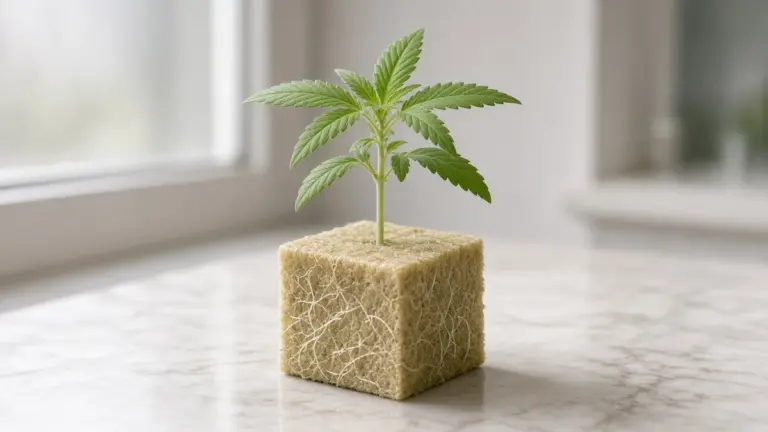


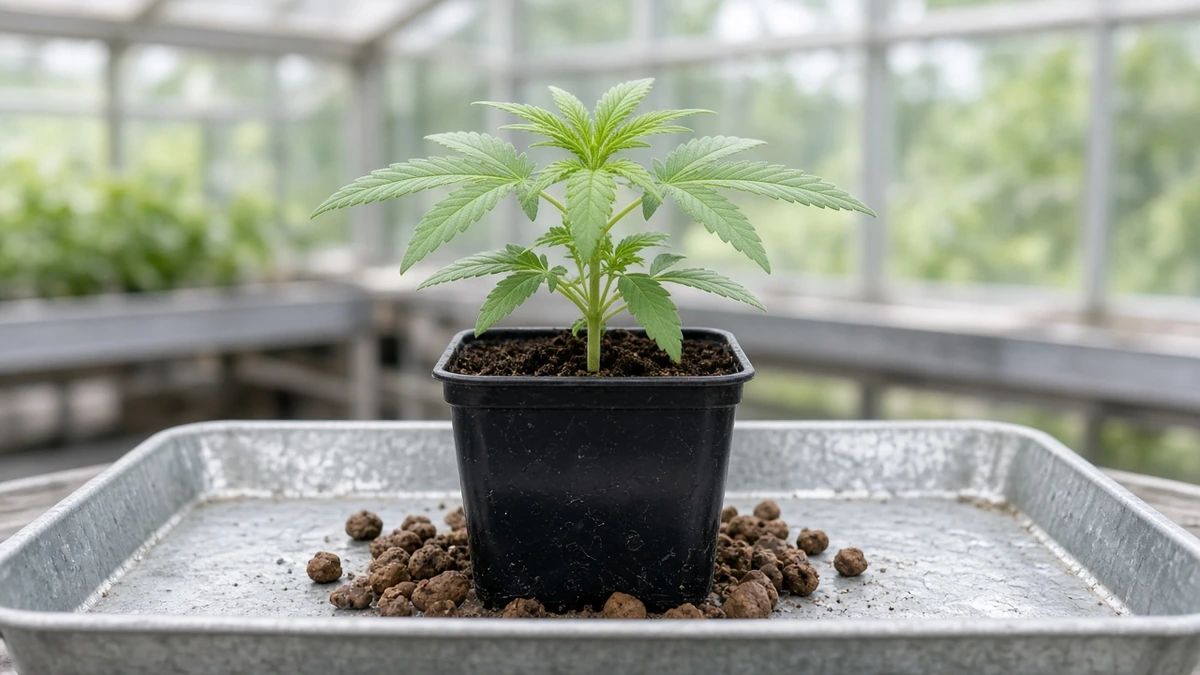
Super Boof strain is a balanced hybrid with a cherry-and-citrus nose, a funky edge, and a giggly, focused feel that made the cut a regular on grow lists. It is also written Superboof, and it was Leafly’s 2024 Strain of the Year after California breeder Blockhead released the same cross as Blockberry. On I Want Clones (IWC), this post walks through the genetics, the flavor, how the strain tends to feel, and what changes when Super Boof is grown from a rooted clone instead of seed. Trusted, approved vendors list rooted clones on the marketplace. To look for clones, visit the I Want Clones shop. For Ready-to-Ship vs Cut-to-Order and how ordering works, see where to buy clones.
Super Boof and Blockberry: What’s the Difference?
There is no secret second strain here. Super Boof is the popular name for a Blockhead cross first released as Blockberry: Black Cherry Punch and Tropicana Cookies. The genetics are the same. What changed is the name growers search for and the name on rooted-clone listings.
Blockhead, also credited as Blockhead Budz, bred the cut in California and put it out as Blockberry, the name covered in the Blockberry strain guide. The same cross now circulates under the Super Boof name, and that is the label most buyers use now. Treat Super Boof and Blockberry as the same cross under two names, not as rival cultivars. The clone format helps here: a rooted cut already matches the selected mother, so the grower is not sorting names and phenotypes out of a seed pack.
Super Boof Strain Genetics and Lineage
The cross is Black Cherry Punch and Tropicana Cookies. Cherry and berry notes track with Black Cherry Punch, and the bright orange and grapefruit edge tracks with Tropicana Cookies. Together they make a fruit-forward hybrid with a pungent, funky finish rather than a straight candy-gas profile.
That lineage is why the plant reads as a balanced hybrid in the garden: enough vigor to fill a canopy, enough density to reward an even finish, and a flavor that stays fruit and citrus when the cut is true. Starting from a clone keeps that profile locked to the mother.
Aroma, Flavor and Appearance
Crack a jar of Super Boof and the first wave is usually cherry and berry over bright citrus, often orange or grapefruit, with a funky, pungent edge underneath. The same notes carry into the taste: fruit on the inhale, citrus in the mid-palate, and a little earth and spice on the finish. Growers who chase dessert and fruit profiles will recognize the family. For neighboring dessert-leaning strains, see the list of best dessert cannabis strains.
The flowers tend to come on chunky, deep green, and often purple-dappled, with a heavy frost that can make the calyxes look wet with resin. A rooted clone from a known mother keeps that look and aroma more consistent than a seed pack would, because the plant is a genetic copy of the mother rather than a new phenotype.
In a sealed flower room, that cherry-citrus funk can be loud. Carbon filters and a closed exhaust path matter with a pungent cut. The clone does not change the odor load; it only makes the profile more predictable once the plant flowers.
Super Boof Strain Effects
Super Boof tends to feel giggly, euphoric, and focused, with a relaxing body load that does not usually flatten the session. The mood leans easy and talkative, and the head stays clear enough for many growers to run it earlier in the day. That is how the strain usually lands, not a promise of how any one plant will feel and not medical advice.
It is strong enough that new growers often start with a small amount until they know how their batch hits. How it feels still varies with dose, tolerance, and how the plant was grown and cured. A clone keeps genetics fixed; it does not lock in anyone’s personal response. For how hybrid genetics sit between indica and sativa labels, see indica vs sativa vs hybrid.
Growing the Super Boof Strain From a Clone
A rooted Super Boof clone skips the germination and phenotype hunt that come with seeds. The cut already matches the mother’s genetics, so the cherry-citrus profile and hybrid structure are what the mother produced rather than a roll of the dice. For a cut that also travels under a second name, that is the practical reason to start with a clone: the selected profile is already settled.
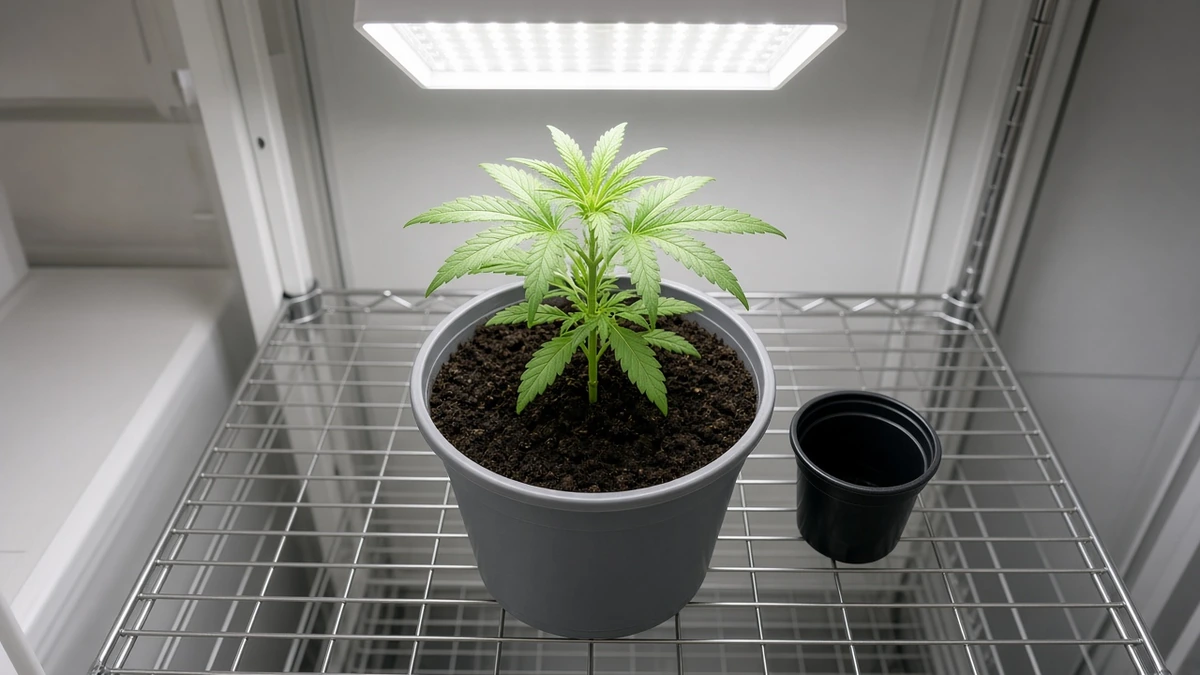
The rooted clones guide covers what that format means on arrival. For whether a clone purchase fits the grow in general, see are cannabis clones worth it.
Clone-led growing still has a clear sequence: receive the plant, quarantine it, confirm roots, transplant once, then train and flower. Super Boof does not change that order. What changes is the payoff of getting the intake right, because the cut is already the selected profile. Rushing a new arrival into a full tent, a hard prune, or a rich feed is how a good cut stalls. Slow early days protect the work that went into selecting this mother.
When a Super Boof clone arrives, follow the intake steps before any heavy training or a pot change. Use the clone arrival checklist, then keep the plant apart from the rest of the garden during quarantine. Keep new Super Boof cuts in quarantine for the IWC-recommended window of two to four weeks before they join other plants; the quarantine guide has the steps. That window is about isolating a new plant, not about rushing it into flower.
After the plant settles and shows white roots at the edges of the plug, move it into its first container when the readiness signs are there. Age alone is a rough guide. Timing signs and mailed-clone caveats are in when to transplant clones. Keep early care gentle: a modestly larger pot than the root ball, steady light, and no rush to full-strength feed. Super Boof puts on dense flower later, so the early goal is a healthy root mass and an even set of tops, not a forced stretch. Water when the pot lightens, and resist the urge to keep the medium wet because the plant looks thirsty after a move. Slight droop after a transplant usually fades once the roots take hold; a plant that stays wilted or yellow needs a check of the root zone and the light intensity, not a stronger bottle of feed.
In veg, let the plant show its hybrid habit before committing to a hard training plan. Some cuts stay compact; others want a little room in the canopy. Either way, an even table of tops is more useful than one tall spear once the plant flowers. Keep airflow under and through the leaves, and avoid packing plants so tight that moisture sits on the frost this cultivar is known for. A simple fan pattern under the canopy and a little space between pots goes further than a late rescue prune. If a top outruns the rest, a single tie-down or a modest top after the plant is clearly established is usually enough to bring the table back in line.
Plan flower by the plant, not by a generic calendar. Watch trichome color and the fill of the colas rather than chasing an unsourced day count. The buds tend to stack dense and frosty, so leave enough space between tops for light and air to reach the interior. A crowded flower room is a faster path to fox tails or damp pockets than a slightly more open canopy. Specific humidity, temperature, light intensity, pH, feeding, height, yield, and flowering-time figures are not listed here without a university extension source for this cultivar.
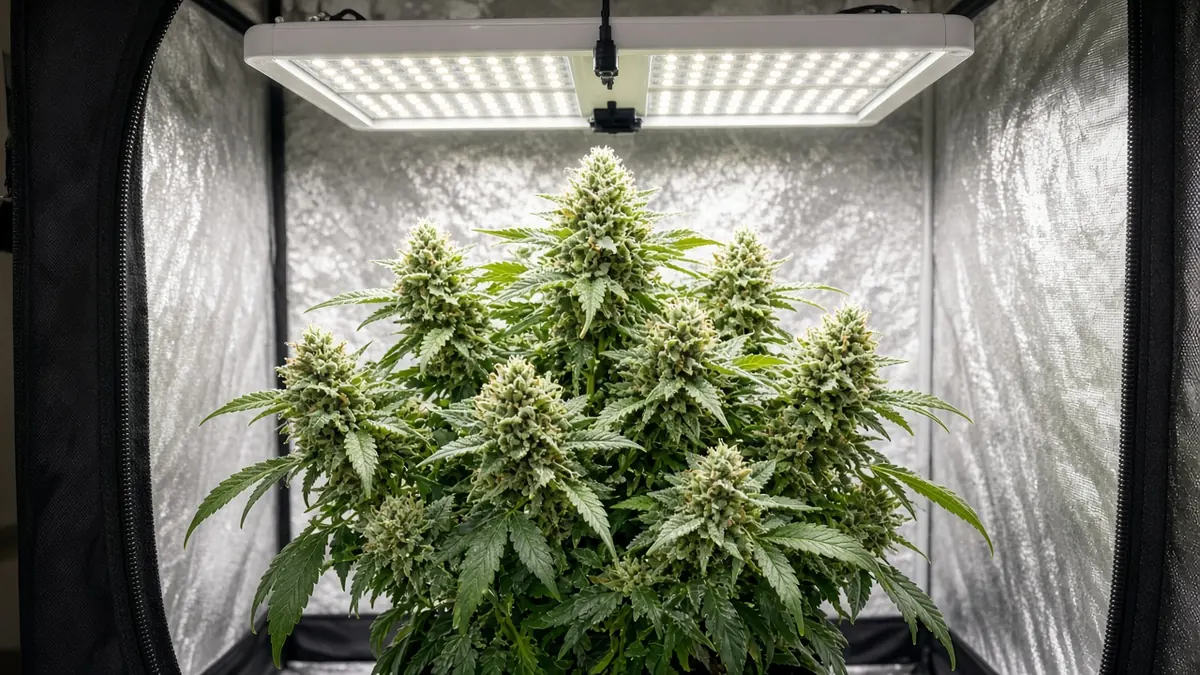
Once the plant is in flower, the work is mostly support and patience. Stake or net heavy colas before they lean, keep the canopy even, and let the cherry-citrus resin develop rather than hunting a date on the calendar. Pull a few sample trichomes with a loupe and look for a shift from clear to cloudy, then decide when to take the plant down based on the finish that fits the grow, not on a copied week count. Dry and cure slowly enough to keep the fruit notes; a rushed dry flattens the jar.
Training, Feeding and Common Problems
Super Boof grows as a balanced hybrid, so topping, low-stress training, and a screen of green can all fit once the plant is established. Dense, frosty colas and a loud nose reward an even canopy and good airflow more than they reward aggressive early training. Wait until the clone has rooted into its first pot and is putting out steady new tops before hard pruning. Early topping on a plant that is still sitting in its arrival plug often costs more time than it saves. Once new growth is steady, one or two well-placed tops, plus a bit of low-stress training, is usually enough to spread this hybrid into a wide, even table.
Defer pot sizes, feed schedules, and room targets to the up-potting, feeding, and transplanting guides already on I Want Clones rather than inventing numbers here. Super Boof does not need a special private recipe; it needs a steady room and a grower who changes one thing at a time. Common early problems after a move (drooping, overwatering, and stalled growth) usually trace back to root disturbance, a wet medium, or a hard jump in light or humidity. Fix the environment before chasing new nutrients. If leaves claw or burn after the first feeds, step strength back and check runoff and root health before adding more product. Yellowing that starts at the bottom after a heavy watering is often a wet-root problem, not a sign to add more food.
During flower, watch the interior of the canopy as the colas swell. Dense, frosty tops look great in a photo and trap moisture if the air cannot move through them. Strip only the growth that will never see light, and leave enough leaf to drive the plant. A modest defoliation after the plant has settled into flower is usually cleaner than a hard strip on a plant that just changed rooms.
If a clone arrives damaged, dead, or clearly unhealthy, contact IWC within three days of delivery and include clear photos of the plants and the packaging (claims policy).
Why Start Super Boof as a Clone on I Want Clones
Trusted, approved vendors list clones on I Want Clones. The site does not grow its own clones and does not sell seeds. Clone to Home is an approved vendor that lists Super Boof, which is the soft path for readers who want this cut without hunting phenotypes from seed. To look for a Super Boof clone, visit the Super Boof clone product page, the Super Clones vendor category, or the I Want Clones shop. Vendor standards live on the vendor listing page.
Buying the clone on I Want Clones keeps the informational strain guide and the transactional listing on the same site. The blog owns genetics, aroma, effects framing, and clone-care links. The product page owns the SKU. That split matters on a cut like Super Boof, where the public name, the older Blockberry name, and a live rooted listing can easily get tangled if the review and the cart live on different stories. No stock count, shipping promise, or testing claim is repeated from the product page here. Stock changes. Shipping windows and claim rules belong on Shipping and Policies.
Who the Super Boof Strain Is For
Super Boof fits growers who want a fruit-and-citrus hybrid with a giggly, focused feel and who prefer a rooted cut over a seed hunt. It suits readers who already know how to quarantine and harden off a new plant, and who can keep early feeds light.
Newer growers can still run it from a clone, but they should lean on the arrival, quarantine, and transplant guides linked above before pushing flower. A rooted cut removes the seed hunt, not the need for a clean room and a patient first week. Growers chasing a heavy indica body load or a candy-gas jar may want a different cut; Super Boof stays in the cherry-citrus lane, and the aroma is not subtle. Fruit-forward growers who want a balanced day-to-evening hybrid, and who are willing to give a dense, frosty plant some airflow, are the better match.
Frequently Asked Questions
Is Super Boof indica or sativa?
It is a balanced hybrid. See indica vs sativa vs hybrid for how those labels are used.
What are Super Boof strain effects?
Super Boof tends to feel giggly, euphoric, and focused, with a relaxing body load. That is how the strain usually lands, not medical advice, and not a promise of how any one plant will feel.
Is Super Boof the same as Blockberry?
Yes. Super Boof is the popular name for the Blockhead cross first released as Blockberry, from Black Cherry Punch and Tropicana Cookies. The genetics are the same; the names are not rival cultivars.
What is Super Boof’s lineage?
The cross is Black Cherry Punch and Tropicana Cookies, bred by Blockhead in California and first released as Blockberry. Super Boof is the name most growers use for that same cut.
Where can I buy a Super Boof clone?
To look for a Super Boof cut from the vendor Clone to Home, visit the Super Boof clone product page, the Super Clones category, or the I Want Clones shop. Trusted, approved vendors list clones on I Want Clones, and the site does not sell seeds.
Start With the Roots, Then Grow the Profile
The Super Boof strain brings Blockhead genetics, a cherry-citrus and funk aroma, and a giggly, focused hybrid feel. Growing it from a rooted clone keeps the cut true to the mother and skips the seed phenotype search, which matters even more on a cultivar that already travels under two names. Quarantine first, transplant when roots show, and keep early care gentle. When a listing fits the garden, the Clone to Home Super Boof cut on I Want Clones is the path to start.